

AI agents design an entirely new CPU architecture from scratch, startup claims — Frostbite posts 4.59x the performance per watt of an in-order core in pre-silicon tests
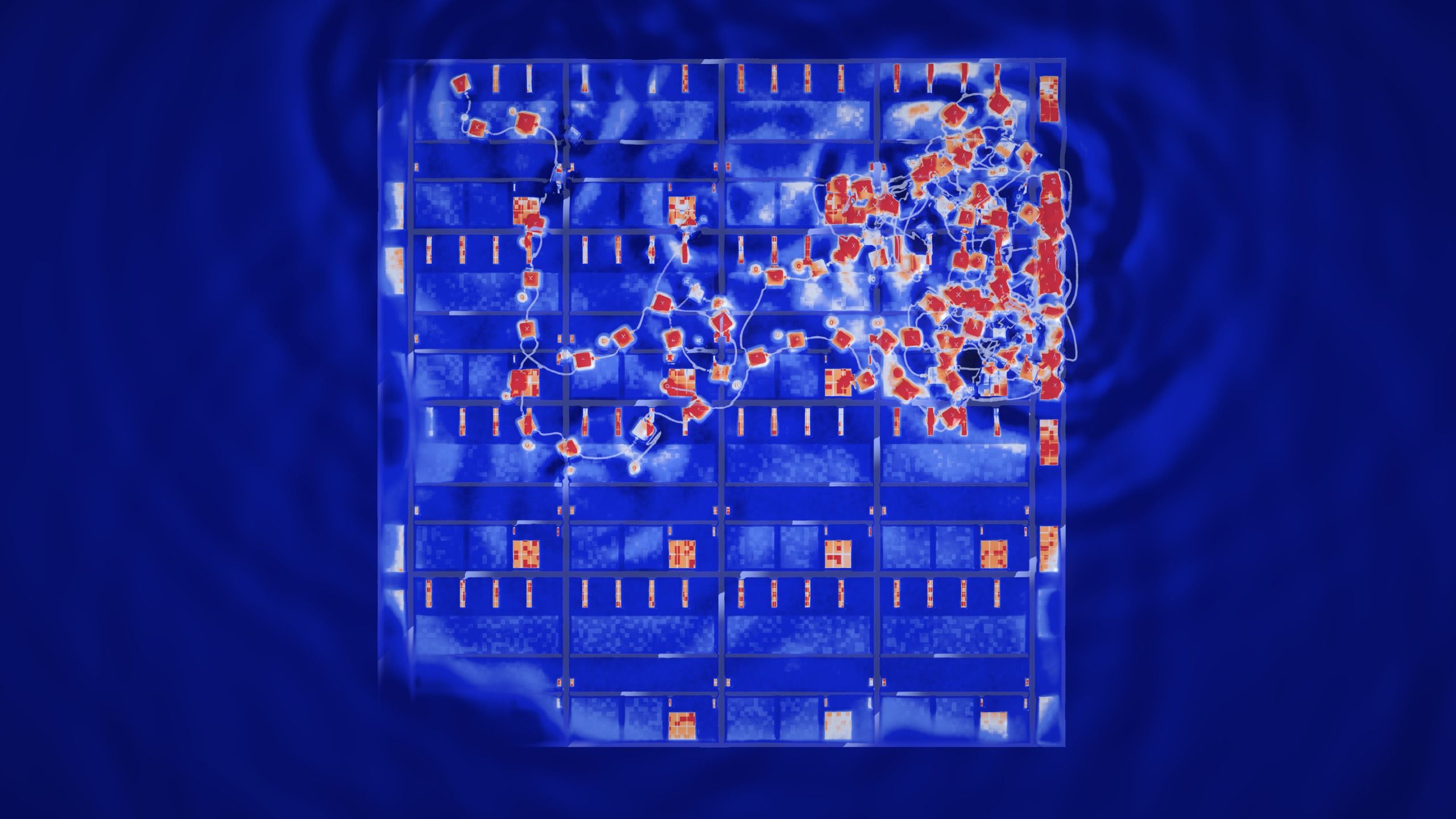
Architect Labs, a Palo Alto startup, said in a research blog post that its AI systems discovered, designed, and verified Frostbite, a general-purpose CPU with a new instruction set “built from the ground up.” Across 25 workloads, a…
Tom's Hardware
Publisher
Nov 22, 2026 at 1:00 PM UTC · Updated 4시간 전 · 5 분 소요
번역 중…
Add us as a preferred source on Google
Architect Labs, a Palo Alto startup, said in a research blog post that its AI systems discovered, designed, and verified Frostbite, a general-purpose CPU with a new instruction set “built from the ground up.” Across 25 workloads, a four-tile Frostbite cluster delivered 4.59 times the performance per watt of a similarly sized “silicon-proven” dual-issue, in-order CPU core. Those numbers come from a simulated 7nm design that has not yet been made in silicon, and the company says it can’t name the comparison core for legal reasons.
Conventional CPUs have hardware that “rediscovers, at runtime, which instructions actually depend on each other.” Multicore designs also need deep cache hierarchies and coherence protocols, which keep every core’s view of shared memory consistent, but scale poorly and cost area and power. Architect Labs’ alternative is what it calls “multithreading for free,” where the program itself exposes the parallel work, without threads, locks, or out-of-order hardware required for that discovery.
Frostbite’s programs are compiled to interaction nets, a model of computation from 1990 in which a program is a graph of nodes and computation happens by rewriting pairs of connected nodes, and the chip is designed around this distinct paradigm. Pairs of nodes being rewritten never overlap, so they can run in any order, or all at once, and arrive at the same result. Every value is also used exactly once, so data can stay in small local memories instead of large shared caches.
Article Intelligence
Topics
Sponsored
Ad
NewsLayerLearn more
NewsLayer Premium
Unlock deeper intelligence.
Ad-free reading, exclusive research, and real-time onchain insights.
Go Premium