

In early October 2026, OpenAI released 722 mathematical research manuscripts generated by its internal models. The list covered number theory, algebraic geometry, computer science. Stanford cryptographer Dan Boneh read through it. He noticed something missing: cryptography.
AI Cracked a Post-Quantum Code in 60 Hours. It Took Humans a Month to Check.
In early October 2026, OpenAI released 722 mathematical research manuscripts generated by its internal models. The list covered number theory, algebraic geometry, computer science. Stanford cryptographer Dan Boneh read through it. He…
Vocal
Publisher
Oct 14, 2026 at 7:18 AM UTC · 5 min de lecture
Traduction…
Cryptography has plenty of open problems. Some of the math in the released papers sits close to those problems. In a conversation with a16z crypto, Boneh said frontier labs should disclose whether they have tested deployed systems with their strongest models. They should also disclose the results.
The gap could mean several things. The model tried and found nothing worth reporting. Or the lab found something security-related and chose to hold it back. Justin Thaler, a computer science professor at Georgetown, wants to know what was tested, how much compute was spent, and how the results were handled.
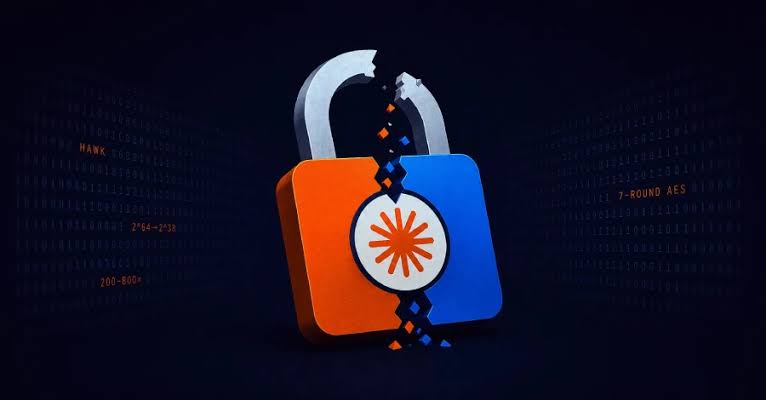
On July 28, 2026, Anthropic disclosed two cryptanalysis results from Claude Mythos Preview. One targeted HAWK.
HAWK is a lattice-based digital signature scheme. Researchers at CWI Amsterdam, Leiden University, and other institutions developed it. It had reached the third round of NIST’s post-quantum standardization process. It had already survived two years of expert review and two rounds of evaluation.
Article Intelligence
Related Coverage
 Artificial IntelligenceGoogle Quantum AI & DeepMind Demonstrate Modular Hyperbolic Codes for Over 30x QEC Overhead Reductionil y a 4 heures · 1 min read
 QuantumORCA Launches PT-3 Photonic Quantum Computer for AI and Optimizationil y a 14 heures · 3 min read
Sponsored
Ad
NewsLayerLearn more
NewsLayer Premium
Unlock deeper intelligence.
Ad-free reading, exclusive research, and real-time onchain insights.
Go Premium