
Biggest stablecoin Tether (USDT) has shed $4 billion in market cap in just two months, but history suggests that the downturn is nearly over.
Bitcoin sell pressure ‘closer to exhaustion’ after $4B USDT market-cap drop: CryptoQuant
Bitcoin analysis suggested that sell pressure would not increase given the historically large contraction in USDT market cap over a 60-day period.
Cointelegraph by William Suberg
Publisher Cointelegraph
Aug 11, 2026 at 10:55 AM UTC · 2 min read

Key Signal
$4B USDT market-cap drop
Entities
bitcoin, tether
Market Impact
BTC+0.86%$84,345
Last Updated
a month ago
Key points:
- Tether’s 60-day rolling market-cap contraction stays near $4 billion in one of its heaviest drawdowns.
- Analysis suggests that the worst of bear-market selling pressure could be over as a result.
- Comparison to 2022 bear-market highlights an ongoing RSI divergence.
USDT drawdown puts “acceleration” of Bitcoin selling in doubt
Onchain analytics platform CryptoQuant in a blog post last week flagged market cap “undergoing one of its sharpest contractions on record.”
“The deterioration has also accelerated at the margin: nearly $870 million of USDT supply disappeared over the latest 11-day period, showing that the contraction is not merely a legacy effect from earlier redemptions,” analysts wrote.
CryptoQuant data puts the 30-day simple moving average (SMA) of 60-day USDT market-cap change at minus $4.88 billion as of Aug. 10.
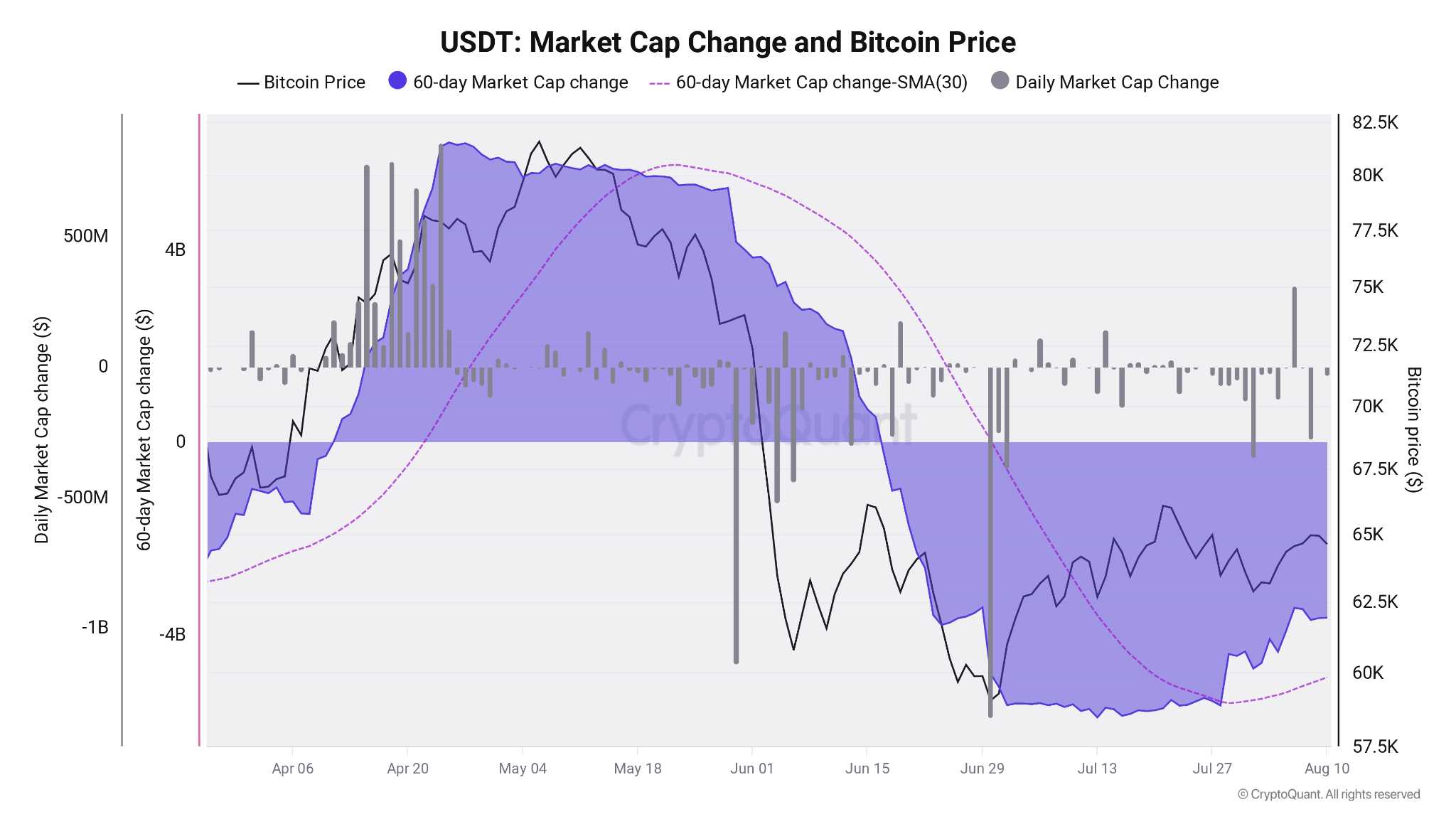
USDT 60-day market-cap change vs. BTC/USD. Source: CryptoQuant
The extent of the drawdown echoes crypto bear markets and rivals the largest ever seen. Its severity has implications for Bitcoin and the broader market recovery. Stablecoins provide a key source of liquidity, and when this evaporates, less capital or “dry powder” is available for deployment, showing a lack of interest among investors in stepping in at a given price.
Market Context
Bitcoin
BTC
$84,329
+0.85% (24H)
Market Cap
$1.69T
24H Volume
$27.2B
24H High
$84,915
Article Intelligence
Related Coverage
 CryptoWhy Is Tether Bringing USDT Back to Bitcoin Now? Morgan Stanley Offers a Clue2 hours ago · 1 min read
 MarketsBitcoin's bear market ends with a 55% drop, aided by ETFs and institutional buying, signaling a new bull phase.2 hours ago · 1 min read
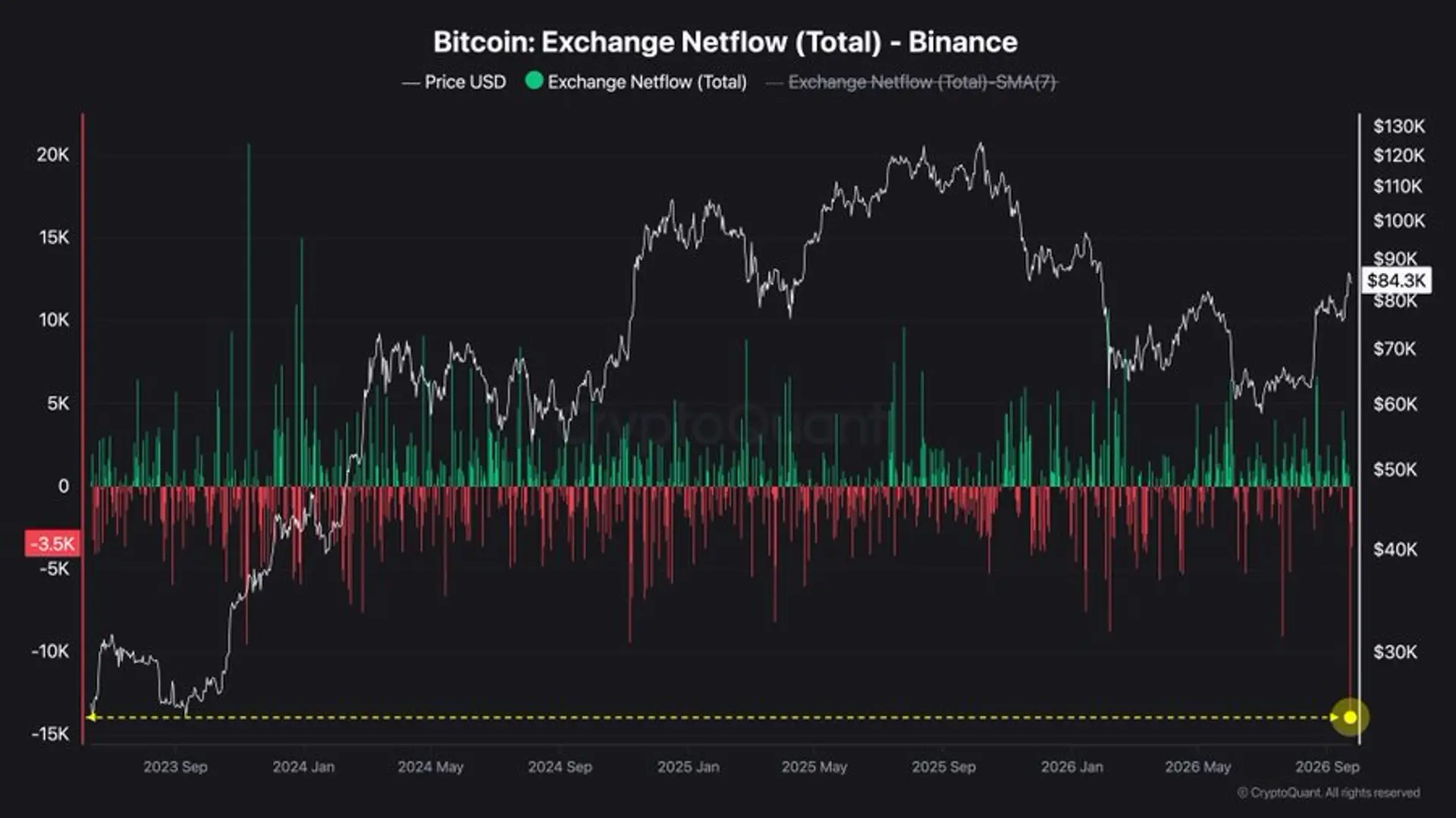 Crypto[Analysis] Binance Records 13,800 Bitcoin Net Outflow, Largest Since 20232 hours ago · 1 min read
Sponsored
Ad
NewsLayerLearn more
NewsLayer Premium
Unlock deeper intelligence.
Ad-free reading, exclusive research, and real-time onchain insights.
Go Premium