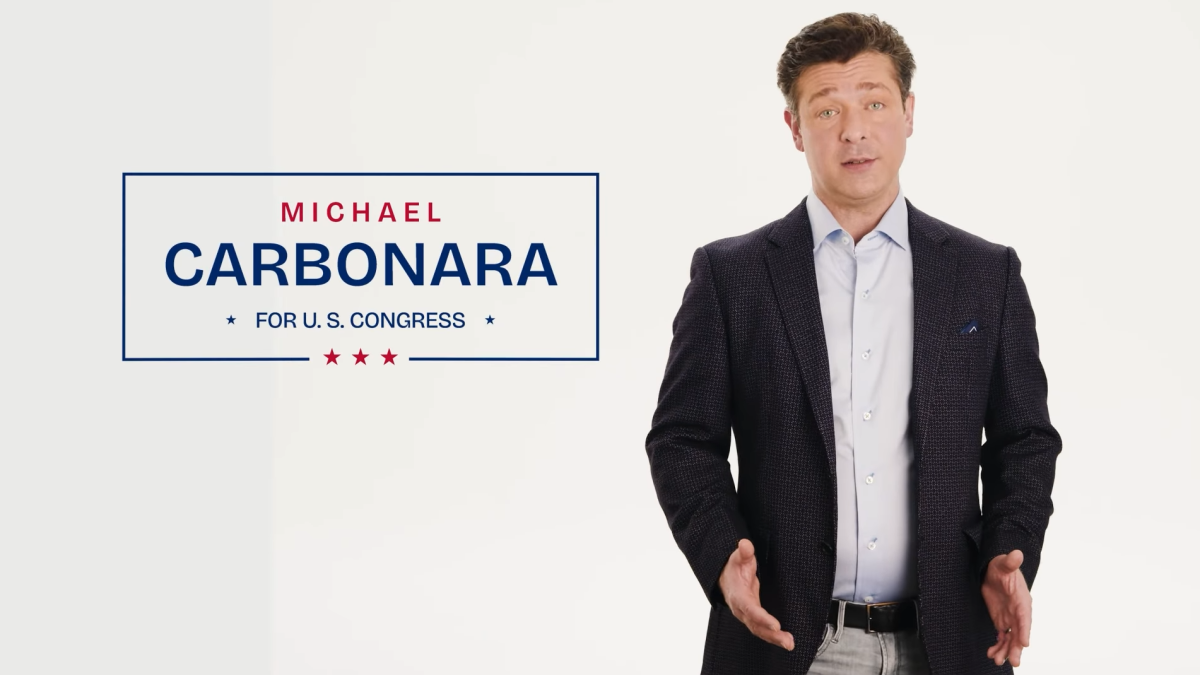
That article reported on comments Carbonara made at a campaign forum for his congressional race. He alluded to having built a bitcoin mine. While Carbonara did not specifically mention the mine located in Dafter Township, he said he built a “bitcoin mining operation.”
He alluded to working with a “nonprofit cooperative electrical company,” which helped save power costs for the community. The Dafter mine’s power is provided by Cloverland Electric, a non-profit co-op in Chippewa County.
Locals in Dafter Township have not had any known contact with Carbonara amid growing frustration with the noise coming from the mine that's lasted for months. His connection to the mine and Odessa LLC (which owns the land the mine is on) are made clear through official documents like the mine permit.
Davenport Enterprises said, in the infringement claim against WCMU, that they “made good faith attempts to contact the responsible party directly to resolve this issue, but no corrective steps have been taken.” WCMU’s leadership team says it received no communication from Davenport Enterprises prior to this claim.
Davenport Enterprises alleged the article was plagiarized from the Tallahassee Democrat. There is no link between Davenport and the publication, which is owned by USA Today.
In response to the claim, WCMU filed an appeal via the law firm Trister, Ross, Schadler & Gold, PLLC. Lawyer Karen Post is a partner with the firm. She said it isn’t clear who owns and operates Davenport Enterprises.
“I couldn't find anything,” Post said. “I couldn't find these entities. I couldn't find any content that seemed related that allegedly WCMU would have copied from. The whole thing just seemed very suspicious.”
WCMU’s article was restored following Post’s appeal to Google. On Aug. 4, Google said, in a reply to the appeal, “we have determined that the original notice is invalid.”
As of Tuesday, the article still appears in Google’s search results.
On Aug. 5, a second copyright claim was filed against WCMU by Foster Enterprises. The wording of the claim is identical to the original infringement claim made by Davenport Enterprises.
Post said it’s likely that Google reviewed the new claim, rejected it as bogus after briefly processing it. “I suspect that they (Google) quickly undid whatever it is that they had done that morning,” she said.
Section 512 The Digital Millennium Copyright Act (DMCA) provides a framework for online service providers to avoid liability for violations of IP law. Notices can be filed to providers who must then remove certain content.
Providers then notify the uploaders of the content, who can then file a counter-notice. The provider has 10-14 days to restore the content, unless the original IP holder files a lawsuit.
In a statement, a Google spokesperson said, “Our DMCA process is designed to efficiently assist rightsholders while vigorously protecting free expression and combating fraudulent takedowns.”
They added that webmasters are allowed to appeal and “we have reviewed the requests in question and taken appropriate action.”
Florida-based outlets hit with false claims during voting season
Early voting in Florida began on Aug. 8. Carbonara is one of seven Republicans running in the 22nd Congressional District, which includes the city of Palm Beach. Early voting in Hendry County, which is also in the district, opened on Aug. 3.
The ties between Carbonara and the Dafter Township bitcoin mine have come under new scrutiny as anti-data center sentiment sweeps the south Florida district he hopes to represent in Congress.
A controversial proposed data center in Palm Beach, Project Tango, was put on pause following public outcry. The 202-acre site has been faced pushback over noise pollution and potential ecological damage.
“I came out very vocally to say no to Project Tango,” Carbonara said at a campaign forum held by The Floridian, a local news outlet.
Over the last two months, articles connecting Carbonara to the mine have been hit with similar takedown notices WCMU has received.
Multiple Florida-based outlets also had Carbonara-related stories pulled from Google’s search results. WLRN (NPR’s member station for South Florida) and Florida Politics were hit with bogus claims by similarly unknown companies, according to the Lumen database (which categorizes copyright takedown notices) and the outlets themselves.
On July 17, a WLRN article was hit with a copyright infringement claim from Reynolds Media Group, who said the article was plagiarized from the Times of India. The article was temporarily pulled from Google’s search results.
On Aug. 1, Pendrick Enterprises of the UK filed a claim that Florida Politics plagiarized the original WLRN article. WLRN denied that claim in its own article about the takedowns. WLRN's articles have since been restored to Google search results.
The wording of the Pendrick complaint and the complaint levied at WCMU are identical, along with a separate complaint filed on Aug. 4 against Florida Politics by Palker Enterprises of the UK.
Both articles are currently available on Google’s search results.
A separate article from the Sun Sentinel received an identical takedown notice to the ones levied at WCMU and Florida Politics. A fourth Florida outlet, The Floridian, says it also was hit with a bogus claim.
Early polling suggests Carbonara is one of the front-runners. A poll from Victory Insights last week placed him behind two points of his opponents, with almost 41% of voters undecided.
“It's a vital, vital service the press provides to the country.”
Carbonara’s campaign did not respond to a request for comment and there is no known link between his campaign and the slew of companies involved in the claims.
On Tuesday, he was endorsed by the influential conservative Club for Growth Action Super PAC. According to The Hill, the group is spending $700,000 on an ad buy for Carbonara.
The seat was one of many redrawn in Florida’s early redistricting effort to be more favorable to Republicans.
McGraw, with the Michigan Press Association, said its especially important for information about candidates to be available during an election. “It's a vital, vital service the press provides to the country as a whole,” she said.
The lawsuit between Lake Superior Academy and the operators of the mine is still ongoing. According to the school, the next court date is Sept. 21.