
Buying charter with crypto ‘no longer a novelty’, says Swapin’s Ivar Jaanus
“The biggest challenge is still market education and helping businesses understand what accepting crypto actually looks like in practice," says Jaanus.
The days of buying pizza with Bitcoin are long gone. Although the regret of those who did is probably still quite fresh.
In recent years, cryptocurrency, in particular stablecoins which are tied to fiat currency, has begun to mature from a speculative asset into a financial tool, especially in luxury markets like real estate, superyachting and private aviation. For a growing demographic of digitally native clientele, stablecoins provide the price stability and transaction simplicity needed for large transactions.
To explore how cryptocurrency payments are impacting the way charters, and sometimes whole aircraft purchases, are paid for, CJI sat down with Ivar Jaanus, head of business development at Estonia-based crypto payment processor Swapin. After initially targeting other markets, the company has seen its business grow significantly in the private aviation sector since 2022.
From adoption trends and application programming interface (API) integrations to the challenges of market education and the importance of personal service, Jaanus takes through where he sees crypto payments fitting into the space, and where they’re headed next.

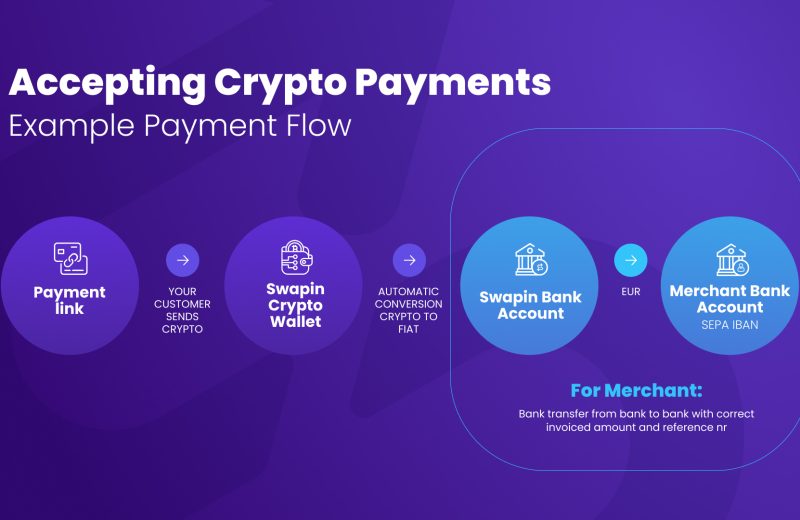
Payment links are usually the easiest place for businesses to start because they can begin accepting crypto almost immediately, says Jaanus.
What specific trends are you seeing in crypto adoption within private aviation, and how do you plan to expand your market reach over the next two-three years?
Jaanus: “We’re seeing crypto move from being a novelty to becoming another payment option clients expect to have. A few years ago, requests were mostly coming from crypto-native customers. Today, we’re also seeing entrepreneurs, investors and international clients who simply hold part of their wealth in stablecoins and want to spend it without unnecessary steps.
Private aviation is a natural fit because transactions are often international, time-sensitive and high value. If someone wants to book a flight at short notice, waiting for international bank transfers isn’t ideal.
“Over the next few years, our focus isn’t on convincing the market that crypto is coming. We’re expanding through partnerships with operators, brokers and booking platforms that want to offer another payment method without changing how they receive funds. For them, crypto should feel like another payment rail rather than a separate business.
“We’re also starting to see the network effect take hold. The private aviation industry is surprisingly well connected, and word travels fast when something works. More and more of our conversations now come through introductions and recommendations from existing clients, which is probably the strongest validation we can ask for because these businesses tend to trust referrals from people they already know.”
What key success or ROI metrics do you typically track with your aviation partners, and how has client feedback shaped your service?
“The first metric is adoption. Are customers actually choosing crypto when it’s available? If they are, it usually means there was demand that wasn’t being served before.
“We also look at repeat customers and, of course, settlement speed, because that’s one of the main reasons clients choose to pay with crypto in the first place. In private aviation, where bookings can be made at very short notice, being able to complete a payment quickly really matters.
“Client feedback has shaped our product in very practical ways. Simplicity has always been one of our main priorities because businesses don’t want another system that creates extra admin or operational work. Brokers and charter operators are focused on delivering a premium service, so the payment process has to fit naturally into what they’re already doing rather than adding another layer of complexity.
“Most of the improvements we’ve made have come directly from conversations with clients and solving real-world problems they’ve encountered. That’s how we’ve approached product development from the beginning, and it’s still how we prioritise new features today.”