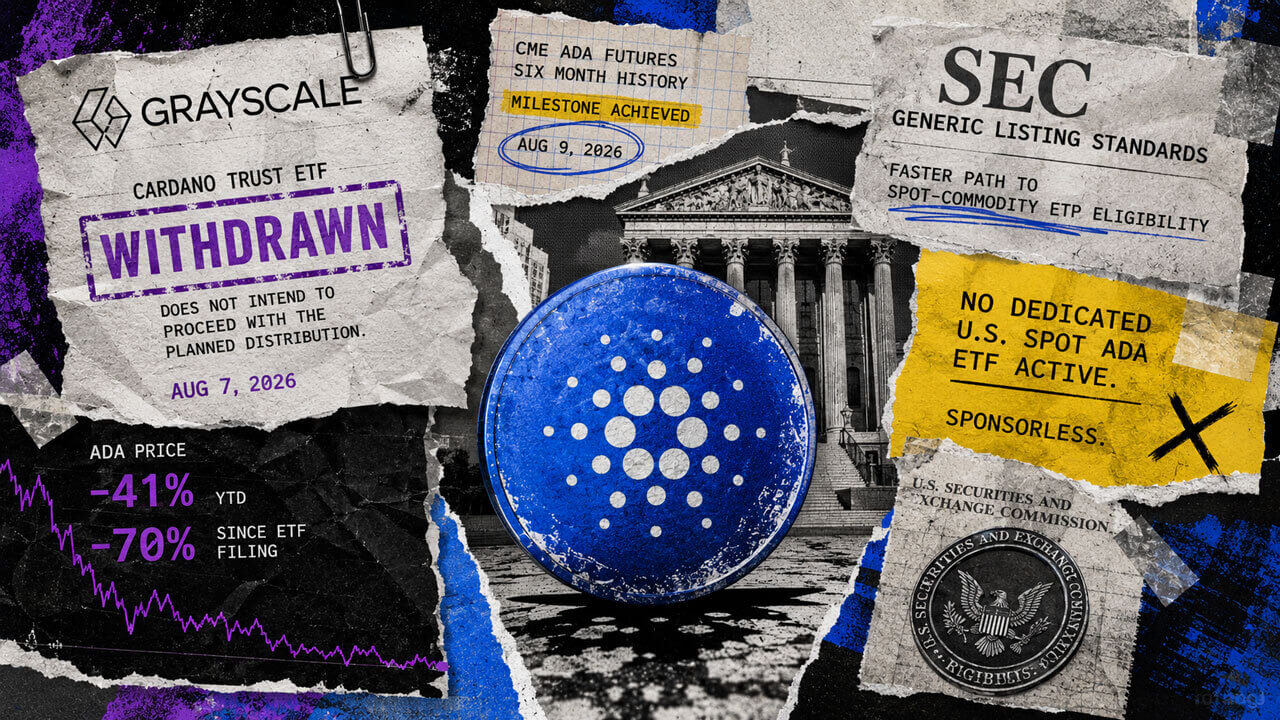
On August 9, 2026, Cardano’s ADA futures on the Chicago Mercantile Exchange (CME) complete six months of regulated trading. That matters because the SEC uses this milestone as a prerequisite for streamlined review of spot cryptocurrency ETF applications. Without it, the path to a spot ADA ETF stays closed. With it, the door opens — but opening a door isn’t the same as walking through it. Six firms have filed to launch spot Cardano ETFs. The timeline from here is more specific — and more cautious — than most coverage suggests.
Why the 6-Month Mark Matters
The SEC’s framework for evaluating spot crypto ETFs relies on a regulated market of significant size standard. In practice, this has meant that the underlying asset needs at least six months of futures trading on a regulated exchange like the CME. Bitcoin met this threshold years before its spot ETF approvals in January 2024. Ethereum followed a similar path.
Cardano’s CME ADA futures launched on February 9, 2026, with contracts covering 10,000 ADA and 100,000 ADA denominations. The exchange recently enabled 24-hour trading for these contracts, increasing liquidity and trading volume — both factors the SEC considers when evaluating whether a futures market is significant.

From our perspective, the six-month mark is necessary but not sufficient. Bitcoin’s spot ETF took years of legal battles after its futures launched. Ethereum’s ETF approvals came faster, partly because the regulatory precedent was already set. Cardano’s path sits somewhere in between — the precedent exists, but the SEC has never approved a spot ETF for an asset outside the top two by market cap.
The Actual Decision Timeline
Here’s where coverage often goes fuzzy. The Grayscale Cardano Trust ETF is the furthest along in the application process. If Grayscale or NYSE Arca activates its filing on August 9, the SEC has a maximum 75-day review window under its streamlined framework. That puts a final decision deadline at approximately October 23, 2026.
But streamlined doesn’t mean automatic. The SEC can approve, deny, or extend the review within that window. An extension pushes the decision into early 2027. A denial sends the application back for revisions and resubmission.
We’ve noticed a pattern in crypto ETF coverage that consistently conflates eligibility with inevitability. When Bitcoin futures ETFs hit their milestones, approval took additional months. When Ethereum’s spot ETF applications were filed, the SEC delayed multiple times before approving in mid-2024. Cardano’s timeline will likely involve at least one round of back-and-forth.
Futures ETFs Already Exist — Spot Is the Prize
It’s worth noting that Cardano already has two futures-based ETFs trading in US markets. Volatility Shares listed CRDD and CRDX in April 2026. CRDD tracks ADA’s return primarily through CME futures contracts, while CRDX is a leveraged fund targeting twice ADA’s daily price movement.

A spot ETF is different. Instead of tracking futures contracts, a spot ETF holds actual ADA tokens. This matters for two reasons. First, spot ETFs eliminate the roll cost problem — the expense of continually rolling futures contracts forward as they expire. Second, spot ETFs create direct buying pressure on the underlying asset. When investors buy shares of a Bitcoin spot ETF, the fund purchases actual Bitcoin. The same mechanism would apply to ADA.
The impact of spot ETF approvals on price is well-documented. Bitcoin’s price rose approximately 50% in the months surrounding its spot ETF launch in January 2024. Ethereum saw a smaller but measurable effect. Whether Cardano would see comparable flows depends on institutional demand for ADA specifically — and that’s less certain.
Where ADA Stands Right Now
ADA trades at roughly $0.20 with a market cap around $7.34 billion, making it the eighth-largest cryptocurrency by market capitalization. The token is up about 35% in the past month, partly driven by ETF speculation.