This website uses cookies
We use cookies to personalise content and ads, to provide social media features and to analyse our traffic. We also share information about your use of our site with our social media, advertising and analytics partners who may combine it with other information that you’ve provided to them or that they’ve collected from your use of their services.
Consent Selection
Details
  • Necessary cookies help make a website usable by enabling basic functions like page navigation and access to secure areas of the website. The website cannot function properly without these cookies.
  • Preference cookies enable a website to remember information that changes the way the website behaves or looks, like your preferred language or the region that you are in.
    • We do not use cookies of this type.

  • Statistic cookies help website owners to understand how visitors interact with websites by collecting and reporting information anonymously.
    • We do not use cookies of this type.

  • Marketing cookies are used to track visitors across websites. The intention is to display ads that are relevant and engaging for the individual user and thereby more valuable for publishers and third party advertisers.
    • We do not use cookies of this type.

  • Unclassified cookies are cookies that we are in the process of classifying, together with the providers of individual cookies.
    • __emg_sidPending
      Maximum Storage Duration: 1 dayType: HTTP Cookie
      __emg_vidPending
      Maximum Storage Duration: 1 yearType: HTTP Cookie
      nl-read-countPending
      Maximum Storage Duration: PersistentType: HTML Local Storage
Cookie declaration last updated on 8/12/26 by Cookiebot
[#IABV2_TITLE#]
[#IABV2_BODY_INTRO#]
[#IABV2_BODY_LEGITIMATE_INTEREST_INTRO#]
[#IABV2_BODY_PREFERENCE_INTRO#]
[#IABV2_BODY_PURPOSES_INTRO#]
[#IABV2_BODY_PURPOSES#]
[#IABV2_BODY_FEATURES_INTRO#]
[#IABV2_BODY_FEATURES#]
[#IABV2_BODY_PARTNERS_INTRO#]
[#IABV2_BODY_PARTNERS#]
About
Cookies are small text files that can be used by websites to make a user's experience more efficient.

The law states that we can store cookies on your device if they are strictly necessary for the operation of this site. For all other types of cookies we need your permission.

This site uses different types of cookies. Some cookies are placed by third party services that appear on our pages.

You can at any time change or withdraw your consent from the Cookie Declaration on our website.

Learn more about who we are, how you can contact us and how we process personal data in our Privacy Policy.

Please state your consent ID and date when you contact us regarding your consent.

Enjoying NewsLayer?

Get breaking crypto stories the second they drop — join our Telegram channel.

NewsLayer.com
NewsLayer PulseLIVEBTC$63,000+0.03%ETH$1,881+0.05%SOL$75.45+0.17%XRP$0.9999+0.13%DOGE$0.0698-0.31%ADA$0.1773-1.55%Total Cap$2.27T+0.26%Layer Index47 Neutral
BreakingExternal Reporting公開 4時間前

CRYPTO 2026 Opens Today: AI Systems Are Now Both Tool and Target of Math Attacks

The internet's newest cryptographic foundations — deployed globally just one year ago and baked into every modern browser, messaging app, and VPN — will face their first concentrated academic scrutiny starting Monday, when CRYPTO 2026,…

CRYPTO 2026 Opens Today: AI Systems Are Now Both Tool and Target of Math Attacks
Publisher Tech Times 15 分で読める
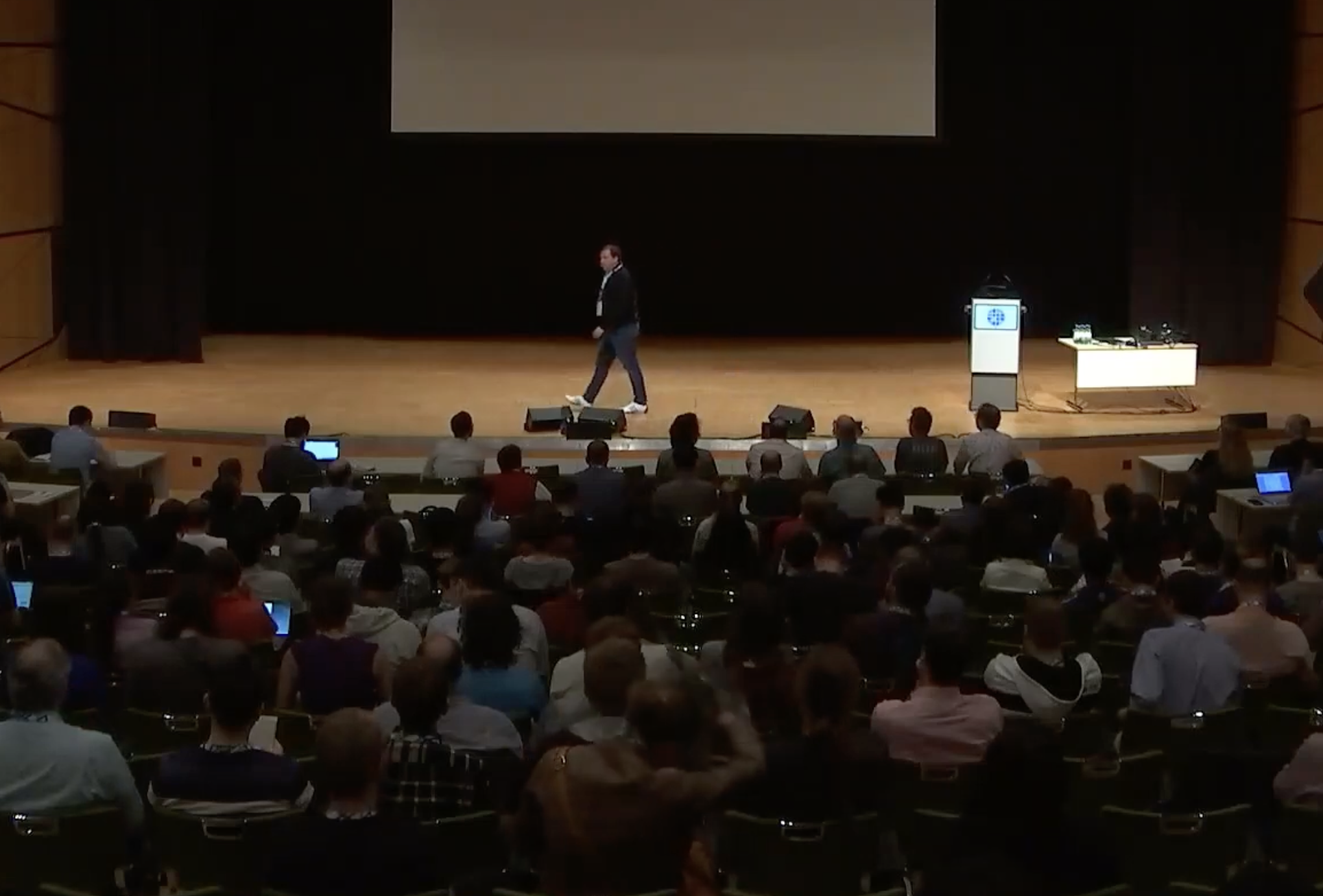
Image via Tech Times

Layer Index

47

↑ 8 pts in 24h

The internet's newest cryptographic foundations — deployed globally just one year ago and baked into every modern browser, messaging app, and VPN — will face their first concentrated academic scrutiny starting Monday, when CRYPTO 2026, the world's foremost cryptology research conference, opens its main program at the University of California, Santa Barbara. The 46th edition of the International Association for Cryptologic Research's flagship gathering arrives at an inflection point: it is the first CRYPTO held after the National Institute of Standards and Technology finalized its post-quantum cryptography standards in August 2024, which means the lattice mathematics underlying those standards — now running on billions of devices — will be interrogated this week by the researchers best positioned to find problems with them.

Five co-located affiliated workshops are scheduled to begin this morning at UCSB, including the Information-Theoretic Cryptography conference, the Workshop on Attacks in Cryptography (WAC8), and sessions on privacy-preserving machine learning — a signal of how much the field's practical horizon has expanded. The affiliated weekend events and main program, featuring 189 full papers selected from 781 submissions, is scheduled to begin Monday and run through Thursday, August 20.

The 189 accepted papers appear across ten Springer LNCS volumes — a record in the conference's 46-year history. CRYPTO 2025 accepted 156 papers from 643 submissions across eight volumes; the jump to ten volumes reflects the combined pressure of post-quantum standardization, zero-knowledge proof systems reaching production deployment, and a brand-new sub-field: neural network cryptanalysis.

Why This Conference Is Different in 2026

For most of its 46-year history, CRYPTO's lattice cryptanalysis papers were attacking hardness problems that governed theoretical constructions. That changed in August 2024 when NIST published FIPS 203 (ML-KEM, based on CRYSTALS-Kyber), FIPS 204 (ML-DSA, based on CRYSTALS-Dilithium), and FIPS 205 (SLH-DSA, based on SPHINCS+) as binding federal standards. Those standards are now the default cryptographic layer in modern TLS deployments, government networks, and major enterprise security infrastructure. When a paper at this year's conference finds a better lattice sieving algorithm or quantifies a gap between the module-LWE and standard-LWE security assumptions, the finding is no longer theoretical. It bears on infrastructure already deployed.

Volume III of this year's Springer proceedings contains nine cryptanalysis papers targeting precisely those mathematical foundations. A paper by Engelberts, Chen, Gilani, van Hoof, Jeffery, and de Wolf is scheduled to present an improved quantum algorithm for 3-tuple lattice sieving — advancing the understanding of quantum speedups for the core problem underlying the security of both NTRU and LWE-based schemes. A companion paper by Hou, Jiang, and Ogilvie titled "Careful with the Ring! Concrete Hardness Gaps Between LWE and MLWE" will quantify the security gap between standard LWE and the module variant used in ML-KEM. For engineers who chose key sizes based on NIST's published security levels, these results matter.

Three papers in the same volume target deployed signature schemes. "Halfspace Learning for Lattice Signature Key Recovery from Signs" (Brinkmann, Kraus, May) introduces a cryptanalytic technique with direct implications for lattice-based signature implementations — including Falcon, which NIST standardized as FN-DSA.

What Is AI Now Doing in a Mathematics Conference?

The most consequential editorial development in this year's program may be a track that did not exist last year: dedicated sessions on neural network cryptanalysis and machine learning, visible in the full conference program.

This is not about using neural networks as attack tools against cryptographic algorithms — a research thread that dates to Gohr's 2019 CRYPTO paper demonstrating improved neural distinguishers for the SPECK32/64 block cipher. The new track goes further: it applies formal cryptanalytic methods to neural network architectures themselves, treating a trained model as a mathematical object with exploitable internal structure.

Two papers in Volume VII of the proceedings represent this shift directly. "Algebraic Attack on Convolutional Neural Networks with Max Pooling" (Chen et al.) applies algebraic attack methodology — the kind developed for block ciphers — to convolutional neural network architectures. "Cryptanalytic Extraction of Deep Neural Networks with Non-linear Activations" (Asselineau, Derbez, Fouque, Minaud) formalizes model extraction as a cryptanalytic problem, treating the neural network's weights as secret keys and developing techniques to recover them from the network's input-output behavior.

The third paper in the track is perhaps the most commercially significant. "Unforgeable Watermarks for Language Models via Robust Signatures" (Lin, Shahabi, Song) applies formal cryptographic signature theory to the AI safety problem of language model provenance — asking whether a watermark embedded in a large language model's outputs can be made cryptographically robust against removal.

For security teams responsible for proprietary AI models, this track's findings are directly actionable. Cryptanalytic model extraction attacks represent an intellectual property threat that previously had no formal threat framework. CRYPTO 2026 is providing one.

How the Encryption That Runs Blockchains Got Into an Academic Math Conference

If neural network cryptanalysis is the surprising newcomer this year, zero-knowledge proof systems are the track whose growth has become impossible to ignore. Volume IX of the proceedings — 20 papers, all on zero-knowledge proofs and succinct proof systems — is the largest single-subject block in the conference and reflects how thoroughly ZK technology has migrated from academic curiosity to production infrastructure.

Zero-knowledge proofs, first conceived in a 1985 paper by Shafi Goldwasser, Silvio Micali, and Charles Rackoff, allow one party to prove a statement is true without revealing any information beyond that truth. They satisfied three properties that made them theoretically attractive: completeness (an honest prover convinces an honest verifier), soundness (a dishonest prover cannot fabricate a passing proof), and zero-knowledgeness (the verifier learns nothing except the truth of the statement). For decades, the computational cost of generating proofs made them impractical outside narrow applications.

That changed with zkSNARKs (Succinct Non-Interactive Arguments of Knowledge), where "succinct" means the proof remains small and fast to verify regardless of the underlying computation's complexity. The production Groth16 algorithm (2016) reduced proof generation costs to the point where Zcash could deploy them at scale. Layer-2 blockchain scaling systems (zk-rollups) now bundle thousands of transactions into a single on-chain proof, reducing the transaction cost on Ethereum by an order of magnitude. Those systems are running in production today, handling billions of dollars in value.

The consequence for CRYPTO is that soundness bugs found at this conference are no longer academic findings about theoretical constructions. They are vulnerabilities in deployed financial infrastructure. A 2024 systematic review found that approximately 96% of documented circuit-layer bugs in SNARK-based proof systems trace to under-constrained circuits. At CRYPTO 2026, "Sumcheck-Based zkSNARKs are Non-malleable" (Faonio, Russo) provides an important formal security guarantee for a large class of practical SNARKs deployed in production; "Incrementally Verifiable Computation Without Extraction" (Jain, Mathialagan, Waters) advances the theory of recursive proof composition, which is the mechanism behind zk-rollup aggregation.

On the engineering side, papers by researchers from Google (Gurkan, Novakovic, Rothblum), Microsoft Research (Kothapalli, Setty), and multiple academic institutions are presenting improvements to the proof system performance that will flow directly into deployed systems.

Fully Homomorphic Encryption: Computation on Encrypted Data Edges Closer to Practical

Fully homomorphic encryption (FHE) — the ability to perform arbitrary computation on encrypted data without ever decrypting it — has been the "someday technology" of cryptography since Craig Gentry's 2009 breakthrough construction. The technical barrier has always been bootstrapping: the operation that refreshes accumulated computational noise in a ciphertext, which is necessary to enable unlimited depth computation but historically added tens of milliseconds of overhead per operation on CPU hardware.

That latency picture has changed. GPU acceleration — particularly on NVIDIA H100-class hardware — has reduced TFHE bootstrapping from tens of milliseconds to under a millisecond per operation. Apple ships FHE at consumer scale. Zama, an FHE company, became the field's first unicorn with a valuation above $1 billion following a Series B in June 2025. The practical deployment question has shifted from "can we make FHE fast enough?" to "which workloads can FHE now serve, and what engineering tradeoffs does each require?"

Volume II of this year's proceedings contains eight papers on homomorphic encryption, including two from Craig Gentry and his collaborators on FHE specifically designed for matrix arithmetic — the dominant operation in transformer neural networks. "Fully Homomorphic Encryption for Matrix Arithmetic" and its companion paper on efficient bootstrapping for that setting together target the workload that would make privacy-preserving AI inference genuinely practical: being able to run an encrypted query through an AI model without the model operator ever seeing the query's contents. For medical records, legal documents, and financial data, that capability has direct real-world value.

The threshold FHE paper by Kim, Lee, Lee, Passelègue, and Stehlé, "Asynchronous Lagrange-Based Threshold FHE with Smaller Modulus Overhead," attacks the overhead problem in distributed settings where multiple parties need to jointly compute on encrypted data — a requirement for privacy-preserving multi-party machine learning.

A Real Hack Gets Its First Rigorous Cryptographic Analysis

Among all 189 papers at CRYPTO 2026, one stands apart for combining formal mathematical analysis with an operation that produced more than 6,000 arrests across Europe: the 2020 Encrochat law enforcement hack.

Encrochat was an end-to-end encrypted communications platform sold on modified Android phones with the GPS, camera, microphone, and USB ports physically removed. The company sold the phones for roughly €1,000 to €1,500 (approximately $1,157 to $1,736 USD at the EUR/USD mid-market rate of approximately $1.157 as of August 15, 2026; conversions are approximate) for a six-month subscription. The platform was widely used by organized crime networks across Europe.

In early 2020, French and Dutch law enforcement deployed malware to Encrochat devices that exfiltrated historical messages and captured real-time communications over months, before the company became aware of the compromise. The data produced prosecutions in the UK, Netherlands, France, Belgium, and elsewhere, with courts wrestling over evidence admissibility under competing national laws.

"A Real-World Law-Enforcement Hack: The Case of Encrochat," authored by Martin R. Albrecht (King's College London), Sunoo Park, Michael A. Specter (Georgia Institute of Technology), and Douglas Stebila, is scheduled for presentation in Volume X and represents the most detailed public cryptographic account of what happened — how Encrochat's infrastructure was built, what the law enforcement "technical tool" actually did, and what formal adversarial model the operation corresponds to. The authors identify the hack with the model of a "covert adversary" — a concept between semi-honest and fully malicious, introduced at TCC 2007 — which has implications for how encrypted communications systems should be designed to resist state-level interference.

For encrypted messaging applications, device security firms, and legal practitioners working on digital evidence, this paper is not academic background material. It is a technical autopsy of the operation that set the terms for encrypted communications law in Europe.

Side-Channel Attacks and the Gap Between Proofs and Hardware

Volume VII contains what may be the most practically alarming single paper in the proceedings. "Robust Single-Trace Full-Key Extraction from Million-Point Traces With Cross-Implementation Transfer" (Gohr, Laus, Leander) demonstrates a deep-learning-based side-channel technique capable of recovering a full cryptographic key from a single power trace measurement — and then transferring that attack capability across different hardware implementations of the same algorithm.

Side-channel attacks exploit information leaked by a physical cryptographic implementation — timing, power consumption, electromagnetic emissions — rather than mathematical weaknesses in the algorithm. They are the primary practical attack vector against hardware security modules, smart cards, and embedded PQC implementations. The NIST post-quantum standardization process explicitly required side-channel resistance, but proving and achieving that resistance in real silicon involves engineering challenges that formal proofs cannot resolve alone.

"A Formal Security Proof of Masking" (Ueno et al.), in the same volume, provides what the authors claim is the first complete formal proof for a widely used hardware countermeasure — a result that matters precisely because masking's informal justifications have left the gap between proof and practice open for years. "Bypassing the Random-Probing Model in Masking Security Proofs" (Béguinot, Brian, Masure) identifies a structural gap between the standard formal model used for masking proofs and physical reality — meaning prior proofs may not protect real hardware as thoroughly as claimed.

What Else Is Coming Monday Through Thursday

The program spans ten volumes and covers ground well beyond the four areas above.

Multi-Party Computation (Volume VIII): Twelve papers address the full spectrum of MPC protocols, from information-theoretic two-party computation to asynchronous distributed settings. "Round-Optimal Black-Box MPC in the Plain Model from Minimal Assumptions" (Hajiabadi, Medepalli, Srinivasan) makes progress on a long-open question about the minimum interaction required for secure computation. "Just-in-Time-OPRFs and a Modular Framework for Fast Private Set Intersection" (Bellare, Ranjan, Riepel) targets private set intersection, a primitive with direct applications in contact tracing, fraud detection, and privacy-preserving data analysis.

Quantum Cryptography (Volume V): Fourteen papers address cryptography for and against quantum adversaries. "Anonymous Public-Key Quantum Money and Universally Verifiable Quantum Voting" (Çakan, Goyal, Yamakawa) constructs quantum monetary systems with strong anonymity guarantees. Two papers on certified deletion — the quantum ability to prove that data has been cryptographically erased — address a privacy property with growing regulatory relevance as data retention laws tighten.

Symmetric Cryptography (Volume VI): "A Robust Variant of ChaCha20-Poly1305" (Beyne, Chen, Verbauwhede) proposes a strengthened authenticated encryption standard used in nearly every HTTPS connection. If its security arguments hold, the paper may influence the next revision of RFC 8439.

Encrypted Messaging (Volume X): "Lattice-Based Updatable KEM for Group Messaging" (Alwen, Fuchsbauer, Mularczyk, Riepel) post-quantizes the TreeKEM ratcheting mechanism used in the MLS (Messaging Layer Security) protocol — the standard that WhatsApp, Microsoft Teams, and other applications are adopting for group end-to-end encryption.

Threshold Signatures (Volume II): With decentralized finance infrastructure increasingly relying on threshold signature schemes for custody, papers including "On the Adaptive Security of Key-Unique Threshold Signatures" (Ciampi, Crites, Komlo, Maller) close security gaps in FROST-style threshold signatures — the scheme used by multiple blockchain networks and hardware wallet implementations.

Who Is Running This Year's Conference

Program co-chairs Nadia Heninger (University of California, San Diego) and Mike Rosulek (Oregon State University) managed the review of 781 submissions, accepting 189. General Chair Mayank Varia (Boston University) is overseeing logistics.

Heninger is herself one of the most consequential applied cryptanalysts working today. Her 2012 paper "Mining Your Ps and Qs," co-authored with several colleagues, found weak RSA keys across deployed servers — a measurable fraction of keys — not because of flaws in RSA itself, but because of insufficient randomness during key generation in embedded devices. The finding led to emergency rekeying by device manufacturers and permanently changed how cryptographic key generation in constrained environments is implemented and audited. In 2026, the IACR named her a Fellow — its highest individual honor.

The Workshop on Attacks in Cryptography WAC8, running today at UCSB, is a conference she founded specifically to give cryptographic attacks on deployed systems — work often published in security engineering venues rather than theory conferences — a home at CRYPTO.

How This Conference Compares to Prior Years

CRYPTO 2025 accepted 156 papers from 643 submissions across eight Springer LNCS volumes. CRYPTO 2026 accepted 189 papers from 781 submissions across ten volumes — a 21% increase in submissions, a 21% increase in accepted papers, and a 25% increase in volume count. The ten-volume format is a record in the conference's 46-year history.

The growth is not merely arithmetic. The combination of post-quantum standardization creating urgent stress-test demand, zero-knowledge proof systems achieving industrial deployment, and the formal opening of neural network cryptanalysis as a recognized sub-field has produced what is, by any editorial measure, the most substantively significant CRYPTO agenda in recent memory. The largest prior volume counts were eight (2025 and certain prior years); reaching ten simultaneously with the neural network track debut is an editorial marker that the field's scope is genuinely expanding, not just the same work growing in volume.

Practical Notes for Attendees

On-site registration is available at the Corwin Pavilion Lobby for in-person attendees who missed the online registration window. On-campus housing at Manzanita Village can be arranged at the De Anza Resource Center Building's 24-hour front desk. Long-time attendees should note that the dining location has changed this year to Carrillo Dining Commons. Hotels are not within walking distance of campus; per the official UCSB campus travel page, the university no longer provides airport shuttle service.

The Rump Session — CRYPTO's informal tradition of short, often humorous talks on preliminary results and community news — is scheduled for Monday evening, August 17, with a submission deadline of 22:00 PDT that same night. Talks will be recorded and posted to the IACR YouTube channel following the conference.

Virtual attendance is available for those unable to attend in person; virtual attendees should contact General Chair Mayank Varia directly via the conference contact page.

Currency conversions in this article are approximate and reflect the EUR/USD mid-market rate of approximately $1.157 as of August 15, 2026.


Frequently Asked Questions

Is CRYPTO 2026 related to cryptocurrency?

No. CRYPTO is the 46th Annual International Cryptology Conference, organized by the International Association for Cryptologic Research — the academic body for mathematical cryptography research. It has run since 1981 and predates modern blockchain technology by decades. The papers at CRYPTO 2026 cover lattice mathematics, zero-knowledge proofs, fully homomorphic encryption, quantum cryptography, and protocol analysis. Some of those techniques — particularly zero-knowledge proofs — are now used in blockchain systems, but the conference itself is an academic mathematics and computer science gathering with no financial industry affiliation.

What does it mean that post-quantum standards are being "stress-tested" at this conference?

NIST published three post-quantum cryptographic standards in August 2024 based on the hardness of mathematical problems in lattices — particularly the Module Learning with Errors (MLWE) problem, which underlies CRYSTALS-Kyber and CRYSTALS-Dilithium. The papers in Volume III of this year's proceedings include new quantum algorithms for lattice sieving and new analyses of the security gap between MLWE and standard LWE. If any of these results dramatically reduce the effective security level of the NIST-standardized schemes, it would require adjusting key sizes or, in a worst case, emergency rekeying of infrastructure already deployed. The papers being presented are the cryptographic community's routine but consequential check on whether those standards were set at the right security levels, as documented in the Springer proceedings for CRYPTO 2026.

What is a zero-knowledge proof and why are so many papers at this conference about them?

A zero-knowledge proof, first described in a 1985 paper, allows one party to mathematically convince another party that a statement is true without revealing any information beyond that truth. For example, a user can prove to a system that they know a password without revealing the password — or prove that a transaction is valid without revealing the transaction details. Zero-knowledge proofs first appeared in a 1985 theoretical paper; by 2016, efficient constructions (zkSNARKs using the Groth16 algorithm) made them practical for blockchain applications. They now underpin layer-2 scaling systems on Ethereum that handle significant transaction volume. Because these systems handle financial value in production, mathematical soundness bugs found by CRYPTO researchers are immediately consequential. Volume IX's 20 papers represent the community's continuing effort to ensure those production proof systems are as sound as their proofs claim.

What is the significance of neural network cryptanalysis appearing as a named track?

For most of CRYPTO's history, neural networks were either tangential or treated as tools to aid classical attacks. This year's dedicated track on neural network cryptanalysis treats trained AI models as the subject of formal mathematical analysis — applying the same algebraic and computational hardness frameworks that cryptographers use against ciphers to neural network architectures. Papers include techniques for algebraically attacking convolutional neural networks and for extracting model weights through carefully chosen queries, without any access to the model's internal parameters. The appearance of this as a named track — visible in the CRYPTO 2026 conference program — signals that the cryptographic research community officially recognizes AI systems as both tools for and targets of rigorous mathematical attack — with direct implications for how AI intellectual property, model provenance, and AI security should be evaluated.

速報

速報を見逃さない

Advertisement

House — Advertise on NewsLayer
NewsLayerAd

Sourced by

Originally reported by Tech Times

NewsLayer coverage based on externally reported material.

The Daily Brief

The onchain economy, before your day starts.

Curated markets, onchain insights, and key headlines — delivered every weekday morning.

Weekdays · Free · ~5 minute read

関連記事