logo
  • Consent
  • Details
  • [#IABV2SETTINGS#]
  • About
This website uses cookies
We use cookies to personalise content and ads, to provide social media features and to analyse our traffic. We also share information about your use of our site with our social media, advertising and analytics partners who may combine it with other information that you’ve provided to them or that they’ve collected from your use of their services.
[#GPC_BANNER_ICON#]
[#GPC_TOAST_TEXT#]
Consent Selection
Show details
Details
  • Necessary cookies help make a website usable by enabling basic functions like page navigation and access to secure areas of the website. The website cannot function properly without these cookies.
    • Pexels
      1
      Learn more about this provideropens in a new window
      _cfuvidThis cookie is a part of the services provided by Cloudflare - Including load-balancing, deliverance of website content and serving DNS connection for website operators.
      Maximum Storage Duration: SessionType: HTTP Cookie
    • ambcrypto.com
      benzinga.com
      bitcoinmagazine.com
      coingape.com
      decrypt.co
      image.coinpedia.org
      pexels.com
      7
      __cf_bm [x7]This cookie is used to distinguish between humans and bots. This is beneficial for the website, in order to make valid reports on the use of their website.
      Maximum Storage Duration: 1 dayType: HTTP Cookie
    • newslayer.com
      1
      CookieConsentStores the user's cookie consent state for the current domain
      Maximum Storage Duration: 1 yearType: HTTP Cookie
  • Preference cookies enable a website to remember information that changes the way the website behaves or looks, like your preferred language or the region that you are in.
    • We do not use cookies of this type.

  • Statistic cookies help website owners to understand how visitors interact with websites by collecting and reporting information anonymously.
    • We do not use cookies of this type.

  • Marketing cookies are used to track visitors across websites. The intention is to display ads that are relevant and engaging for the individual user and thereby more valuable for publishers and third party advertisers.
    • We do not use cookies of this type.

  • Unclassified cookies are cookies that we are in the process of classifying, together with the providers of individual cookies.
    • newslayer.com
      3
      __emg_sidPending
      Maximum Storage Duration: 1 dayType: HTTP Cookie
      __emg_vidPending
      Maximum Storage Duration: 1 yearType: HTTP Cookie
      nl-read-countPending
      Maximum Storage Duration: PersistentType: HTML Local Storage
Cross-domain consent[#BULK_CONSENT_DOMAINS_COUNT#]
[#BULK_CONSENT_TITLE#]
List of domains your consent applies to: [#BULK_CONSENT_DOMAINS#]
Cookie declaration last updated on 8/12/26 by Cookiebot
[#IABV2_TITLE#]
[#IABV2_BODY_INTRO#]
[#IABV2_BODY_LEGITIMATE_INTEREST_INTRO#]
[#IABV2_BODY_PREFERENCE_INTRO#]
[#IABV2_BODY_PURPOSES_INTRO#]
[#IABV2_BODY_PURPOSES#]
[#IABV2_BODY_FEATURES_INTRO#]
[#IABV2_BODY_FEATURES#]
[#IABV2_BODY_PARTNERS_INTRO#]
[#IABV2_BODY_PARTNERS#]
About
Cookies are small text files that can be used by websites to make a user's experience more efficient.

The law states that we can store cookies on your device if they are strictly necessary for the operation of this site. For all other types of cookies we need your permission.

This site uses different types of cookies. Some cookies are placed by third party services that appear on our pages.

You can at any time change or withdraw your consent from the Cookie Declaration on our website.

Learn more about who we are, how you can contact us and how we process personal data in our Privacy Policy.

Please state your consent ID and date when you contact us regarding your consent.
NewsLayer

Install NewsLayer

Get the app experience — one tap from your home screen, instant loads and breaking-news alerts.

NewsLayer.com
LatestDaily BriefMarkets
NewsLayer PulseLIVE₿BTC$64,332+0.30%ΞETH$1,919+1.18%◎SOL$76.97+1.26%✕XRP$1.01+0.93%ÐDOGE$0.07+0.24%₳ADA$0.1755+1.30%Total Cap$2.30T+0.33%24H Vol$196.5BLayer Index41 Neutral
Crypto·Policy
External ReportingVeröffentlicht vor 3 Tagen

Crypto Credit Card Tax in Germany: Why Every Payment Is a Disposal

A crypto credit card promises something very simple. You hold the card against the terminal, part of your crypto balance is liquidated in the background, and the merchant receives euros. In everyday use it feels like any other card…

Crypto Credit Card Tax in Germany: Why Every Payment Is a Disposal
Publisher CryptoTicker 9 Min. Lesezeit
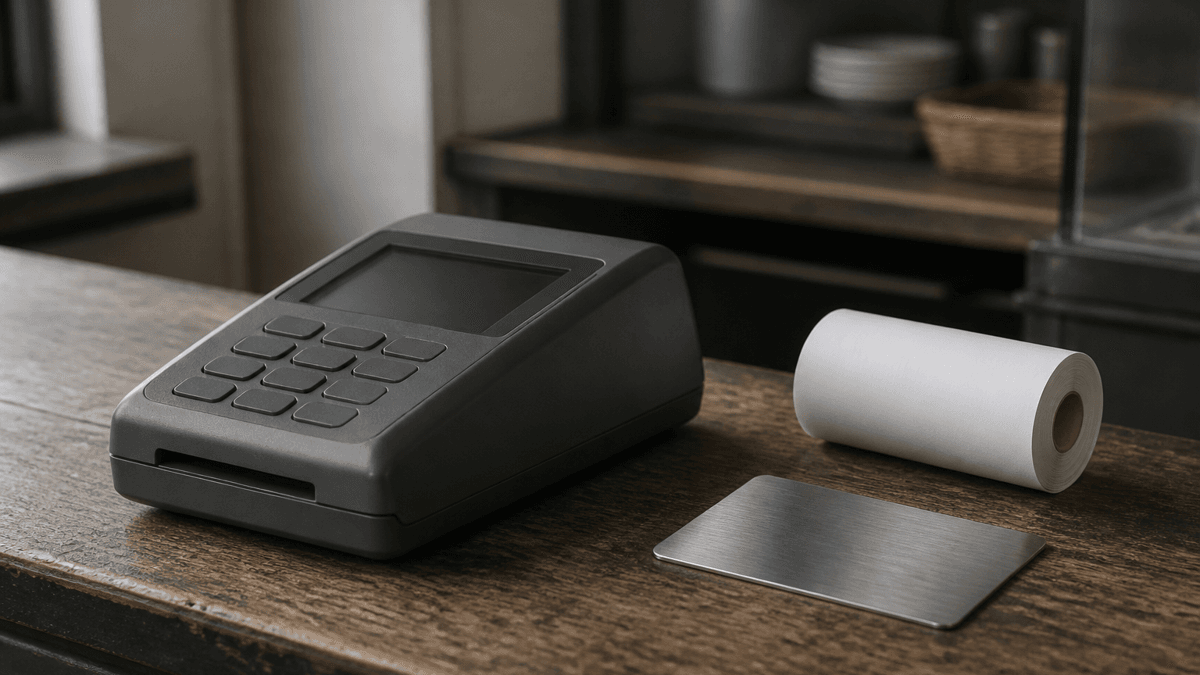
Image via CryptoTicker
Übersetzung…

Regulation Context

Track live crypto policy developments across jurisdictions.

Open Regulation Tracker

Market Context

₿

Bitcoin

BTC

$64,332

+0.30% 24h

Layer Index

41

Neutral

Layer Index

↓ 4 pts in 24h

A crypto credit card promises something very simple. You hold the card against the terminal, part of your crypto balance is liquidated in the background, and the merchant receives euros. In everyday use it feels like any other card payment. For tax purposes in Germany it is a disposal of your crypto assets.

Almost everything that later creates work with the card follows from that classification. Use it for a year on fuel, weekly groceries and restaurant bills and you do not produce a handful of events. You quickly produce several hundred separate disposals. Each one carries its own date, its own price and its own holding period, and you have to be able to evidence each one if asked.

This article sets out how the card is treated for tax: which designs exist, when a payment becomes taxable, and which records you need before your next tax return. Which providers are available for the German market, and how they differ on fees and custody, is covered in our comparison of crypto credit cards and crypto debit cards.

How a crypto credit card works: wallet, settlement partner and card network

No merchant terminal in Europe accepts Bitcoin. At the till the payment runs over the same rails as any ordinary debit card transaction, and settlement happens in euros. The crypto side of the process takes place solely at the card issuer.

That issuer is usually a licensed e-money institution or a bank, often working alongside the crypto provider itself. The institution holds the authorisation for the card business, while the wallet function sits with the crypto service. For you these are two contractual relationships behind a single interface.

At the moment of payment, the provider liquidates as much of your balance as the euro amount requires. On some cards this happens to the second, alongside the transaction. On others the card draws down a euro balance that was topped up in advance. The difference is small technically and large fiscally, because it determines which price and which day are decisive for your gain.

The tax core: paying is a disposal under Section 23 of the German Income Tax Act

Crypto assets held as private assets count in Germany as other economic goods within the meaning of Section 23(1) sentence 1 no. 2 of the Income Tax Act, and they therefore fall under private disposal transactions. The gain is taxable where no more than one year lies between acquisition and disposal.

What matters is the broad meaning of disposal. It covers a sale for euros, a swap into another cryptocurrency, and equally the use of crypto as a means of payment. Whether you sell your coins on an exchange or the card issuer liquidates them while you pay at the hardware store makes no difference for tax.

The tax authority last set out its position in the BMF circular of March 6, 2025, which replaced the earlier version of May 10, 2022. In practice that means even the four-euro coffee is a disposal. There is no de minimis carve-out for small amounts.

Debit model, stablecoin balance and credit line: three designs with three tax outcomes

Under the pure debit model, Bitcoin, Ether or another crypto asset sits in your account with the provider, and every card payment triggers a proportional sale. This is the most laborious case. Each payment needs a date, a price and an acquisition history, and over a year that adds up to a four-digit number of individual entries.

Reach crypto's most engaged readers — advertise mid-article on NewsLayer
Sponsored

Reach crypto's most engaged readers — advertise mid-article on NewsLayer

NewsLayer

Ad

Things run considerably more calmly if you fund the card from a stablecoin balance. A stablecoin pegged to the euro barely moves in price, so a payment produces a gain or a loss only in the cent range. The event remains a disposal subject to documentation, but the amounts are minimal.

The credit line variant sells nothing. You pledge crypto assets as collateral and pay out of a loan. Taking on a loan is not a disposal, so the transaction triggers no income tax at the outset. In exchange you acquire a different problem.

The one-year holding period decides whether your card payment stays tax free

If more than a year lies between the purchase of your coins and the card payment, the gain is exempt from income tax, regardless of its size. The period runs to the day from the moment of acquisition.

In the circular cited above, the Federal Ministry of Finance clarified that this period does not extend to ten years where you have used your crypto assets for staking or lending in the meantime. That matters for anyone who earns yield on a balance between payments.

Whether the period survives at all is an open question. We reported on the push to abolish it on August 9, 2026 in our article on the debate over the German crypto holding period. Until something changes, the one-year rule is the most effective lever you have when using the card.

Crypto Tax Tools Compared

The 1,000 euro threshold is not an allowance

The statute says that gains remain tax free where the total gain from private disposal transactions in the calendar year came to less than 1,000 euros. That clause is often misread, because it sets an exemption threshold rather than an allowance. Reach 1,000 euros and the entire gain is taxable, from the first euro onwards. At 999 euros you pay nothing; at 1,000 euros you tax the full amount.

The threshold also applies beyond crypto. It captures all private disposal transactions in a calendar year, including a sale of gold. For card users that is an uncomfortable combination. Hundreds of small gains ranging from a few cents to a few euros do not stand out individually, but they add up over the year. Without clean records you only find out where you stand when you file.

FIFO in practice: which coins the card spends first

If you have bought Bitcoin in several tranches over months, it is not obvious which tranche a card payment spends. For fungible economic goods, the assumption is that the units acquired first are also disposed of first. This first-in-first-out rule works against you in a rising market, because it consumes the oldest and usually cheapest holdings first and so raises the gain you report. At the same time it helps you, because those old holdings often sit outside the one-year period.

We set out how the holding period, the allocation of units and the exemption threshold interact on regular purchases on August 11, 2026, in our article on Bitcoin savings plans and tax. The same logic applies to the card, only with far more individual events on the disposal side. You therefore cannot decide after the fact which purchase belongs to which card payment.

Cashback and rewards in crypto: separate inflow, separate valuation

Many cards pay a rebate in crypto assets, frequently in the provider's own token. This is a second matter, independent of the payment itself. The allocated units enter your assets with their own acquisition date and their own value, and from that day a fresh one-year period runs for them.

Whether the inflow is itself taxable, or only the later sale, depends on how the programme is structured. A discount on your own purchase is treated differently from a reward for holding a token. This is the point at which a visit to a tax adviser pays off most readily. In any case, record the euro value of the credit on the day it arrives, otherwise a later gain is close to impossible to calculate.

Fees, exchange rate spread and foreign currency charges erode the arithmetic

When assessing a card it is worth looking at several cost blocks that rarely appear in one place: the annual or monthly fee, the mark-up between the market price and the price at which the provider liquidates your balance, the charge for payments outside the euro area, and the cost of cash withdrawals.

For tax purposes these costs are not lost. Expenses directly connected with the disposal reduce the taxable gain, and incidental acquisition costs increase the acquisition cost. In practice this often fails because the statement hides the mark-up inside the execution price. A card that gives two percent back and takes one and a half percent of spread on the conversion is a different product from its marketing.

Record-keeping duties: what the tax authority wants to see since the BMF circular

The part of the March 2025 circular with the greatest practical consequences concerns the duties to cooperate and to keep records. The authority expects complete documentation of the transactions; a mere reference to blockchain addresses is expressly not enough; transaction summaries or tax reports are to serve as the basis of assessment.

For the card that means you must be able to evidence, for each payment, the date, the type and quantity of crypto assets given up, the euro price at the time of payment, and the origin of the holdings. On top of that comes the acquisition side: when the units entered your portfolio, and at what price.

Crypto Credit Cards Compared

Cards with a credit line: borrowing instead of selling, and the risk of liquidation

The credit line card looks at first glance like the elegant answer to the tax problem, and that is exactly how it is marketed. You keep your coins, you pay out of a collateralised loan, and you trigger no disposal. The catch lies in the collateral mechanism. If the price of the pledged crypto assets falls, the provider demands more collateral or liquidates part of the holding. That forced liquidation is in turn a disposal with all the tax consequences attached, only at a moment you did not choose. Anyone opting for this structure should keep the loan-to-value ratio low and know the liquidation threshold; it sits in the contract terms and not in the marketing material.

When the card provider shuts the programme down or leaves the market

Card programmes in the crypto sector have a short half life. In recent years several providers have discontinued their cards for European customers because a licensing partner walked away or the regulatory environment shifted. Two points matter here.

First, a residual balance on an expiring card is often converted automatically into euros or a stablecoin. That forced conversion is also a disposal, falling in a tax year you did not choose. Second, access to the transaction history frequently ends together with the programme, so back up the data while you still have it.

When a crypto card pays off and when the paperwork eats the advantage

The card makes sense for two groups: users who want to spend old holdings that sit well outside the one-year period without the detour via an exchange and a bank account, and users who work from a euro-pegged stablecoin balance whose gains per transaction are in the cent range.

It makes little sense if you spend freshly bought, volatile holdings in everyday life. You then produce taxable events in large numbers, and documenting them costs more time than the cashback brings in. The honest question is whether you want to keep a record for every card payment. If the answer is no, one planned sale per quarter and an ordinary bank card will give you a quieter life.

What to take away

  1. Establish the design of your card first. Read the terms to see whether a payment sells crypto, draws down a euro balance or takes out a loan. That determines whether a taxable event arises at all. Our comparison of crypto credit cards and their settlement models helps with the shortlist.
  2. Set up your record-keeping before you use the card. Connect the card account from the outset to software that captures date, quantity, price and origin for every transaction. Our overview of crypto tax tools and portfolio trackers shows which programmes manage this for the German market.
  3. Separate your spending account from your holdings. Load only the amount you intend to spend in the near term onto the card, and keep the rest away from the card provider. For the long-term portion, self-custody is the next step; the devices worth considering are covered in our hardware wallet comparison.

(As of August 11, 2026. This article is not investment advice. Prices and fee structures change; check the terms with the provider before you buy.)

Eilmeldung

Verpassen Sie keine Eilmeldung

Auf X folgen Telegram beitreten

Advertisement

House — Advertise on NewsLayer
NewsLayerAd

Related Intelligence

External ReportingMetaplanet Makes $135M US Bet to Build New Bitcoin Treasury HubExternal ReportingNasdaq-Listed Chinese Company Does a Michael Saylor, Launches New Bitcoin Treasury Worth $154.7 MillionExternal ReportingXRP Price Outlook Ahead of Today’s White House Crypto Meeting — What’s Next?
View More
#crypto#government-policy

Sourced by

Originally reported by CryptoTicker

NewsLayer coverage based on externally reported material.

The Daily Brief

The onchain economy, before your day starts.

Curated markets, onchain insights, and key headlines — delivered every weekday morning.

Weekdays · Free · ~5 minute read

Regulation Context

Track live crypto policy developments across jurisdictions.

Open Regulation Tracker

Market Context

₿

Bitcoin

BTC

$64,332

+0.30% 24h

Layer Index

41

Neutral

Layer Index

↓ 4 pts in 24h

Eilmeldung

Verpassen Sie keine Eilmeldung

Auf X folgen Telegram beitreten

Advertisement

House — Advertise on NewsLayer
NewsLayerAd

Related Intelligence

External ReportingMetaplanet Makes $135M US Bet to Build New Bitcoin Treasury HubExternal ReportingNasdaq-Listed Chinese Company Does a Michael Saylor, Launches New Bitcoin Treasury Worth $154.7 MillionExternal ReportingXRP Price Outlook Ahead of Today’s White House Crypto Meeting — What’s Next?
View More

Ähnliche Artikel

Kalshi beantragt CFTC-Zulassung für US500 und Kupfer-PerpsREG-RADAR

Kalshi beantragt CFTC-Zulassung für US500 und Kupfer-Perps

Kalshi strebt die CFTC-Zulassung für US500 und Kupfer-Perps an – Crypto News

vor 2 Stunden

1 Min. Lesezeit
PredictBay™ beendet Stealth-Phase mit 26.1 Mrd. USD fiktivem Volumen und 1-Minute Sui-Prognosemärkten und nimmt Polymarket und Kalshi ins VisierMARKTPULS

PredictBay™ beendet Stealth-Phase mit 26.1 Mrd. USD fiktivem Volumen und 1-Minute Sui-Prognosemärkten und nimmt Polymarket und Kalshi ins Visier

PredictBay™ beendet Stealth-Phase mit 26.1 Mrd. USD fiktivem Volumen und 1-Minute Sui-Prognosemärkten und nimmt Polymarket und Kalshi ins Visier markets.businessinsider.com

vor einer Stunde

9 Min. Lesezeit
Graphwise will nach bedeutender Investition von Oakley Capital zur semantischen Ebene für KI-Agenten werdenPOLITIK-DESK

Graphwise will nach bedeutender Investition von Oakley Capital zur semantischen Ebene für KI-Agenten werden

Graphwise strebt danach, die semantische Ebene für KI-Agenten zu werden, nachdem sich das Unternehmen eine bedeutende Investition von Oakley Capital gesichert hat SiliconANGLE

vor 2 Stunden

4 Min. Lesezeit
Kalshi beantragt bei CFTC Notierung von Perpetual Futures auf US-Aktienindex und KupferREG-RADAR

Kalshi beantragt bei CFTC Notierung von Perpetual Futures auf US-Aktienindex und Kupfer

Kalshi reicht bei der CFTC Unterlagen zur Notierung von Perpetual Futures auf einen US-Aktienindex und Kupfer ein bloomingbit

vor 3 Stunden

1 Min. Lesezeit
NewsLayer.com

The front page of the onchain economy. Crypto, Web3 and regulation intelligence — live prices, original research and policy tracking in one layer.

Follow on XTelegram

News

  • Latest News
  • The Daily Brief
  • Crypto
  • DeFi
  • Web3
  • Blockchain
  • Policy
  • Explainers

Markets & Tools

  • Market News
  • Live Charts
  • Layer Index
  • Regulation Tracker
  • Regulation Radar
  • Research
  • NewsLayer Originals
  • My Feed
  • Search

Company

  • About NewsLayer
  • Go Premium
  • Advertise
  • PR Publication
  • Become an Author
  • Create Account
  • Sign in

© 2026 NewsLayer.com — The front page of the onchain economy·Privacy Policy·Terms of Service

NewsLayer

Get the signal, not the noise.

Markets, regulation and onchain intelligence in a 5-minute morning read — plus breaking alerts and Layer Index flips as they happen.

The Daily Brief

Breaking alerts

Index flips

Free · No spam · Unsubscribe anytime