
Gold’s Quantum Moment
Quantum computing’s race for a stable, scalable qubit has never lacked contenders. Trapped ions, superconducting circuits, photonic systems, neutral atoms, silicon spin — each modality stakes its claim on the same unsolved problem: how…
The Quantum Insider
Publisher
Sep 16, 2026 at 8:46 PM UTC · 8 min read
Insider Brief
- Delta Gold Technologies is betting on nanoscale gold as a new qubit platform, running two parallel research programs — with Penn State and the University of Toronto — that target quantum computing’s long-standing trade-off between qubit stability and scalability.
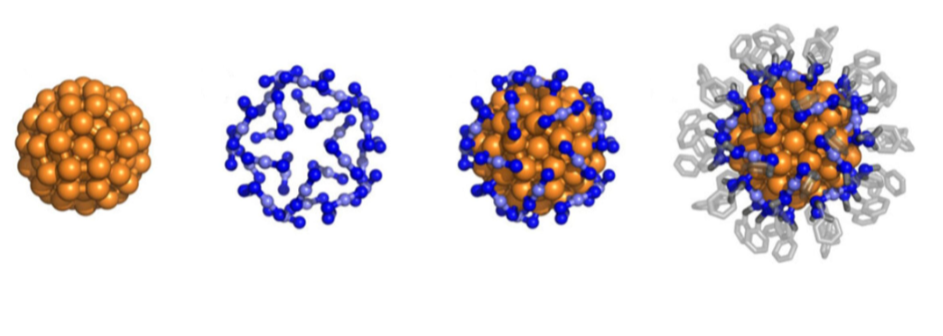
- Penn State’s optical approach, led by Professor Kenneth Knappenberger, has recorded roughly 40% spin-polarised photon emission in gold nanoclusters — the highest such figure reported in any condensed-phase quantum material — alongside gram-scale synthesis achievable under standard lab conditions.
- Toronto’s electrical approach, led by Professor Harry Ruda, builds atomically precise planar gold structures via Molecular Beam Epitaxy; Penn State has filed three full patent applications and Toronto a provisional patent, giving Delta Gold a foundational IP position ahead of either program producing a finished device.
Quantum computing’s race for a stable, scalable qubit has never lacked contenders. Trapped ions, superconducting circuits, photonic systems, neutral atoms, silicon spin — each modality stakes its claim on the same unsolved problem: how to build a qubit that is stable enough to hold a quantum state and scalable enough to manufacture in bulk. So far, every platform has had to trade one for the other.
Article Intelligence
Topics
Sponsored
Ad
NewsLayerLearn more
NewsLayer Premium
Unlock deeper intelligence.
Ad-free reading, exclusive research, and real-time onchain insights.
Go Premium