

This website uses cookies
We use cookies to personalise content and ads, to provide social media features and to analyse our traffic. We also share information about your use of our site with our social media, advertising and analytics partners who may combine it with other information that you’ve provided to them or that they’ve collected from your use of their services.
Consent Selection
Details
  • Necessary cookies help make a website usable by enabling basic functions like page navigation and access to secure areas of the website. The website cannot function properly without these cookies.
  • Preference cookies enable a website to remember information that changes the way the website behaves or looks, like your preferred language or the region that you are in.
    • We do not use cookies of this type.

  • Statistic cookies help website owners to understand how visitors interact with websites by collecting and reporting information anonymously.
    • We do not use cookies of this type.

  • Marketing cookies are used to track visitors across websites. The intention is to display ads that are relevant and engaging for the individual user and thereby more valuable for publishers and third party advertisers.
    • We do not use cookies of this type.

  • Unclassified cookies are cookies that we are in the process of classifying, together with the providers of individual cookies.
    • __emg_sidPending
      Maximum Storage Duration: 1 dayType: HTTP Cookie
      __emg_vidPending
      Maximum Storage Duration: 1 yearType: HTTP Cookie
      nl-read-countPending
      Maximum Storage Duration: PersistentType: HTML Local Storage
Cookie declaration last updated on 8/12/26 by Cookiebot
[#IABV2_TITLE#]
[#IABV2_BODY_INTRO#]
[#IABV2_BODY_LEGITIMATE_INTEREST_INTRO#]
[#IABV2_BODY_PREFERENCE_INTRO#]
[#IABV2_BODY_PURPOSES_INTRO#]
[#IABV2_BODY_PURPOSES#]
[#IABV2_BODY_FEATURES_INTRO#]
[#IABV2_BODY_FEATURES#]
[#IABV2_BODY_PARTNERS_INTRO#]
[#IABV2_BODY_PARTNERS#]
About
Cookies are small text files that can be used by websites to make a user's experience more efficient.

The law states that we can store cookies on your device if they are strictly necessary for the operation of this site. For all other types of cookies we need your permission.

This site uses different types of cookies. Some cookies are placed by third party services that appear on our pages.

You can at any time change or withdraw your consent from the Cookie Declaration on our website.

Learn more about who we are, how you can contact us and how we process personal data in our Privacy Policy.

Please state your consent ID and date when you contact us regarding your consent.
NewsLayer

Install NewsLayer

Get the app experience — one tap from your home screen, instant loads and breaking-news alerts.

NewsLayer.com
NewsLayer PulseLIVEBTC$78,748+1.75%ETH$2,473+0.96%SOL$96.4+1.43%XRP$1.48-1.53%DOGE$0.089-4.09%ADA$0.219-2.82%Total Cap$2.77T+1.01%Layer Index67 Greed

GSA Updates Identity, Access Programs for Post-Quantum Migration

The General Services Administration (GSA) said on Aug. 24 that it is updating and expanding two existing federal programs to support the government-wide migration to post-quantum cryptography (PQC). The action follows a June executive…

MeriTalk

Publisher

Aug 24, 2026 at 7:40 PM UTC · 2 phút đọc
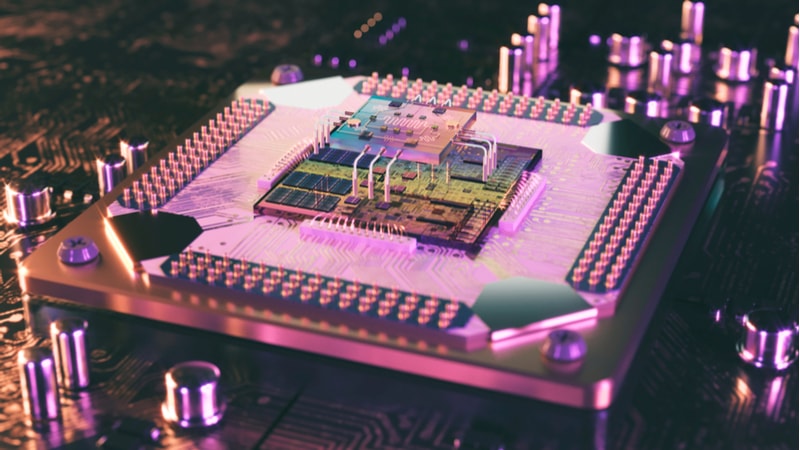
GSA Updates Identity, Access Programs for Post-Quantum Migration
Image via MeriTalk

The General Services Administration (GSA) said on Aug. 24 that it is updating and expanding two existing federal programs to support the government-wide migration to post-quantum cryptography (PQC). The action follows a June executive order and Office of Management and Budget (OMB) memorandum directing agencies to accelerate the transition to quantum-resistant security.

In a blog post, GSA said it is updating the Federal Identity, Credential, and Access Management (FICAM) architecture to support quantum-resistant algorithms.

The FICAM modernization effort will emphasize “crypto agility,” which GSA described as the ability to quickly shift between cryptographic methods as threats and security standards change.

GSA is also expanding the testing capabilities of the Federal Information Processing Standards (FIPS) 201 Evaluation Program, executed through the Physical Access Control System (PACS) lab, to evaluate quantum-resistant solutions for federal buildings.

“This ensures that employee badges, visitor passes, and building access controls will remain secure against future quantum threats,” GSA said.

“The enhanced lab infrastructure represents an entirely new capability, requiring extensive research and development to test quantum-resistant technology for both physical access control systems and employee identification cards,” it added.

Article Intelligence

Topics

Sponsored

Ad

House — Advertise on NewsLayer
NewsLayerLearn more

NewsLayer Premium

Unlock deeper intelligence.

Ad-free reading, exclusive research, and real-time onchain insights.

Go Premium