This website uses cookies
We use cookies to personalise content and ads, to provide social media features and to analyse our traffic. We also share information about your use of our site with our social media, advertising and analytics partners who may combine it with other information that you’ve provided to them or that they’ve collected from your use of their services.
Consent Selection
Details
  • Necessary cookies help make a website usable by enabling basic functions like page navigation and access to secure areas of the website. The website cannot function properly without these cookies.
  • Preference cookies enable a website to remember information that changes the way the website behaves or looks, like your preferred language or the region that you are in.
    • We do not use cookies of this type.

  • Statistic cookies help website owners to understand how visitors interact with websites by collecting and reporting information anonymously.
    • We do not use cookies of this type.

  • Marketing cookies are used to track visitors across websites. The intention is to display ads that are relevant and engaging for the individual user and thereby more valuable for publishers and third party advertisers.
    • We do not use cookies of this type.

  • Unclassified cookies are cookies that we are in the process of classifying, together with the providers of individual cookies.
    • __emg_sidPending
      Maximum Storage Duration: 1 dayType: HTTP Cookie
      __emg_vidPending
      Maximum Storage Duration: 1 yearType: HTTP Cookie
      nl-read-countPending
      Maximum Storage Duration: PersistentType: HTML Local Storage
Cookie declaration last updated on 8/12/26 by Cookiebot
[#IABV2_TITLE#]
[#IABV2_BODY_INTRO#]
[#IABV2_BODY_LEGITIMATE_INTEREST_INTRO#]
[#IABV2_BODY_PREFERENCE_INTRO#]
[#IABV2_BODY_PURPOSES_INTRO#]
[#IABV2_BODY_PURPOSES#]
[#IABV2_BODY_FEATURES_INTRO#]
[#IABV2_BODY_FEATURES#]
[#IABV2_BODY_PARTNERS_INTRO#]
[#IABV2_BODY_PARTNERS#]
About
Cookies are small text files that can be used by websites to make a user's experience more efficient.

The law states that we can store cookies on your device if they are strictly necessary for the operation of this site. For all other types of cookies we need your permission.

This site uses different types of cookies. Some cookies are placed by third party services that appear on our pages.

You can at any time change or withdraw your consent from the Cookie Declaration on our website.

Learn more about who we are, how you can contact us and how we process personal data in our Privacy Policy.

Please state your consent ID and date when you contact us regarding your consent.
NewsLayer

Install NewsLayer

Get the app experience — one tap from your home screen, instant loads and breaking-news alerts.

Enjoying NewsLayer?

Get breaking crypto stories the second they drop — join our Telegram channel.

NewsLayer.com
NewsLayer PulseLIVEBTC$63,894+1.30%ETH$1,905+1.22%SOL$75.91+0.56%XRP$1+0.29%DOGE$0.0704+0.54%ADA$0.1745-1.19%Total Cap$2.29T+0.84%Layer Index44 Neutral
BreakingExternal Reporting发布于 2 小时前

Hackers Are Abusing a macOS Screen Sharing Flaw to Secretly Mine Monero

The Dutch cyber agency says attackers exploited an authentication flaw in macOS Screen Sharing to gain root access and plant Monero miners, with public proof-of-concept code now circulating.

Hackers Are Abusing a macOS Screen Sharing Flaw to Secretly Mine Monero
作者 Decrypt StaffPublisher Decrypt 2 分钟阅读
Image via Decrypt

Market Context

Bitcoin

BTC

$63,894

+1.30% 24h

ETH$1,905+1.22%

Layer Index

44

↑ 2 pts in 24h

In brief

  • The Netherlands' NCSC warned of active exploitation of a macOS Screen Sharing vulnerability across systems with port 5900 exposed to the internet, where attackers gained root access and installed Monero mining programs.
  • The flaw stems from faulty state management during authentication, letting network attackers log in without valid credentials
  • The cryptojacking campaign—which quietly mines privacy coin Monero on victims' hardware—joins a wave of similar schemes.

Attackers have been exploiting a vulnerability in Apple's macOS Screen Sharing feature to seize control of Macs and quietly install cryptocurrency miners, the Netherlands' national cyber agency warned this week.

In an updated advisory, the Dutch National Cyber Security Center, or NCSC, said it received reports of active exploitation across multiple systems that had port 5900, used by Screen Sharing, exposed to the internet.
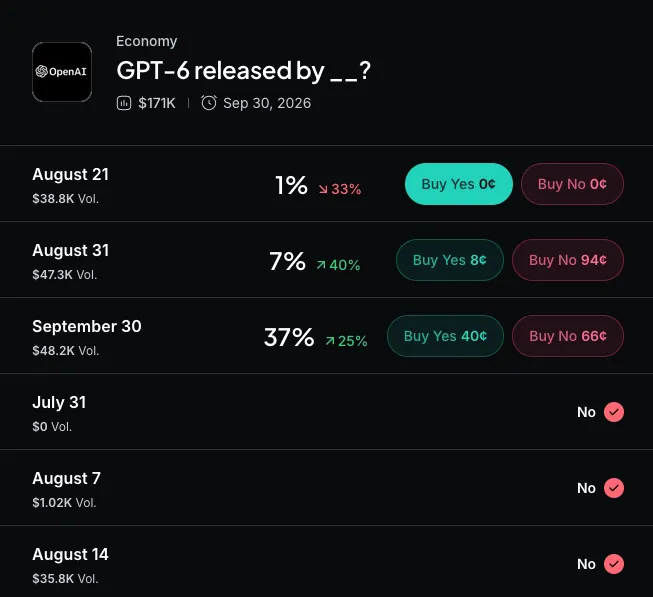
Myriad: When will OpenAI release GPT-6? Click to make your prediction.

In each case, the attackers gained root access, the highest level of control over a machine, and planted a Monero mining program to harness the victim's hardware. Monero is a so-called privacy coin, a type of cryptocurrency that cannot be easily traced, unlike transparent networks such as Bitcoin or Ethereum. The agency flagged that public proof-of-concept code for the flaw is now circulating, lowering the bar for would-be attackers.

The bug, tracked as CVE-2026-65400 and rated 7.1 out of 10 in severity, is an authentication flaw rooted in faulty state management during the login process. It let network-based attackers slip through without valid credentials, accepting authentication attempts that should have been rejected.


Apple has since patched the issue, tightening its validation checks in macOS Sequoia 15.7.9, Sonoma 14.8.9 and Tahoe 26.6.1. Users who haven't updated, particularly anyone with Screen Sharing reachable from the open internet, remain exposed.

Monero has long been the coin of choice for so-called cryptojacking, in which hijacked machines mine crypto for an attacker who pockets the rewards while the victim absorbs the electricity costs and degraded performance. The token's privacy features make the proceeds far harder to trace than Bitcoin.

The campaign is the latest in a steady stream of schemes turning other people's devices into crypto profit.

Just this month, Bitdefender found pirated copies of "The Odyssey" laced with the wallet-draining Lumma Stealer. Decrypt has also reported on malware pushed through fake CAPTCHA pages routed via BNB Chain, the SparkKitty operation that hid wallet-stealing code in mobile apps, malicious "anime girl" wallpapers aimed at Steam gamers, and crypto-stealing code smuggled into a booby-trapped Python library.

The NCSC suggests users apply Apple's updates promptly and avoid leaving Screen Sharing accessible from the internet, which gave attackers their opening in the first place.

Daily Debrief Newsletter

Start every day with the top news stories right now, plus original features, a podcast, videos and more.

突发新闻

Never miss a breaking story

Advertisement

House — Advertise on NewsLayer
NewsLayerAd

Sourced by

Originally reported by Decrypt

NewsLayer coverage based on externally reported material.

The Daily Brief

The onchain economy, before your day starts.

Curated markets, onchain insights, and key headlines — delivered every weekday morning.

Weekdays · Free · ~5 minute read

相关报道