



Japan Switches On Its First Full-Stack Neutral-Atom Quantum Computer
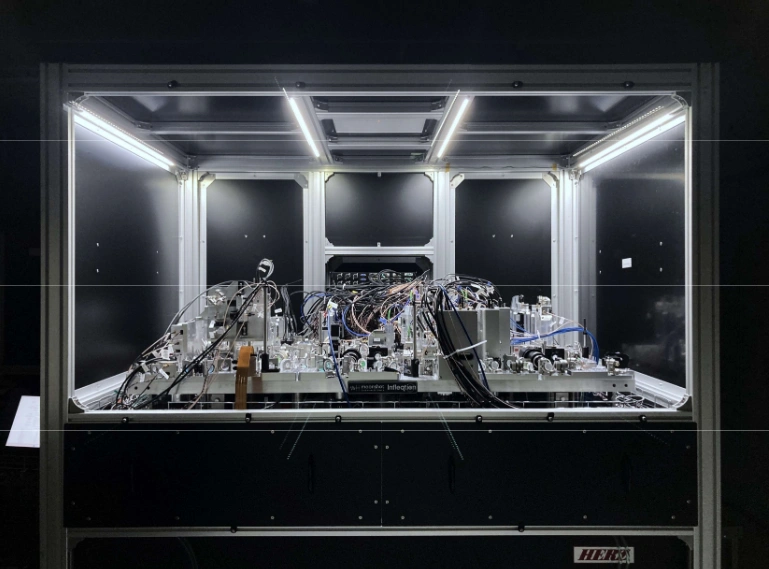
Japan has today switched on its first full-stack neutral-atom quantum computer, using individual atoms and lasers in an attempt to overcome some of the problems that have so far limited the technology’s practical use.
The European Magazine
Publisher
Aug 25, 2026 at 9:49 AM UTC · 2 phút đọc
Đang dịch…
New machine uses individual atoms held in place by lasers and will grow from around 50 qubits to 500 as researchers work towards more practical quantum computing
Japan has today switched on its first full-stack neutral-atom quantum computer, using individual atoms and lasers in an attempt to overcome some of the problems that have so far limited the technology’s practical use.
The system, named Shunkai, has been developed by the Institute for Molecular Science in Okazaki (IMS) and will initially use around 50 qubits – the basic units of information used by a quantum computer – before expanding to approximately 500.
Unlike an ordinary computer, which processes information using conventional electronic bits, Shunkai uses individual atoms as its qubits.
The atoms are held in position by tightly focused laser beams known as optical tweezers and calculations are carried out by exposing them to microwaves or laser light.
The neutral-atom approach can operate at room temperature without a refrigerator and allows atoms to be moved during calculations. Researchers say it should also be relatively easy to increase the number of qubits and arrange them differently depending on the calculation being performed.
Article Intelligence
Topics
Related Coverage
 QuantumInfleqtion supports Japan’s first neutral-atom quantum computer35 phút trước · 1 min read
 QuantumU.S. Treasury Announces the Quantum-Readiness Task Force13 giờ trước · 2 min read
 QuantumGSA, Treasury kick off post-quantum initiatives to protect against cyber threats13 giờ trước · 5 min read
Sponsored
Ad
NewsLayerLearn more
NewsLayer Premium
Unlock deeper intelligence.
Ad-free reading, exclusive research, and real-time onchain insights.
Go Premium