

This website uses cookies
We use cookies to personalise content and ads, to provide social media features and to analyse our traffic. We also share information about your use of our site with our social media, advertising and analytics partners who may combine it with other information that you’ve provided to them or that they’ve collected from your use of their services.
Consent Selection
Details
  • Necessary cookies help make a website usable by enabling basic functions like page navigation and access to secure areas of the website. The website cannot function properly without these cookies.
  • Preference cookies enable a website to remember information that changes the way the website behaves or looks, like your preferred language or the region that you are in.
    • We do not use cookies of this type.

  • Statistic cookies help website owners to understand how visitors interact with websites by collecting and reporting information anonymously.
    • We do not use cookies of this type.

  • Marketing cookies are used to track visitors across websites. The intention is to display ads that are relevant and engaging for the individual user and thereby more valuable for publishers and third party advertisers.
    • We do not use cookies of this type.

  • Unclassified cookies are cookies that we are in the process of classifying, together with the providers of individual cookies.
    • __emg_sidPending
      Maximum Storage Duration: 1 dayType: HTTP Cookie
      __emg_vidPending
      Maximum Storage Duration: 1 yearType: HTTP Cookie
      nl-read-countPending
      Maximum Storage Duration: PersistentType: HTML Local Storage
Cookie declaration last updated on 8/12/26 by Cookiebot
[#IABV2_TITLE#]
[#IABV2_BODY_INTRO#]
[#IABV2_BODY_LEGITIMATE_INTEREST_INTRO#]
[#IABV2_BODY_PREFERENCE_INTRO#]
[#IABV2_BODY_PURPOSES_INTRO#]
[#IABV2_BODY_PURPOSES#]
[#IABV2_BODY_FEATURES_INTRO#]
[#IABV2_BODY_FEATURES#]
[#IABV2_BODY_PARTNERS_INTRO#]
[#IABV2_BODY_PARTNERS#]
About
Cookies are small text files that can be used by websites to make a user's experience more efficient.

The law states that we can store cookies on your device if they are strictly necessary for the operation of this site. For all other types of cookies we need your permission.

This site uses different types of cookies. Some cookies are placed by third party services that appear on our pages.

You can at any time change or withdraw your consent from the Cookie Declaration on our website.

Learn more about who we are, how you can contact us and how we process personal data in our Privacy Policy.

Please state your consent ID and date when you contact us regarding your consent.
NewsLayer.com
NewsLayer PulseLIVEBTC$77,234+0.18%ETH$2,427+0.27%SOL$94.12+2.82%XRP$1.48+7.43%DOGE$0.0928+10.15%ADA$0.2283+5.46%Total Cap$2.74T+0.71%Layer Index59 Neutral

Policy

breaking

Microsoft Fixes 'Perfect 10' Exploit That Could Have Let Hackers Run Code Remotely

The Entra ID flaw earned the highest possible severity score, but Microsoft says it patched the bug before publishing the CVE and found no evidence it was ever exploited.

Jason Nelson

Publisher Decrypt

Aug 22, 2026 at 5:31 PM UTC · 2 分钟阅读

Microsoft Fixes 'Perfect 10' Exploit That Could Have Let Hackers Run Code Remotely
Image via Decrypt
翻译中…

In brief

  • Microsoft disclosed a critical remote code execution vulnerability affecting its Entra ID cloud identity service.
  • CVE-2026-69836 received a CVSS score of 10.0 and requires no existing privileges or user interaction to exploit.
  • Microsoft said it fixed the vulnerability and confirmed it was not exploited in the wild.

Microsoft disclosed a critical vulnerability in its Entra ID identity platform that could allow an unauthorized attacker to remotely execute code without existing privileges or user interaction.

Tracked as CVE-2026-69836, the vulnerability received a CVSS score of 10.0, the highest possible rating. The flaw affects Microsoft Entra ID, the company's cloud-based identity and access management service formerly known as Azure Active Directory.
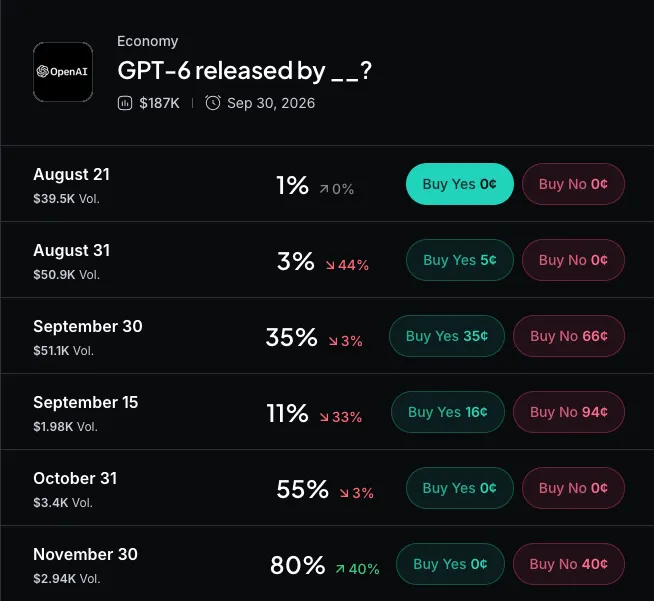
Myriad: When will OpenAI release GPT-6? Click to make your prediction.

Microsoft's security advisory says the vulnerability can be exploited over a network with low attack complexity and requires no privileges or user interaction.

Deserialization converts data into a format an application can use. If the application does not properly validate that data, an attacker could manipulate it to execute malicious code.

Microsoft said it identified and fixed the vulnerability before publishing the CVE.

“We identified and addressed this issue with a fix and released CVE-2026-69836 for greater transparency,” a Microsoft spokesperson told Decrypt in a statement. “There are no additional actions customers need to take.”

Article Intelligence

Sponsored

Ad
House — Advertise on NewsLayer
NewsLayerLearn more

NewsLayer Premium

Unlock deeper intelligence.

Ad-free reading, exclusive research, and real-time onchain insights.

Go Premium