
A multi-institutional consortium comprising IBM Quantum, Pasqal, Alice & Bob, CINECA, Lawrence Livermore National Laboratory (LLNL), Oak Ridge National Laboratory (ORNL), and the STFC Hartree Centre has detailed the expansion of the open-source Quantum Resource Management Interface (QRMI).
Multi-Institutional Consortium Expands QRMI to Standardize Quantum-HPC Integration Across Major Workload Managers
A multi-institutional consortium comprising IBM Quantum, Pasqal, Alice & Bob, CINECA, Lawrence Livermore National Laboratory (LLNL), Oak Ridge National Laboratory (ORNL), and the STFC Hartree Centre has detailed the expansion of the…
Quantum Computing Report
Publisher
Oct 10, 2026 at 7:19 PM UTC · 3 min read
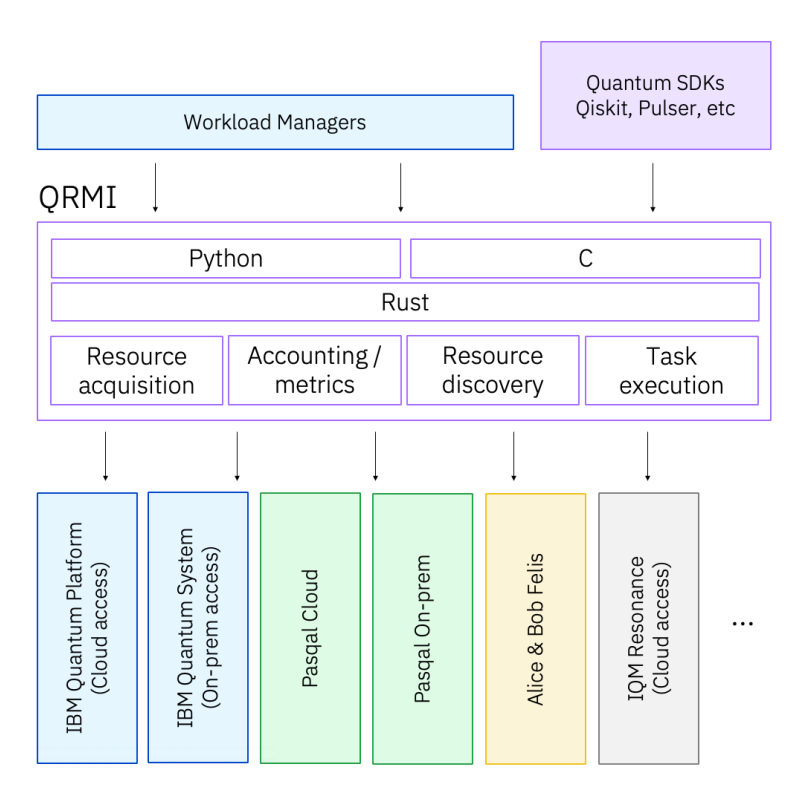
Detailed in a research paper (arXiv:2607.19591), QRMI establishes a vendor-agnostic middleware layer that exposes quantum processing units (QPUs) as first-class schedulable resources alongside classical CPUs and GPUs. Building on IBM’s reference architecture for quantum-centric supercomputing, the updated framework extends QPU co-scheduling beyond Slurm to encompass six primary HPC workload managers and orchestrators: Slurm, PBS Professional, IBM Spectrum LSF, Open Cluster Scheduler (Grid Engine), Kubernetes, and the Flux Framework.
| [ Summary of QRMI Workload Manager Integrations ] | ||
|---|---|---|
| Workload Manager | Integration Mechanism | Resource Abstraction & Availability Handling |
| • Slurm | • SPANK Plugin framework | • Uses Generic Resources (GRES) and Dynamic Licenses to align QPU availability with node execution. |
| • PBS Professional | • Server & execution hooks | • Uses custom resources and server_dyn_res scripts to check QPU readiness during scheduling. |
| • IBM Spectrum LSF | • jobstarter and postexec hooks | • Maps QPUs via External Load Information Managers (ELIM) running periodic status checks. |
| • Open Cluster Scheduler | • Queue prolog/epilog & Load Sensors | • Employs custom string and numeric complexes with Load Sensors (e.g., Warden) for slot tracking. |
| • Kubernetes | • Custom Operator & CRDs | • Uses QuantumResource and QuantumResourceClaim CRDs with job suspension until claims bind. |
| • Flux Framework | • Fluxion graph-based scheduler | • Models QPUs as native nodes in the resource graph and uses Fluence sidecars to monitor queue depth. |
Integrating heterogeneous QPU hardware into classical HPC data centers presents abstraction and scheduling challenges due to vendor-specific APIs, dynamic calibration windows, and queue latency. QRMI decouples application logic and batch schedulers from hardware APIs through a unified middleware layer. The integration enforces a standardized three-step job lifecycle across all supported schedulers:
Article Intelligence
Related Coverage
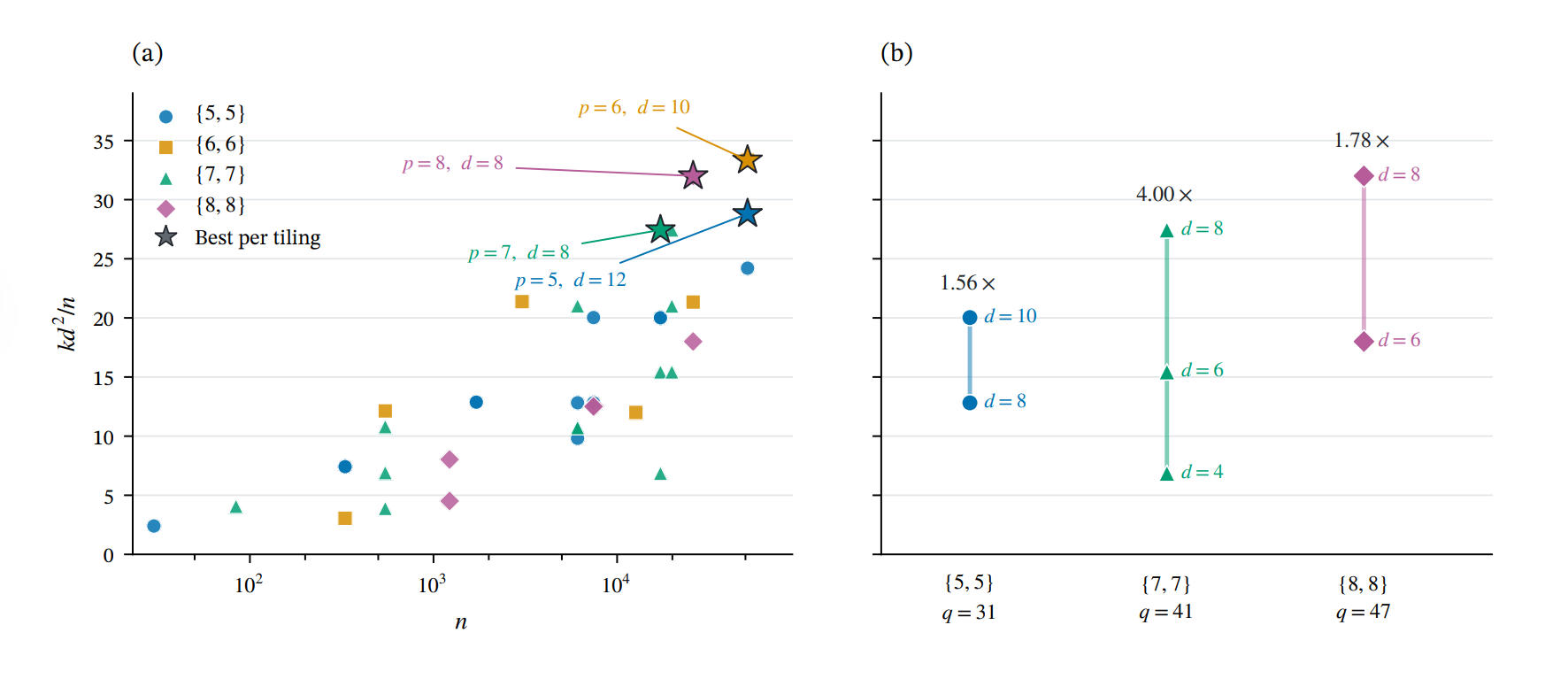 ResearchUniversity of Saskatchewan Researchers Achieve Record Hyperbolic Surface Code Efficiency for Modular Fault-Tolerant Architectures7 minutes ago · 2 min read
 QuantumArqit Quantum Inc. Reports Select Preliminary FY 2026 Financial Results: Annual Revenue Tops $975K, NATO Contract Win, and Cash Position Reaches $51Ma day ago · 1 min read
 QuantumQuantinuum and HQS Simulate 21-Spin NMR Spectrum on 42 Qubits With 1,400+ Two-Qubit Gate Circuitsa day ago · 1 min read
Sponsored
Ad
NewsLayerLearn more
NewsLayer Premium
Unlock deeper intelligence.
Ad-free reading, exclusive research, and real-time onchain insights.
Go Premium