
Opinion by Michael Egorov, founder of Curve Finance and Yield Basis
The future of onchain FX could start with users, not institutional liquidity
Onchain FX does not need to recreate the trillion-dollar institutional market to become useful. Real demand can make smaller markets work first.
Cointelegraph by Michael Egorov
Publisher Cointelegraph
Nov 22, 2026 at 2:30 PM UTC · 5 Min. Lesezeit
Key Signal
$220B+ Cross-border stablecoin activity
Last Updated
vor 13 Stunden
For a long time, the obvious way to think about onchain foreign exchange (FX) was to start at the top. Banks tokenize currencies, large financial institutions move their FX activity onchain and institutional liquidity naturally follows.
The end result? Blockchain-based FX eventually grows large enough to resemble its traditional counterpart. But that’s not necessarily how it is going to happen.
In fact, there are growing signs that onchain FX will develop in the exact opposite way — from the bottom up.
Stablecoins like Brazilian Digital (BRZ) or Monerium’s EURe can be quickly redeemed onchain and easily moved from digital wallets to bank accounts. They generate healthy trading activity as decentralized finance (DeFi) users swap them in decentralized exchange (DEX) pools.
Markets like this end up developing in real time around a practical user need, which is moving directly between digital currencies and fiat.
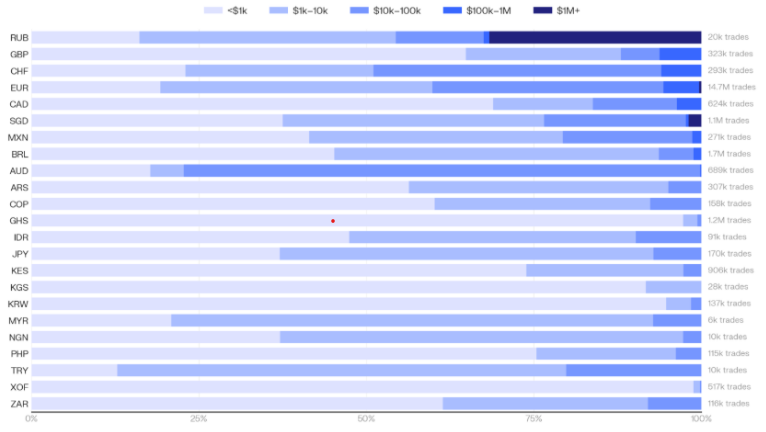
This is still just an early-stage example, but the use case and demand are real enough. Keyrock data shows that the majority of onchain stablecoin trades tied to emerging market currencies fall in the $1,000 to $10,000 range — modest amounts compared to institutional scale — but that’s precisely the point.
Article Intelligence
Key Entities
Curve Finance
Topics
Sponsored
Ad
NewsLayerLearn more
NewsLayer Premium
Unlock deeper intelligence.
Ad-free reading, exclusive research, and real-time onchain insights.
Go Premium