
This AI Is Already Fooling People on Video Calls Into Thinking Its Human, Company Says
Tavus says 26 of 54 people on a one-minute video call thought its new Griffin model was human. The results are the company's own, and the model isn't going to retail customers yet.
Jose Antonio Lanz
Publisher Decrypt
Oct 2, 2026 at 7:05 PM UTC · 4 min read
Key Signal
48% Believed AI was human
Last Updated
a month ago
- Tavus says 26 of 54 participants (48%) believed Griffin-Lite was a real person after a one-minute video call, versus 1 of 41 for its previous system.
- Griffin-Lite ranks first on Nvidia's VideoFDB benchmark, scoring 3.83 out of 5 on generation against 2.80 for the next-best system and 3.92 for a human reference.
- The results come from Tavus' own research page, participants were told they would meet another person, and Griffin-Lite is limited to select trusted testers while Tavus works on safety measures.
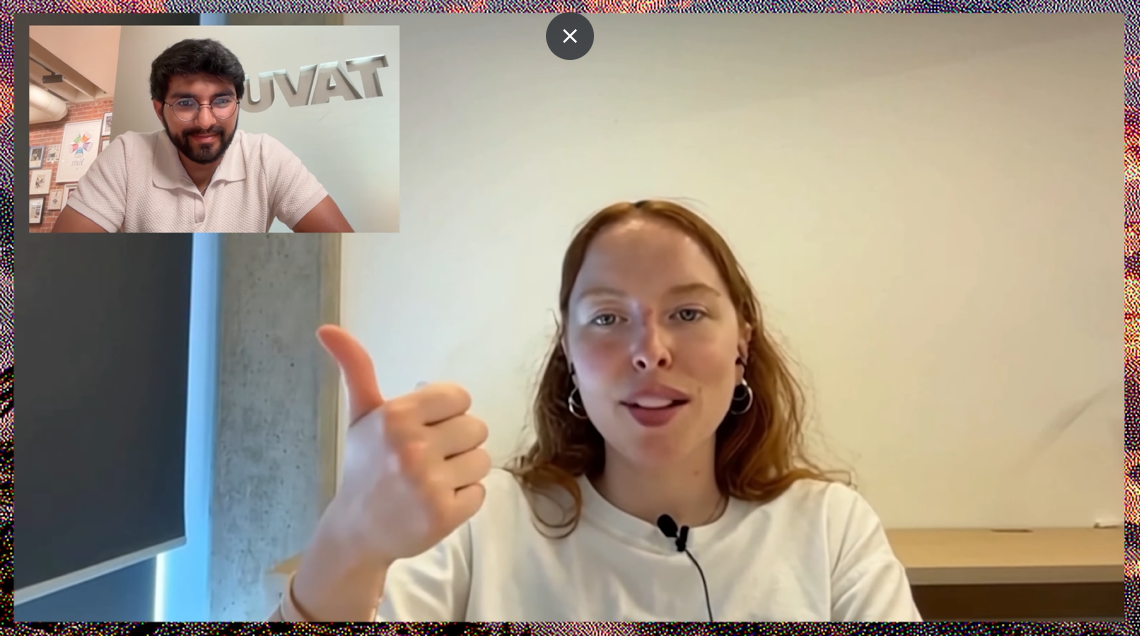
AI startup Tavus says its new model, Griffin, convinced 48% of the people who talked to it on a live video call that they were speaking with a real human.
The company unveiled it on October 1 and calls it the first Human Interaction Model, an AI built to understand and generate face-to-face conversation, paying attention to expressions and pauses as well as words. Its previous system scored 2.4% on the same test.

Griffin-Lite, the version Tavus tested, faced 54 people, and 26 of them said afterward they believed their partner was a real person. The older system faced 41 people and got exactly one believer.
Tavus explains that participants were told they would be matched with another person for a one-minute video call about what they were looking forward to this year. Only at the end were they asked whether it had crossed their mind that their partner might not be real.
Article Intelligence
Key Entities
Curve Finance
Topics
Sponsored
Ad
NewsLayerLearn more
NewsLayer Premium
Unlock deeper intelligence.
Ad-free reading, exclusive research, and real-time onchain insights.
Go Premium