
Xufeng Zhang is using magnets to make computers more power efficient at the quantum level.
This Northeastern researcher is making 'waves' with magnets
Xufeng Zhang is using magnets to make computers more power efficient at the quantum level.
news.northeastern.edu
Publisher
Sep 14, 2026 at 9:04 PM UTC · Updated a few seconds ago · 3 min read
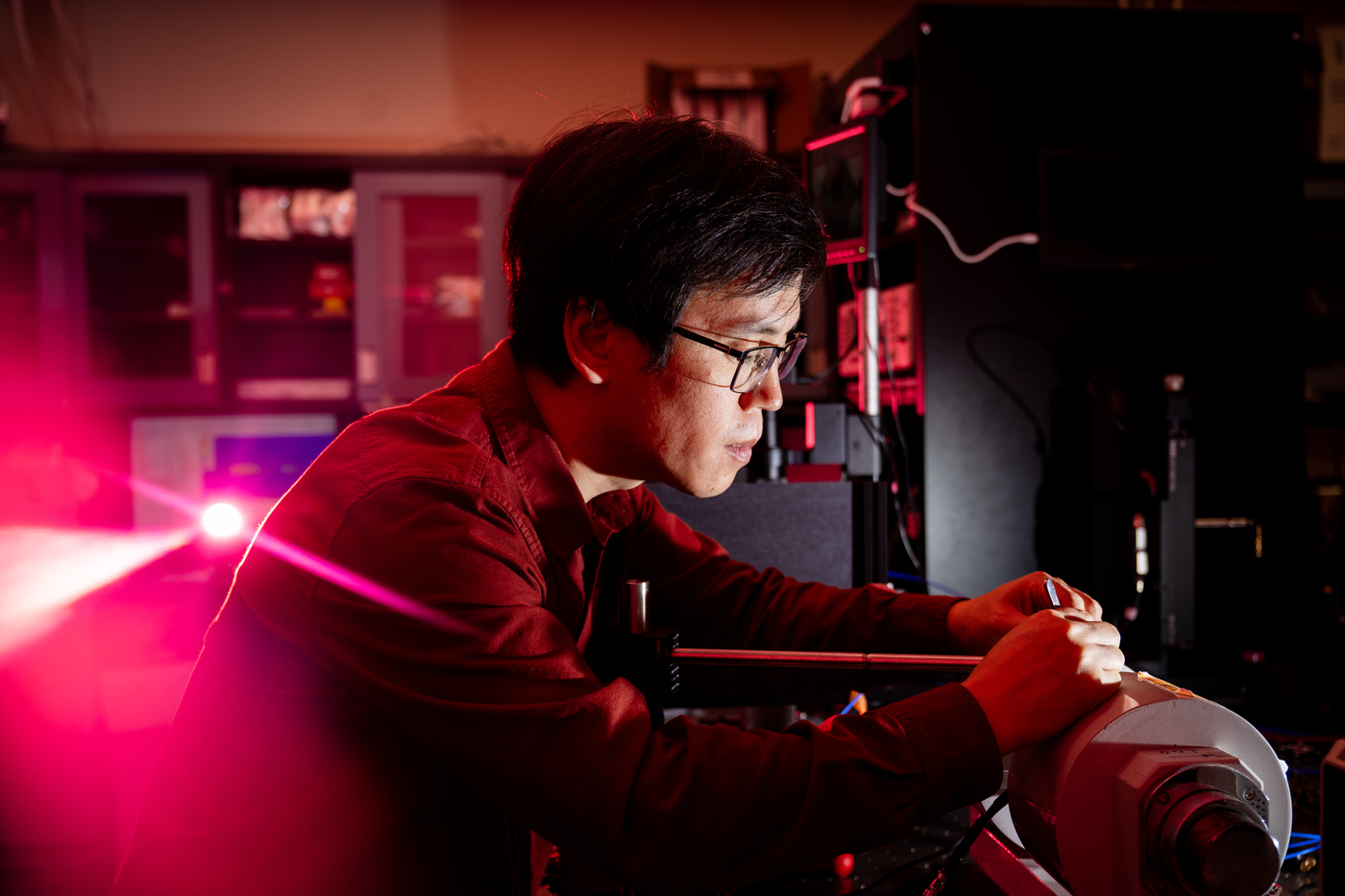
The Northeastern professor of electrical and computer engineering recently published two papers over the past year highlighting small-scale magnetic systems he and his team developed that could help make computers much more power efficient in the future.
From placing over 300 hundred microwave sources on a single computer chip to creating a new approach to making his systems easier to deploy globally, Zhang is working on the cutting edge.
Central to Zhang’s research are magnons, tiny waves that travel through magnetic materials – including nickel and iron — when they are disturbed.
Northeastern Global News caught up with Zhang to learn more about magnons, his research, and its potential for the future of computing.
What is a magnon?
A magnon is a term used in quantum mechanics to describe a specific type of quasi-particle, which is particle-like systems that perform a specific shared behavior, Zhang explained.
Magnons perform a phenomenon known as spin wave, which is when electrons in magnetic material are disturbed. Notably, this action does not emit an electrical charge.
Devices made using spin waves won’t face any “ohmic loss,” Zhang explained, referring to electrical power that turns into unwanted heat.
Article Intelligence
Topics
Sponsored
Ad
NewsLayerLearn more
NewsLayer Premium
Unlock deeper intelligence.
Ad-free reading, exclusive research, and real-time onchain insights.
Go Premium