This website uses cookies
We use cookies to personalise content and ads, to provide social media features and to analyse our traffic. We also share information about your use of our site with our social media, advertising and analytics partners who may combine it with other information that you’ve provided to them or that they’ve collected from your use of their services.
Consent Selection
Details
  • Necessary cookies help make a website usable by enabling basic functions like page navigation and access to secure areas of the website. The website cannot function properly without these cookies.
  • Preference cookies enable a website to remember information that changes the way the website behaves or looks, like your preferred language or the region that you are in.
    • We do not use cookies of this type.

  • Statistic cookies help website owners to understand how visitors interact with websites by collecting and reporting information anonymously.
    • We do not use cookies of this type.

  • Marketing cookies are used to track visitors across websites. The intention is to display ads that are relevant and engaging for the individual user and thereby more valuable for publishers and third party advertisers.
    • We do not use cookies of this type.

  • Unclassified cookies are cookies that we are in the process of classifying, together with the providers of individual cookies.
    • __emg_sidPending
      Maximum Storage Duration: 1 dayType: HTTP Cookie
      __emg_vidPending
      Maximum Storage Duration: 1 yearType: HTTP Cookie
      nl-read-countPending
      Maximum Storage Duration: PersistentType: HTML Local Storage
Cookie declaration last updated on 8/12/26 by Cookiebot
[#IABV2_TITLE#]
[#IABV2_BODY_INTRO#]
[#IABV2_BODY_LEGITIMATE_INTEREST_INTRO#]
[#IABV2_BODY_PREFERENCE_INTRO#]
[#IABV2_BODY_PURPOSES_INTRO#]
[#IABV2_BODY_PURPOSES#]
[#IABV2_BODY_FEATURES_INTRO#]
[#IABV2_BODY_FEATURES#]
[#IABV2_BODY_PARTNERS_INTRO#]
[#IABV2_BODY_PARTNERS#]
About
Cookies are small text files that can be used by websites to make a user's experience more efficient.

The law states that we can store cookies on your device if they are strictly necessary for the operation of this site. For all other types of cookies we need your permission.

This site uses different types of cookies. Some cookies are placed by third party services that appear on our pages.

You can at any time change or withdraw your consent from the Cookie Declaration on our website.

Learn more about who we are, how you can contact us and how we process personal data in our Privacy Policy.

Please state your consent ID and date when you contact us regarding your consent.
NewsLayer

Install NewsLayer

Get the app experience — one tap from your home screen, instant loads and breaking-news alerts.

NewsLayer.com
NewsLayer PulseLIVEBTC$63,532+0.19%ETH$1,888+0.55%SOL$76.32+1.01%XRP$1.01+0.57%DOGE$0.0703+0.99%ADA$0.1825+0.10%Total Cap$2.27T+0.31%Layer Index45 Neutral
BreakingExternal ReportingPublicado hace 4 horas

White House Lets Private Firms Hack Cybercriminals—At Their Own Legal Risk

President Donald Trump signed a memorandum Tuesday that lets vetted U.S. companies carry out offensive cyber operations against foreign criminal networks. Here's what the program actually authorizes.

White House Lets Private Firms Hack Cybercriminals—At Their Own Legal Risk
Por Jose Antonio LanzPublisher Decrypt 2 min de lectura
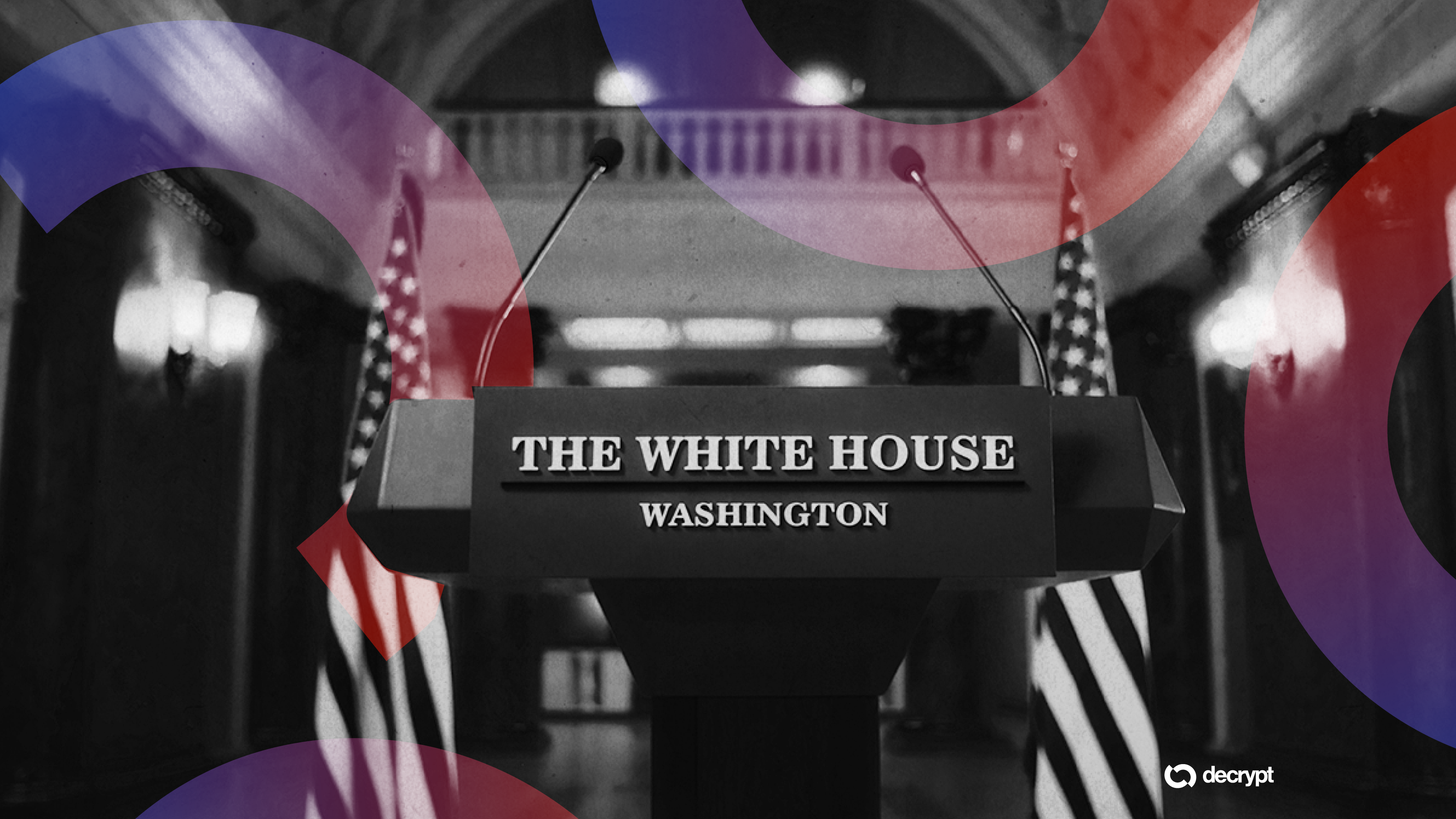
Image via Decrypt

Regulation Context

Track live crypto policy developments across jurisdictions.

Layer Index

45

↑ 10 pts in 24h

In brief

  • Trump signed a National Security Presidential Memorandum on Aug. 12 creating a program for private firms to disrupt foreign cybercriminal networks.
  • Participating companies operate under DOJ and DHS direction, post a bond of at least $1 million, and face annual review.
  • Americans reported more than $20.8 billion in losses to cyber-enabled crime in 2025, the White House said.

President Donald Trump signed a memorandum on Tuesday directing the federal government to enlist vetted U.S. companies in offensive cyber operations against foreign criminal networks. The National Security Presidential Memorandum, dated Aug. 12, stands up a program inside the National Coordination Center of the Homeland Security Task Force.

"This memorandum expands the fight against TCO-perpetrated cybercrime by incorporating the ingenuity of the private sector," the White House wrote in the order's purpose section, referring to transnational criminal organizations.
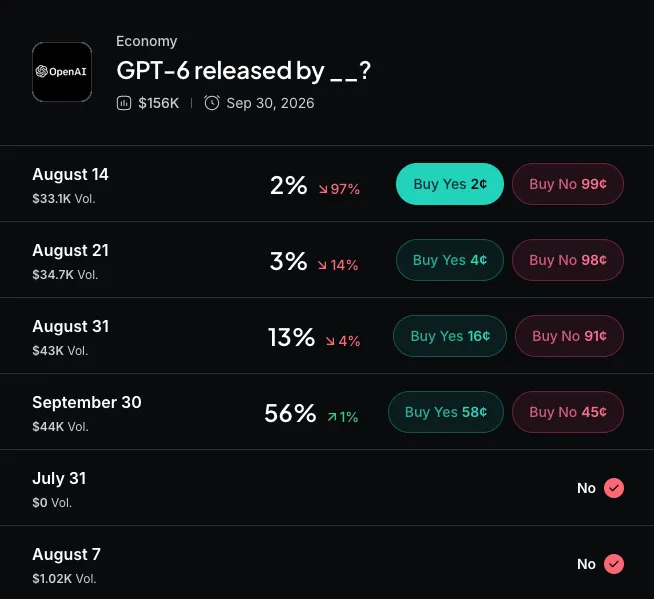
Myriad: When will OpenAI release GPT-6? Click to make your prediction.

“By partnering with vetted United States companies subject to the direction and oversight of the Federal Government, we will enhance our ability to counter TCO threats and combat transnational cybercrime, fraud, and other predatory schemes against American citizens.”

Two executive directors, one each from the Department of Justice and the Department of Homeland Security, would run the program. Private firms that contract with either agency could propose and carry out operations to access, surveil, disrupt, or destroy systems tied to those networks operating abroad.

Here's how it actually works: A company applies, clears a vetting process, and posts a bond or escrow of at least $1 million, forfeited if it breaks the rules. It gathers threat information from other businesses or from state and local agencies, then proposes operations to the NCC at Homeland Security. Nothing moves until the program's executive directors review the package and give written approval and direction. The government keeps operational control. The company pulls the trigger only on the government's say-so.

What the companies can do

The memo authorizes "Cyber Surveillance Operations" (accessing systems without the owner's permission or by exceeding authorized access) and broader offensive action against the networks behind ransomware, phishing, financial fraud, and sextortion schemes. Operations that would cause "Critical Outcomes," are barred, and any hit on a U.S. person or a U.S.-based system must stop immediately with minimization procedures.

Per the memorandum, "it is the policy of the United States to use all instruments of national power, including the innovative capabilities of the private sector, to combat cybercrime." The scale is the stated justification.

Crypto scams alone cost Americans an estimated $80.7 billion in 2025. North Korean hackers now have more sophisticated and complex ways to launder stolen crypto, and the government has already seized more than $25 million in crypto tied to investment and romance scams. This program would scale that model with private hands.

The program's targeting rules sit in a classified annex, so the public guardrails are thin on detail. The memo gives companies 60 days before implementation guidance is due.

Última Hora

No te pierdas ninguna noticia de última hora

Advertisement

House — Advertise on NewsLayer
NewsLayerAd

Sourced by

Originally reported by Decrypt

NewsLayer coverage based on externally reported material.

The Daily Brief

The onchain economy, before your day starts.

Curated markets, onchain insights, and key headlines — delivered every weekday morning.

Weekdays · Free · ~5 minute read

Noticias Relacionadas