

Why the Path to Quantum Resistance Runs Uphill for Bitcoin Wallet Makers
Trezor CTO Tomáš Sušánka explains the trade-offs of Bitcoin’s leading post-quantum signature scheme.
André Beganski
Publisher Decrypt
Nov 12, 2026 at 8:36 PM UTC · 3 Min. Lesezeit
Key Signal
10x Stateful signature size
Entities
bitcoin
Market Impact
BTC-6.47%$68,881
Last Updated
vor 7 Stunden
Übersetzung…
- Trezor is preparing for the UX challenges of a post-quantum Bitcoin, where SHRINCS, the community’s leading candidate signature scheme, lets users choose efficient “stateful” signatures that can expose funds to theft if reused beyond a signing budget, CTO Tomáš Sušánka said.
- To reduce that risk, Trezor is considering making larger, safer “stateless” signatures the default and hiding the riskier stateful option behind advanced settings.
- He also noted devices themselves need post-quantum upgrades for firmware and authentication.
Bitcoin custody has always involved some degree of risk, but wallet manufacturers like Trezor—which build physical devices designed to keep a user’s private keys secure offline—are preparing for a post-quantum world where new challenges arise.
That’s because SHRINCS, the community’s leading candidate for a post-quantum signature scheme, allows users to make transactions using stateful signatures that require rigid state tracking to prevent funds from being stolen, according to Trezor CTO Tomáš Sušánka.
Proposed late last year by Blockstream Research Director Jonas Nick and cryptographer Mikhail Kudinov, SHRINCS centers on a composite hash-based approach: users can make transactions using either stateful signatures or stateless signatures.
Market Context
Bitcoin
BTC
$68,843
-6.52% (24H)
Market Cap
$1.39T
24H Volume
$22.7B
24H High
$73,734
Article Intelligence
Key Entities
Related Coverage
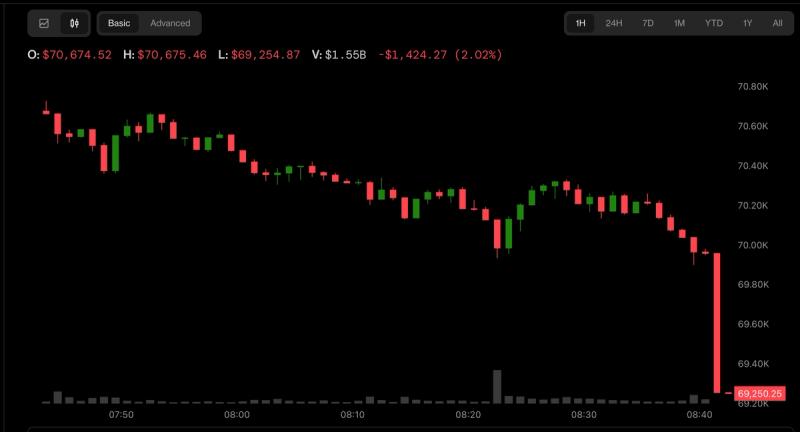 CryptoBitcoin dips below $70,000 as Dollar Index hits 19-month highvor einer Stunde · 1 min read
 CryptoBitcoin Slips Below $70,000 as Higher Yields Weigh on Cryptovor einer Stunde · 1 min read
 CryptoCrypto News Today: AlphaPepe Reveals New AI DEX Upgrade as Bitcoin Price Prediction Eyes $250Kvor 2 Stunden · 5 min read
Sponsored
Ad
NewsLayerLearn more
NewsLayer Premium
Unlock deeper intelligence.
Ad-free reading, exclusive research, and real-time onchain insights.
Go Premium