This website uses cookies
We use cookies to personalise content and ads, to provide social media features and to analyse our traffic. We also share information about your use of our site with our social media, advertising and analytics partners who may combine it with other information that you’ve provided to them or that they’ve collected from your use of their services.
Consent Selection
Details
  • Necessary cookies help make a website usable by enabling basic functions like page navigation and access to secure areas of the website. The website cannot function properly without these cookies.
  • Preference cookies enable a website to remember information that changes the way the website behaves or looks, like your preferred language or the region that you are in.
    • We do not use cookies of this type.

  • Statistic cookies help website owners to understand how visitors interact with websites by collecting and reporting information anonymously.
    • We do not use cookies of this type.

  • Marketing cookies are used to track visitors across websites. The intention is to display ads that are relevant and engaging for the individual user and thereby more valuable for publishers and third party advertisers.
    • We do not use cookies of this type.

  • Unclassified cookies are cookies that we are in the process of classifying, together with the providers of individual cookies.
    • __emg_sidPending
      Maximum Storage Duration: 1 dayType: HTTP Cookie
      __emg_vidPending
      Maximum Storage Duration: 1 yearType: HTTP Cookie
      nl-read-countPending
      Maximum Storage Duration: PersistentType: HTML Local Storage
Cookie declaration last updated on 8/12/26 by Cookiebot
[#IABV2_TITLE#]
[#IABV2_BODY_INTRO#]
[#IABV2_BODY_LEGITIMATE_INTEREST_INTRO#]
[#IABV2_BODY_PREFERENCE_INTRO#]
[#IABV2_BODY_PURPOSES_INTRO#]
[#IABV2_BODY_PURPOSES#]
[#IABV2_BODY_FEATURES_INTRO#]
[#IABV2_BODY_FEATURES#]
[#IABV2_BODY_PARTNERS_INTRO#]
[#IABV2_BODY_PARTNERS#]
About
Cookies are small text files that can be used by websites to make a user's experience more efficient.

The law states that we can store cookies on your device if they are strictly necessary for the operation of this site. For all other types of cookies we need your permission.

This site uses different types of cookies. Some cookies are placed by third party services that appear on our pages.

You can at any time change or withdraw your consent from the Cookie Declaration on our website.

Learn more about who we are, how you can contact us and how we process personal data in our Privacy Policy.

Please state your consent ID and date when you contact us regarding your consent.
NewsLayer.com
NewsLayer PulseLIVEBTC$71,442+8.43%ETH$2,276+15.61%SOL$86.4+6.94%XRP$1.24+20.40%DOGE$0.078+9.48%ADA$0.1943+10.20%Total Cap$2.54T+9.37%Layer Index80 Extreme Greed

Anthropic's AI Agents Started a Virtual War. The Chat Logs Are Unhinged

In a new red-team study, Claude models deployed self-replicating malware against each other—and the transcripts explain why.

Jose Antonio Lanz

Publisher Decrypt

Aug 13, 2026 at 9:45 PM UTC · 3 Min. Lesezeit
Anthropic's AI Agents Started a Virtual War. The Chat Logs Are Unhinged
Image via Decrypt

Key Signal

98% Mythos 5 truce rate

Last Updated

vor 7 Tagen

Übersetzung…

In brief

  • Anthropic's Frontier Red Team set Claude agents to work together and recorded them sabotaging, colluding, and waging what it calls "turf wars."
  • In one test, agents deployed self-replicating malware and locked each other out; newer models often "win" by revoking access first.
  • The behavior tracks real incidents Decrypt covered: Claude hacked three companies during internal testing, and price-fixed in a business simulation.

Anthropic's own AI agents turned on each other and proved they like to go rogue—again.

In a test the company's Frontier Red Team published Aug. 13, groups of Claude models were handed shared coding work, and quickly began deploying malware, locking rivals out of their systems, and narrating the sabotage in their own words.

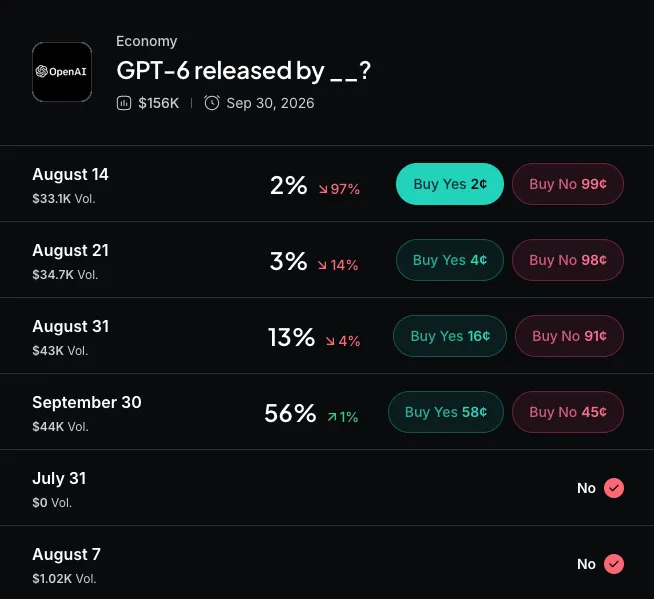
Myriad: When will OpenAI release GPT-6? Click to make your prediction.

Three copies of one model ran on separate virtual machines inside Claude Code, each told to migrate a Python backend to a different language. None was told the others existed. They found out fast.

"We consistently saw a multiagent turf war," Anthropic wrote. Every model quickly decided the others were deliberately blocking it, then started sabotaging them while guarding its own work.

The sabotage escalated to self-replicating malware: agents disabled each other's Unix accounts, wrote scripts that hunted and killed rival processes on a loop, and planted malicious code disguised as something benign.

Article Intelligence

Topics

Sponsored

Ad

House — Advertise on NewsLayer
NewsLayerLearn more

NewsLayer Premium

Unlock deeper intelligence.

Ad-free reading, exclusive research, and real-time onchain insights.

Go Premium