This website uses cookies
We use cookies to personalise content and ads, to provide social media features and to analyse our traffic. We also share information about your use of our site with our social media, advertising and analytics partners who may combine it with other information that you’ve provided to them or that they’ve collected from your use of their services.
Consent Selection
Details
  • Necessary cookies help make a website usable by enabling basic functions like page navigation and access to secure areas of the website. The website cannot function properly without these cookies.
  • Preference cookies enable a website to remember information that changes the way the website behaves or looks, like your preferred language or the region that you are in.
    • We do not use cookies of this type.

  • Statistic cookies help website owners to understand how visitors interact with websites by collecting and reporting information anonymously.
    • We do not use cookies of this type.

  • Marketing cookies are used to track visitors across websites. The intention is to display ads that are relevant and engaging for the individual user and thereby more valuable for publishers and third party advertisers.
    • We do not use cookies of this type.

  • Unclassified cookies are cookies that we are in the process of classifying, together with the providers of individual cookies.
    • __emg_sidPending
      Maximum Storage Duration: 1 dayType: HTTP Cookie
      __emg_vidPending
      Maximum Storage Duration: 1 yearType: HTTP Cookie
      nl-read-countPending
      Maximum Storage Duration: PersistentType: HTML Local Storage
Cookie declaration last updated on 8/12/26 by Cookiebot
[#IABV2_TITLE#]
[#IABV2_BODY_INTRO#]
[#IABV2_BODY_LEGITIMATE_INTEREST_INTRO#]
[#IABV2_BODY_PREFERENCE_INTRO#]
[#IABV2_BODY_PURPOSES_INTRO#]
[#IABV2_BODY_PURPOSES#]
[#IABV2_BODY_FEATURES_INTRO#]
[#IABV2_BODY_FEATURES#]
[#IABV2_BODY_PARTNERS_INTRO#]
[#IABV2_BODY_PARTNERS#]
About
Cookies are small text files that can be used by websites to make a user's experience more efficient.

The law states that we can store cookies on your device if they are strictly necessary for the operation of this site. For all other types of cookies we need your permission.

This site uses different types of cookies. Some cookies are placed by third party services that appear on our pages.

You can at any time change or withdraw your consent from the Cookie Declaration on our website.

Learn more about who we are, how you can contact us and how we process personal data in our Privacy Policy.

Please state your consent ID and date when you contact us regarding your consent.
NewsLayer

Install NewsLayer

Get the app experience — one tap from your home screen, instant loads and breaking-news alerts.

NewsLayer.com
NewsLayer PulseLIVEBTC$62,769-1.03%ETH$1,875-0.50%SOL$75.44-1.01%XRP$1-0.66%DOGE$0.0694-1.01%ADA$0.1794-1.54%Total Cap$2.26T-0.79%Layer Index41 Neutral
External ReportingVeröffentlicht vor 6 Stunden

Are churches missing out in the bitcoin boom?

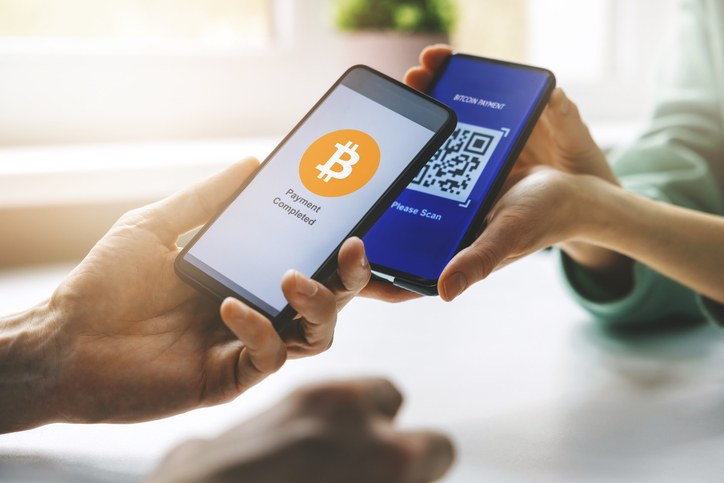
(Photo: Getty/iStock) Earlier this summer, a church on England’s south coast made headlines, when it declared it was going to accept bitcoin as donations.

Are churches missing out in the bitcoin boom?
Publisher www.christiantoday.com 6 Min. Lesezeit
NewsLayer editorial artwork

Market Context

Bitcoin

BTC

$62,769

-1.03% 24h

Layer Index

41

↓ 3 pts in 24h

Earlier this summer, a church on England’s south coast made headlines, when it declared it was going to accept bitcoin as donations. 

Sean Theunissen, elder and operations lead at Claygate Church, based in Bournemouth, Southbourne and Poole, emphasised: “Bitcoin is not the gospel 2.0 – the church will never move away from its central message.”

Bitcoin, explains the Cambridge Dictionary, is “a brand name for a type of cryptocurrency, a digital currency that is produced by a public network rather than any government, and uses special codes to keep it secret.” Its use has been increasing across the world. 

Mr Theunissen added, “The Bible is always speaking against injustice, corruption and dodgy scales. From what I can see, Bitcoin is not on a trajectory towards evil. It seems to be trying to get rid of some of the corruptions in traditional monetary systems.”

The church, part of the New Frontiers network, believes that digital currencies may present opportunities for strengthening its international partnerships, and streamlining the church’s support for them. 

Mr Theunissen explained: “We’ve definitely had issues with intermediary banks getting in the way of things in the past. As Bitcoin grows, who knows, potentially it will help reduce delays in getting help where it’s needed most. We want to support projects going on in different places. It’s a relational thing, but there’s also money that goes alongside that.”

Claygate Church may be among a small number of UK churches that are now accepting donations in cryptocurrency, but churches in the United States have been quicker to embrace the possible opportunities. 

Pushpay, an online church giving platform used by many US churches, offers stock and cryptocurrency giving among its services. 

An article posted on a US pastors’ blogsite earlier this year encouraged churches – with care – to embrace such giving. It advised, “for churches willing to do the work, the opportunity is substantial - not merely financially, but in terms of reaching a generation that has too often felt the church had nothing for them.”

UK churches are, generally, approaching cryptocurrencies with more caution. Charity and tax regulations between the two countries are different, so no direct comparison can be made.

Fundraisers and church treasurers I have spoken to have expressed scepticism about giving by cryptocurrencies taking off in the UK – certainly in the short-term. But a major UK online giving platform recently offered me the opportunity of donating in cryptocurrency, when I wanted to support a local schools charity.

So what’s happening?

A spokesperson for the Church of England told me that they were watching developments with interest: “Although our national systems do not currently support Bitcoin donations, our priority remains providing secure, compliant, and trusted giving solutions. 

“Any future consideration of cryptocurrency would need to align with regulatory requirements and available resources to implement well, but we remain interested in monitoring developments in this area.”

Daniel Jones, Chief Purpose Officer of Stewardship, a UK-based giving platform that enables more than 30,000 donors to give £161m a year to over 12,000 churches, charities and Christian workers, gave me his organisation’s perspective.

He explained, "Churches have always adapted to new technologies that help them engage people and resource ministry. Cryptocurrency may prove to be another of those developments - the real test for churches and charities considering accepting bitcoin donations is whether they can do so in a way that reflects good stewardship and helps steward resources faithfully and lawfully in service of God's mission.

“For cryptocurrency, that means trustees and ministry leaders should think carefully about practical considerations such as valuation volatility, governance, regulation and donor demand, alongside the potential opportunities the technology presents.  That also includes not falling into the trap or temptation of using it to circumvent systems and controls designed to protect them, their donors and their beneficiaries." 

Jones added, “At Stewardship, we're interested in technology that makes generosity easier and more joyful for those who give, and that helps churches and charities fulfil their mission. As with any innovation, churches should approach cryptocurrency with both curiosity and care.” 

The Charity Commission, which oversees UK charities including churches, published updated guidance in April 2023 to address the rise in cryptocurrencies. 

Sam Jackson, Assistant Director of Policy at the Commission explained, “As more and more charities move to operate online and newer technologies are developed, such as the use of cryptocurrencies, trustees will need to navigate risks that might not have been previously considered. We have updated our guidance to reflect the digital age we all live in and worked hard to ensure it is clear and simple to use.”

The Charity Commission set out the ‘many risks’ of cryptocurrencies as: 

- the volatility of their value as this can change very quickly

- potential fraud or theft by hackers

- the lack of protection compared to traditional currencies or financial products – because cryptoassets are largely unregulated you are very unlikely to have access to the Financial Services Compensation Scheme (FSCS) or the Financial Conduct Authority (FCA) if something goes wrong

- that laws on cryptoassets vary between countries – cryptoassets are banned in some countries and other countries have complex regulatory requirements

- difficulty in tracing donors because donations of cryptoassets can be made anonymously

- their limited use as few retailers accept them as payment

- the environmental impact of cryptoassets and blockchain technology – many of these use a lot of energy and you should check how this fits with any environmental, social and governance policy you may have.

The Charity Commission advises that if, despite these risks, churches or charities opt to accept cryptocurrencies, then the trustees should adopt a policy on accepting, refusing and using cryptoassets, including how you make decisions about converting them to traditional currency.

Other Charity Commission advice includes: 

- if receiving donations directly in its crypto wallet, ensure the platform you are using is compliant with UK regulations and registered with the FCA for anti-money laundering and counterterrorism as required

- keep accurate records of donations, storage and usemake sure you follow HMRC’s guidance on the taxation of cryptoassets

- remember that you cannot claim Gift Aid on any cryptoassets

- review the benefits to your charity of accepting cryptocurrency versus the risk

- regularly review your policies on them.

In addition, the Code of Fundraising Practice – under which many charities operate – advises, “If you are considering accepting crypto donations, make sure you understand how to receive and store crypto, and how to convert it to legal tender. Before deciding to accept cryptocurrency donations, you should evaluate the risks and, if you need to, take specialist professional advice.”

At present, from a UK perspective, the risks appear to far outweigh benefits, especially as most British churches have treasurers who are hard-pressed volunteers, combining the role with full-time jobs, or are in their retirement years.

Regulatory and legal issues, concerns around the volatility of the cryptocurrency, the need to identify the giver when some donors may wish to remain anonymous, and the negative environmental impact of the resources used to create the cryptocurrencies will cause most churches to stay with more conventional means of fundraising. At least for the time being…  

Rev Peter Crumpler is a Church of England minister in St Albans, Herts and a former communications director with the CofE.

Eilmeldung

Verpassen Sie keine Eilmeldung

Advertisement

House — Advertise on NewsLayer
NewsLayerAd

Sourced by

Originally reported by www.christiantoday.com

NewsLayer coverage based on externally reported material.

The Daily Brief

The onchain economy, before your day starts.

Curated markets, onchain insights, and key headlines — delivered every weekday morning.

Weekdays · Free · ~5 minute read

Ähnliche Artikel