
Bitcoin Fork: Was mit deinen Coins bei einem Chain-Split passiert
Bitcoin Fork: Was mit deinen Coins bei einem Chain-Split passiert CryptoTicker
CryptoTicker
Publisher
Aug 22, 2026 at 9:29 AM UTC · 13 Min. Lesezeit
Key Signal
963,648 Alpha launch block height
Entities
bitcoin
Market Impact
BTC+1.93%$82,434
Last Updated
vor 2 Monaten
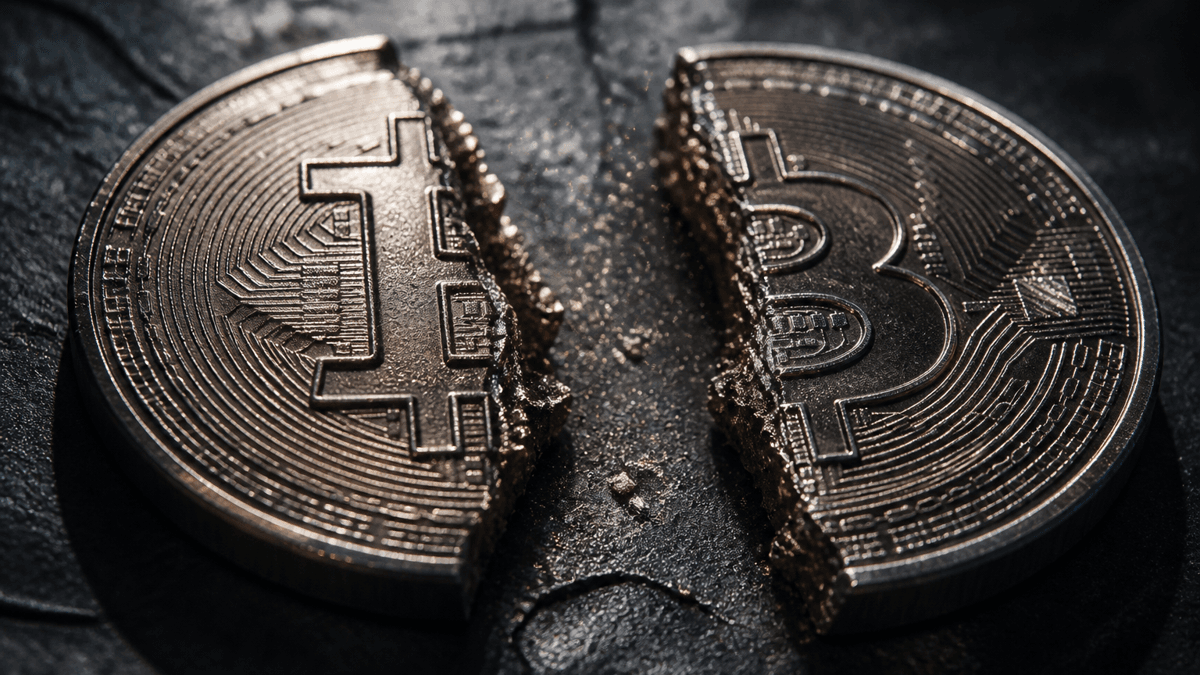
Wenn eine Blockchain sich aufspaltet, verschwindet Ihr Bitcoin nicht. Nach der Aufspaltung halten Sie ihn auf beiden Chains gleichzeitig, da beide Chains bis zum Zeitpunkt der Trennung dieselbe Historie teilen. Aus einem Guthaben werden zwei. Ob Sie das zweite Guthaben tatsächlich erhalten und ob Sie es sicher bewegen können, hängt von zwei Fragen ab: Wer hält die privaten Schlüssel, und gibt es einen Schutz gegen Transaktionen, die doppelt gültig sind. Dieser Artikel beantwortet beides, erklärt die beteiligten Begriffe und erläutert die deutsche steuerliche Situation.
Der Anlass ist konkret. Eine dauerhafte Abspaltung von der Bitcoin-Blockchain ist für den 31. Oktober 2026 geplant und trägt den Namen eCash sowie den Ticker ECX. Dies betrifft jeden, der Bitcoin hält, unabhängig davon, ob er jemals von dem Projekt gehört hat. Bevor wir uns diesem speziellen Fall zuwenden, lohnt es sich, das Prinzip dahinter darzulegen, da es sich bei jeder Chain-Abspaltung wiederholt.
Was ist ein Bitcoin-Fork, und warum liegen Ihre Coins danach auf zwei Chains?
Ein Fork ist eine Änderung der Regeln, nach denen ein Netzwerk gültige Blöcke akzeptiert. Das ist die Definition in einem Satz, und sie erklärt bereits die Folge: Wenn Teilnehmer über die neuen Regeln uneins sind, führen sie die Chain ab einem bestimmten Block unterschiedlich fort. Von diesem Punkt an existieren zwei Blockchains, die bis zur Spaltung Block für Block identisch sind.
Market Context
Bitcoin
BTC
$82,489
+1.99% (24H)
Market Cap
$1.65T
24H Volume
$23.5B
24H High
$82,600
Article Intelligence
Key Entities
Related Coverage
 CryptoWhat Is a Hardware Wallet? Crypto Cold Storage Explainedvor 2 Stunden · 7 min read
 CryptoBitcoin price prediction: difficulty jumps 6 percentvor 2 Stunden · 1 min read
 CryptoBitcoin at $81,963: ETF inflows close to zerovor 5 Stunden · 1 min read
Sponsored
Ad
NewsLayer Premium
Unlock deeper intelligence.
Ad-free reading, exclusive research, and real-time onchain insights.
Go Premium