We use cookies to personalise content and ads, to provide social media features and to analyse our traffic. We also share information about your use of our site with our social media, advertising and analytics partners who may combine it with other information that you’ve provided to them or that they’ve collected from your use of their services.
Necessary cookies help make a website usable by enabling basic functions like page navigation and access to secure areas of the website. The website cannot function properly without these cookies.
_cfuvidThis cookie is a part of the services provided by Cloudflare - Including load-balancing, deliverance of website content and serving DNS connection for website operators.
Maximum Storage Duration: SessionType: HTTP Cookie
__cf_bm [x7]This cookie is used to distinguish between humans and bots. This is beneficial for the website, in order to make valid reports on the use of their website.
CookieConsentStores the user's cookie consent state for the current domain
Maximum Storage Duration: 1 yearType: HTTP Cookie
Preference cookies enable a website to remember information that changes the way the website behaves or looks, like your preferred language or the region that you are in.
We do not use cookies of this type.
Statistic cookies help website owners to understand how visitors interact with websites by collecting and reporting information anonymously.
We do not use cookies of this type.
Marketing cookies are used to track visitors across websites. The intention is to display ads that are relevant and engaging for the individual user and thereby more valuable for publishers and third party advertisers.
We do not use cookies of this type.
Unclassified cookies are cookies that we are in the process of classifying, together with the providers of individual cookies.
List of domains your consent applies to: [#BULK_CONSENT_DOMAINS#]
Cookie declaration last updated on 8/12/26 by Cookiebot
[#IABV2_TITLE#]
[#IABV2_BODY_INTRO#]
[#IABV2_BODY_LEGITIMATE_INTEREST_INTRO#]
[#IABV2_BODY_PREFERENCE_INTRO#]
[#IABV2_BODY_PURPOSES_INTRO#]
[#IABV2_BODY_PURPOSES#]
[#IABV2_BODY_FEATURES_INTRO#]
[#IABV2_BODY_FEATURES#]
[#IABV2_BODY_PARTNERS_INTRO#]
[#IABV2_BODY_PARTNERS#]
About
Cookies are small text files that can be used by websites to make a user's experience more efficient.
The law states that we can store cookies on your device if they are strictly necessary for the operation of this site. For all other types of cookies we need your permission.
This site uses different types of cookies. Some cookies are placed by third party services that appear on our pages.
You can at any time change or withdraw your consent from the Cookie Declaration on our website.
Learn more about who we are, how you can contact us and how we process personal data in our Privacy Policy.
Please state your consent ID and date when you contact us regarding your consent.
Install NewsLayer
Get the app experience — one tap from your home screen, instant loads and breaking-news alerts.
Bitcoin (BTC) falling more than 50% from its $126,200 all-time high was a “positioning correction,” BlackRock says.
Key points:
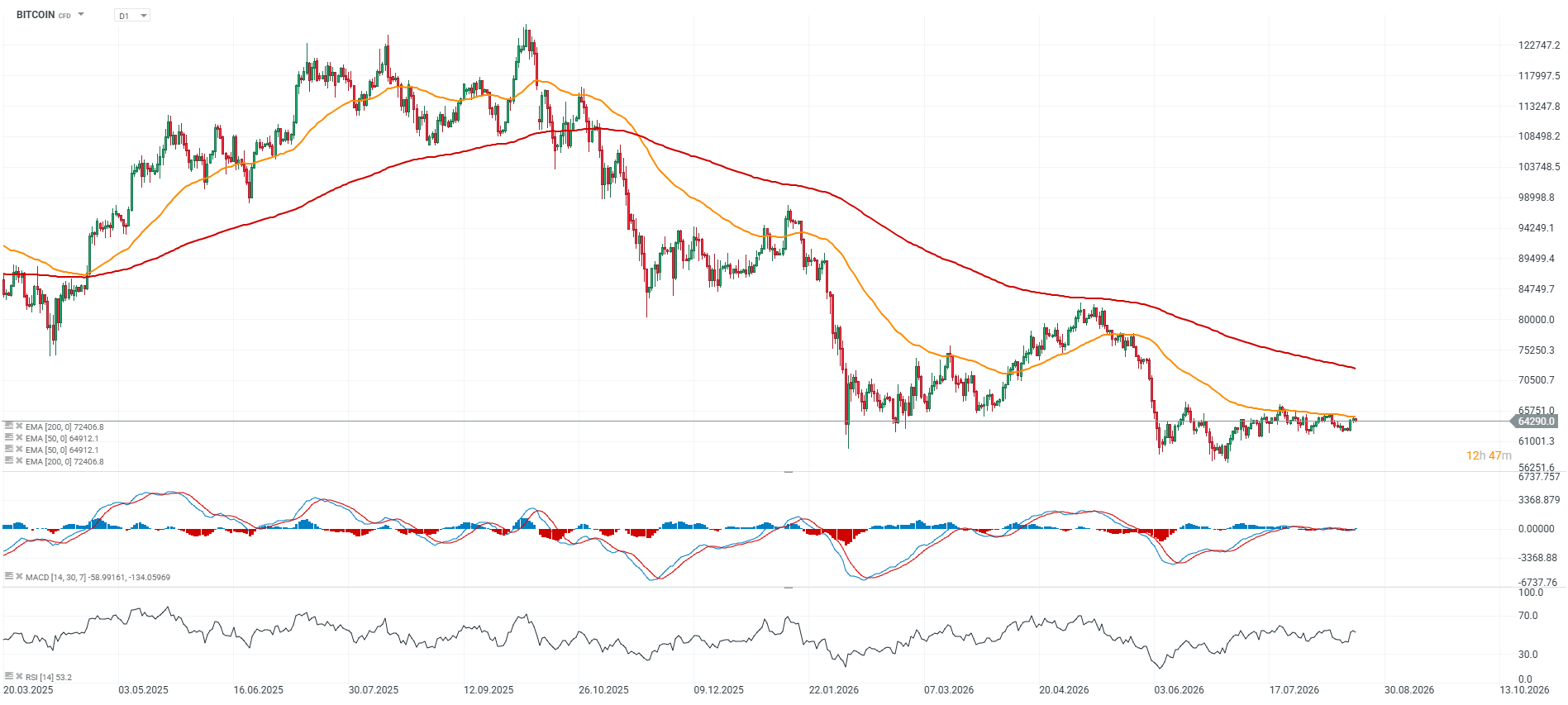
A BlackRock report attributes Bitcoin’s decline below $60,000 to cascading liquidations as leverage was purged from the market.
The long-term BTC investment thesis as a “low-correlation diversifier” remains intact, analysts confirm.
BlackRock sees Bitcoin’s risk-asset correlation declining as time goes on.
BlackRock predicts falling correlation of BTC with risk assets
In a report published this week, the world’s largest asset manager preserved its bull thesis despite waves of outflows from its spot Bitcoin exchange-traded fund (ETF) in 2026.
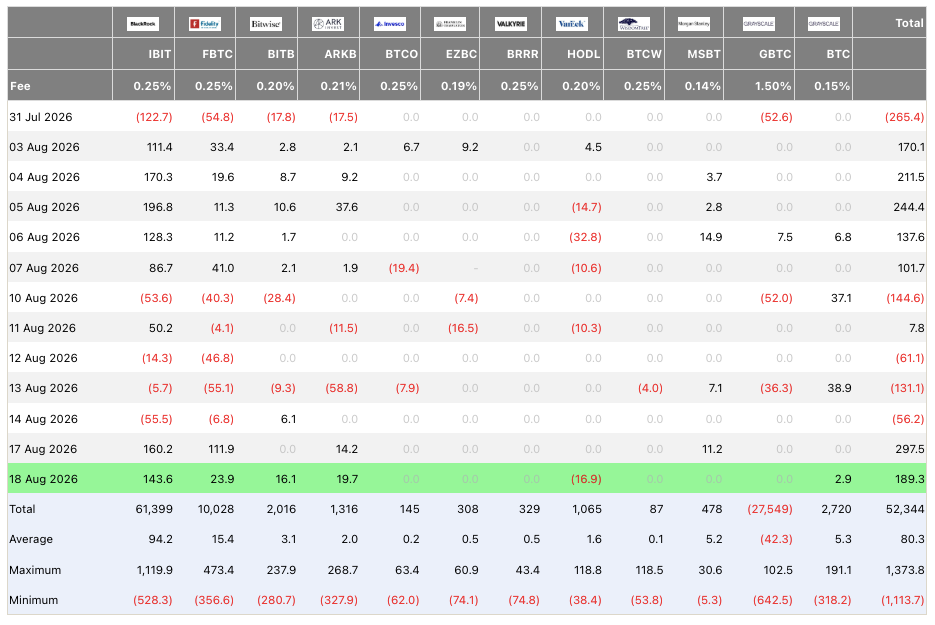
BlackRock’s iShares Bitcoin Trust (IBIT) saw net outflows of $78.9 million in the week through Aug. 14. Across all ETF products, outflows totaled $267.2 million.
“We view bitcoin’s ~50% pullback from October 2025 highs as a positioning correction rather than a change in its investment case. A historically overleveraged market, enabled by perpetual futures, suffered cascading liquidations compounded by slowing ETP outflows and digital asset treasury demand,” the report states.
US spot Bitcoin ETF netflows (screenshot). Source: Farside Investors
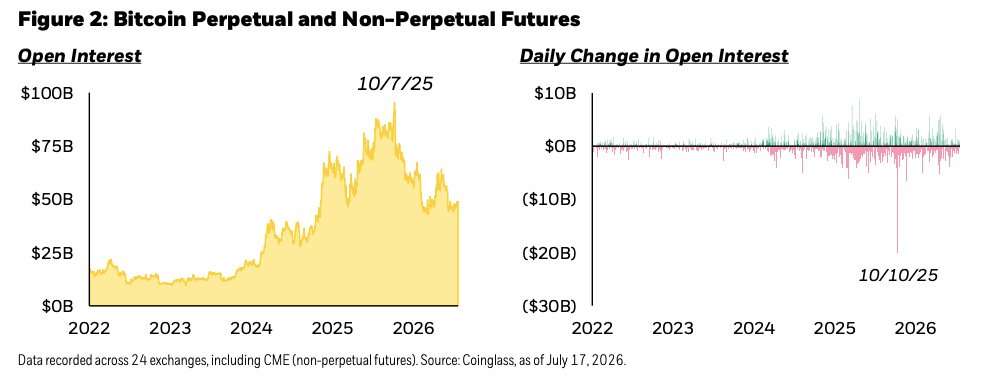
During last year’s peak, Bitcoin experienced a surge in speculative positioning. BlackRock pointed to open interest on Bitcoin derivatives markets passing $90 billion in early October amid heavy use of leverage. The unwinding of these positions increased the correlation between BTC/USD and risk assets more broadly.
“A macro-driven risk-off catalyst (China tariff headlines) triggered large-scale deleveraging across precious metals and crypto markets. The resulting liquidation waves drove prices down to cycle lows below $60,000 per bitcoin by June 2026,” it explained.
Bitcoin futures open interest data (screenshot). Source: BlackRock
Institutional Bitcoin demand has suffered this year as a combination of geopolitical uncertainty and growing inflation pressures saw capital flowing into established risk-asset classes, among them US equities, with the S&P 500 hitting record highs last week. Bitcoin has failed to follow suit, but BlackRock forecasts that this may change.
“With speculative excess now largely purged, we believe bitcoin’s recent episodes of elevated risk correlation should normalize lower, consistent with its longer-term record as a low-correlation diversifier,” it continued.
Longer-term resilience of BTC stands out
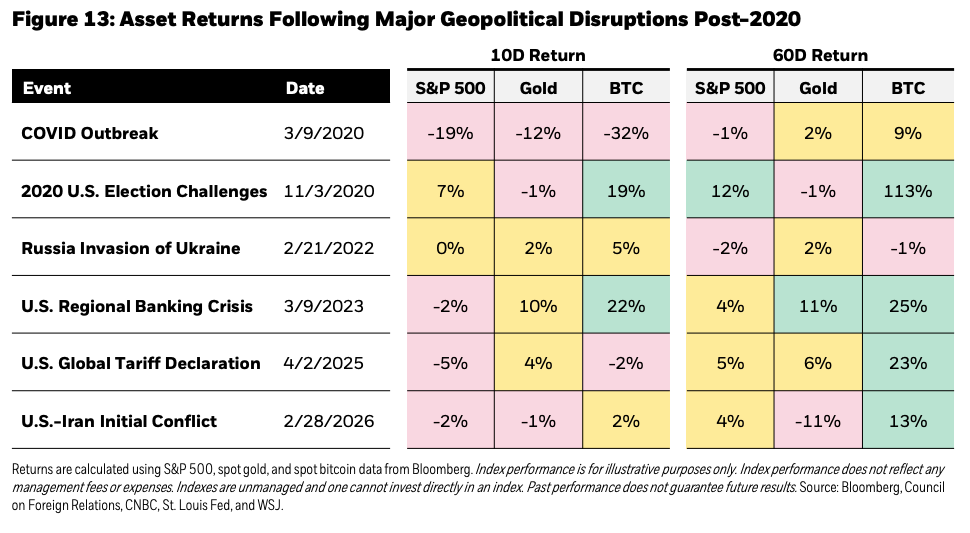
The report highlights that long-term BTC investment returns follow key political and macro events. These include the COVID-19 outbreak in March 2020, the US presidential election the same year, as well as the regional banking crisis and president Donald Trump’s multiple international trade-tariff declarations.
Related: Bitcoin price spike to $64.5K was ‘low-volume liquidity trap’: Analysis
While it initially struggled following some of these events, Bitcoin produced solid returns on a 60-day basis. In the case of the 2020 election, these hit as high as 113%.
“Through multiple shocks in recent years, bitcoin often outperformed both the S&P 500 and gold in the weeks and months following the onset of disruptions,” BlackRock commented.
“This pattern has held true thus far in 2026 amid ongoing conflict between the U.S. and Iran, with bitcoin delivering positive returns and outperforming equities and gold following the onset of hostilities in February and the end of the ceasefire agreement in July.”
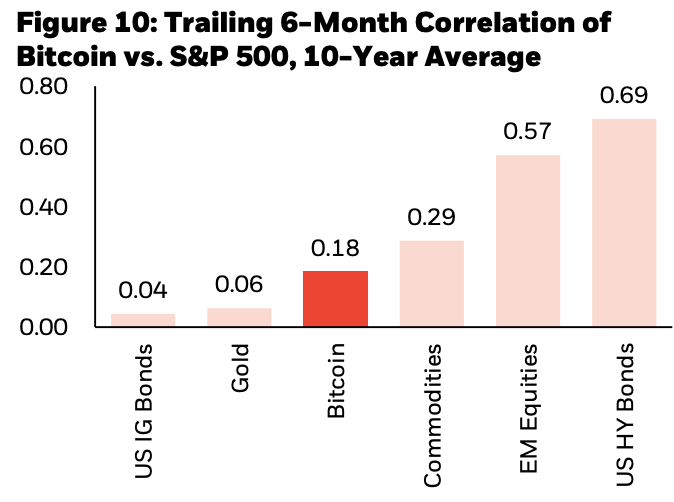
Further data puts Bitcoin’s 12-month realized volatility at 40% compared to 26% for gold and 12% for the S&P 500. The rolling six-month correlation between Bitcoin and the S&P, presented as a 10-year average, is now 0.18 — still notably higher than gold’s 0.06 reading.
“Bitcoin’s underlying investment case aligns more closely with that of gold — as a global monetary alternative and a hedge against inflation, global disorder, and declining trust in fiat currencies. Even for gold, which tends to be viewed as a standard uncorrelated, store-of-value asset, brief periods of high equity correlation exist, including COVID in 2020-2021 and the monetary easing cycle in 2023,” the report added.
Bitcoin vs. S&P 500 correlation data (screenshot). Source: BlackRock
Since October 2025, BTC price performance has led some to question its role as a form of “digital gold.” In a Q1 report, asset manager Grayscale described short-term behavior as being more like a growth stock than gold, noting its low correlation to the latter.