This website uses cookies
We use cookies to personalise content and ads, to provide social media features and to analyse our traffic. We also share information about your use of our site with our social media, advertising and analytics partners who may combine it with other information that you’ve provided to them or that they’ve collected from your use of their services.
Consent Selection
Details
  • Necessary cookies help make a website usable by enabling basic functions like page navigation and access to secure areas of the website. The website cannot function properly without these cookies.
  • Preference cookies enable a website to remember information that changes the way the website behaves or looks, like your preferred language or the region that you are in.
    • We do not use cookies of this type.

  • Statistic cookies help website owners to understand how visitors interact with websites by collecting and reporting information anonymously.
    • We do not use cookies of this type.

  • Marketing cookies are used to track visitors across websites. The intention is to display ads that are relevant and engaging for the individual user and thereby more valuable for publishers and third party advertisers.
    • We do not use cookies of this type.

  • Unclassified cookies are cookies that we are in the process of classifying, together with the providers of individual cookies.
    • __emg_sidPending
      Maximum Storage Duration: 1 dayType: HTTP Cookie
      __emg_vidPending
      Maximum Storage Duration: 1 yearType: HTTP Cookie
      nl-read-countPending
      Maximum Storage Duration: PersistentType: HTML Local Storage
Cookie declaration last updated on 8/12/26 by Cookiebot
[#IABV2_TITLE#]
[#IABV2_BODY_INTRO#]
[#IABV2_BODY_LEGITIMATE_INTEREST_INTRO#]
[#IABV2_BODY_PREFERENCE_INTRO#]
[#IABV2_BODY_PURPOSES_INTRO#]
[#IABV2_BODY_PURPOSES#]
[#IABV2_BODY_FEATURES_INTRO#]
[#IABV2_BODY_FEATURES#]
[#IABV2_BODY_PARTNERS_INTRO#]
[#IABV2_BODY_PARTNERS#]
About
Cookies are small text files that can be used by websites to make a user's experience more efficient.

The law states that we can store cookies on your device if they are strictly necessary for the operation of this site. For all other types of cookies we need your permission.

This site uses different types of cookies. Some cookies are placed by third party services that appear on our pages.

You can at any time change or withdraw your consent from the Cookie Declaration on our website.

Learn more about who we are, how you can contact us and how we process personal data in our Privacy Policy.

Please state your consent ID and date when you contact us regarding your consent.
NewsLayer

Install NewsLayer

Get the app experience — one tap from your home screen, instant loads and breaking-news alerts.

NewsLayer.com
NewsLayer PulseLIVEBTC$64,290+2.21%ETH$1,905+1.65%SOL$75.85+2.11%XRP$1+0.72%DOGE$0.0704+1.47%ADA$0.1738-1.08%Total Cap$2.28T+1.64%Layer Index41 Neutral
External ReportingVeröffentlicht vor 3 Stunden

Bitcoin Price Impact: Will $390M ETF Outflows Trigger a Deeper Drop?

Spot Bitcoin ETFs saw $390 million in outflows during the week to August 14, as institutions pulled capital amid rising oil prices and tensions over the Strait of Hormuz. The Bitcoin price has held near $63,500 despite the withdrawal.…

Bitcoin Price Impact: Will $390M ETF Outflows Trigger a Deeper Drop?
Publisher Cryptonews.net 4 Min. Lesezeit
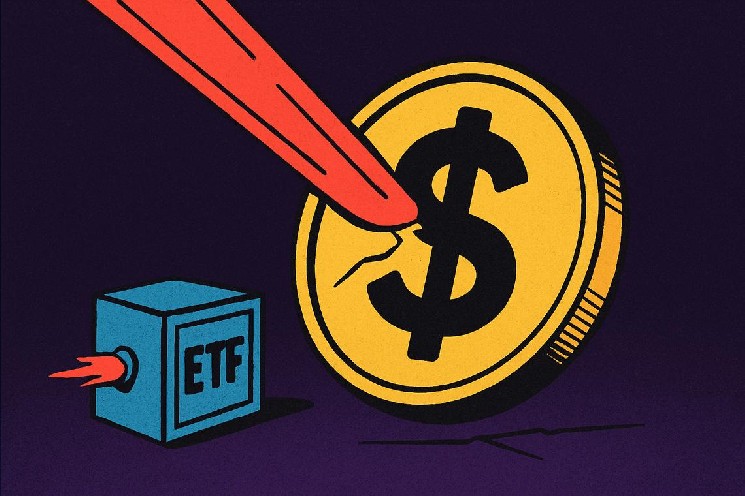
Image via Cryptonews.net
Übersetzung…

Market Context

Bitcoin

BTC

$64,290

+2.21% 24h

Layer Index

41

↓ 1 pts in 24h

Spot Bitcoin ETFs saw $390 million in outflows during the week to August 14, as institutions pulled capital amid rising oil prices and tensions over the Strait of Hormuz. The Bitcoin price has held near $63,500 despite the withdrawal. The selling reflects concerns about inflation and its potential impact on Federal Reserve policy, which observers trace through a chain of events: geopolitical tension in the Middle East, rising commodity prices, inflation expectations, and reduced appetite for risk assets.

Key takeaways

  • Spot Bitcoin ETFs saw $390 million in outflows during the week to August 14, the heaviest weekly withdrawal since early July.
  • Brent crude climbed above $88 a barrel in the week to August 15 as the US maintained its naval blockade of Iran amid deadlocked Strait of Hormuz talks.
  • Bitcoin whale wallets holding 1,000+ $BTC fell from a peak of 1,963 on July 31, thinning steadily through August.
  • Despite the selling, the Bitcoin price has held near $63,500 rather than crashing, suggesting controlled de-risking instead of panic.
  • History shows Bitcoin has typically dropped and then rebounded after past geopolitical shocks, though the current outcome remains uncertain.

Bitcoin ETF Outflows and Geopolitical Pressure

Spot Bitcoin ETFs experienced roughly $390 million in withdrawals during the week to August 14. That marks a sharp reversal from the $853 million these same funds absorbed just the week before, and it’s the largest single-week pullback since early July. The timing coincides with a surge in oil prices and the standoff over the Strait of Hormuz.

Even with that outflow, the Bitcoin price has stayed close to $63,500 instead of falling sharply. That resilience suggests a measured retreat by institutional players rather than a rush for the exits, which signals a controlled de-risking rather than panic selling.

Oil Shock and the Strait of Hormuz Standoff

Brent crude pushed above $88 a barrel in the week to August 15, a jump of more than 5%, after the United States said its naval blockade of Iran could continue indefinitely while talks to reopen the Strait of Hormuz remained deadlocked.

That chokepoint carries significance beyond oil. The Middle East ships close to a quarter of the world’s urea through Hormuz, and nitrogen fertilizer benchmarks jumped between 25% and 50% after the conflict began. Combined with an oil price shock, such disruptions feed into food and energy inflation.

Sticky energy and food costs give the Federal Reserve reason to keep interest rates elevated, and higher rates reduce the cheap liquidity that risk assets like Bitcoin typically depend on. In this way, a supply disruption in a shipping lane can reshape appetite for a digital asset traded globally. When a blockade threatens to run indefinitely and negotiations remain stuck, the inflation risk compounds, and investors positioning for a prolonged standoff tend to trim exposure to volatile assets first.

Whale Wallets Thin Out as Market Sentiment Shifts

Large Bitcoin holders reduced their positions as oil prices climbed. According to Glassnode, wallets holding 1,000 or more $BTC peaked near 1,963 on July 31, then declined steadily through August.

The 30-day trend for this cohort turned net negative around August 10, the same week crude pushed higher. That timing suggests the largest holders were reducing exposure as inflation concerns intensified.

The sequence is notable: whales generally react to macro signals before slower-moving capital does. In this case, the largest holders moved first, with ETF outflows following soon after. This order suggests selling pressure flowed from geopolitical tensions through inflation expectations and into Bitcoin markets within a matter of weeks.

What History Says About Bitcoin’s Reaction to Geopolitical Shocks

Geopolitical shocks are not new to Bitcoin, and the asset’s track record during past conflicts offers context. When Russia invaded Ukraine in February 2022, Bitcoin fell about 9% within two days, then rebounded roughly 15% over the following five weeks. The 2023 Israel-Hamas war had minimal price impact. The Israel-Iran flare-up in June 2025 knocked Bitcoin down about 4% before a ceasefire triggered a recovery.

That pattern suggests geopolitical-driven drops have tended to be short-lived shakeouts rather than lasting bear signals, reversing once tensions cooled. Whether that repeats now remains uncertain.

Two scenarios are possible. If Gulf tensions ease, or if whales and ETF buyers step back in, the dip likely repairs itself the same way past geopolitical scares did. Some market watchers describe an accumulation zone forming, even while acknowledging the floor is not yet confirmed.

The alternative path is different. If ETF outflows continue through August, historically one of Bitcoin’s weakest months, and whales keep selling rather than buying, the pullback could deepen. Under that scenario, a deeper bottom may form, but only if selling pressure intensifies before it eases.

FAQ

Why did $390 million flow out of Bitcoin ETFs recently?

Spot Bitcoin ETFs saw outflows during the week to August 14 as institutions reduced exposure amid rising oil prices and tensions over the Strait of Hormuz, which raised inflation concerns.

How do rising oil prices relate to Bitcoin demand?

Rising oil prices increase inflation and can keep Federal Reserve interest rates elevated, which reduces liquidity and increases risk aversion, potentially leading to Bitcoin ETF outflows.

What has been Bitcoin’s historical price reaction to geopolitical shocks?

Bitcoin has typically experienced a short-term price drop followed by a rebound as conflicts de-escalate, as seen during the Russia-Ukraine war and other Middle East tensions.

What are the possible future Bitcoin price scenarios given current geopolitical tensions?

If Gulf tensions ease, Bitcoin could recover from its recent dip. If ETF outflows and selling pressure continue, the market could see a deeper pullback before stabilizing.

Article produced with the assistance of artificial intelligence and reviewed by the editorial team.

Eilmeldung

Verpassen Sie keine Eilmeldung

Advertisement

House — Advertise on NewsLayer
NewsLayerAd

Sourced by

Originally reported by Cryptonews.net

NewsLayer coverage based on externally reported material.

The Daily Brief

The onchain economy, before your day starts.

Curated markets, onchain insights, and key headlines — delivered every weekday morning.

Weekdays · Free · ~5 minute read

Ähnliche Artikel