
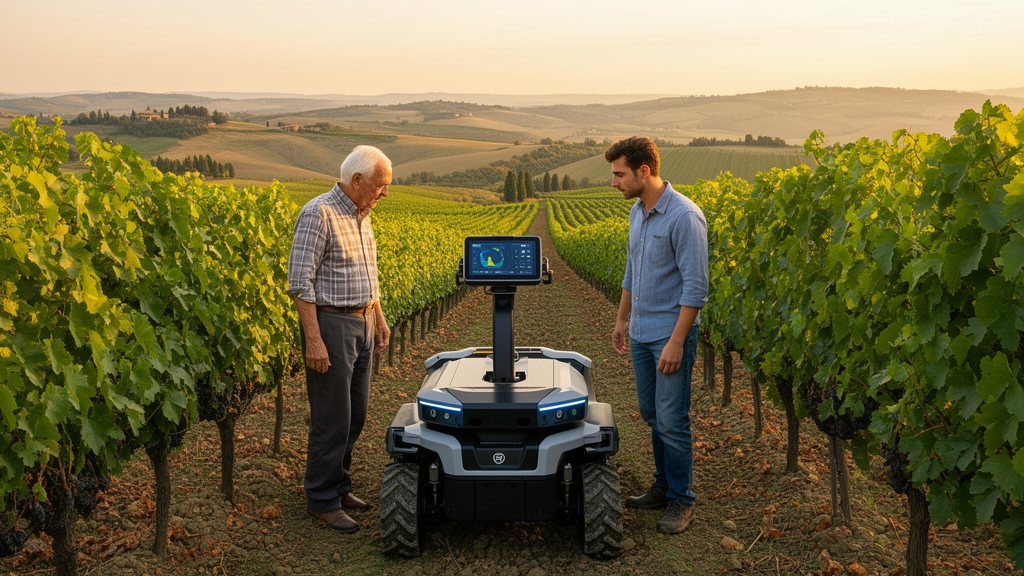
Italian citizens demonstrate moderate to high acceptance of artificial intelligence applications in agriculture, yet their favorable attitudes frequently coexist with measurable response uncertainty rather than fully established convictions, according to a nationwide survey published in Smart Agricultural Technology. Conducted by an interdisciplinary research team from institutions including the University of Turin, the investigation explored public attitudes toward eleven distinct artificial intelligence tools deployed across modern agri-food systems. Rather than treating public approval as a simple binary choice between acceptance and rejection, the study examined consumer evaluations as a behavioral continuum where positive sentiment can mask hesitation, ambivalence, or unfamiliarity. Using advanced statistical modeling that explicitly separates genuine preference from underlying decision-making uncertainty, the researchers found that acceptance indices consistently surpassed moderate thresholds across every evaluated technology. However, the degree of clarity with which respondents expressed their views varied widely depending on the specific application, individual educational attainment, household income, and participant age brackets.
Italian Citizens Favor Farm Artificial Intelligence While Expressing Notable Response Uncertainty
Italian citizens demonstrate moderate to high acceptance of artificial intelligence applications in agriculture, yet their favorable attitudes frequently coexist with measurable response uncertainty rather than fully established…
Bioengineer.org
Publisher
Nov 22, 2026 at 12:34 PM UTC · 8 Min. Lesezeit
Übersetzung…
Article Intelligence
Sponsored
Ad
NewsLayerLearn more
NewsLayer Premium
Unlock deeper intelligence.
Ad-free reading, exclusive research, and real-time onchain insights.
Go Premium