
NASA's Apollo Computer Mined Bitcoin in 2019 But Today It Would Take Forever
Crypto media outlets circulated the story again earlier today, explaining that computer scientist Ken Shirriff was able to program an Apollo Guidance machine to mine Bitcoin. Shirriff first published the project on his blog in July…
Bitcoin News
Publisher
Sep 20, 2026 at 9:37 AM UTC · 3 Min. Lesezeit
Entities
bitcoin
Market Impact
BTC-1.02%$80,364
Last Updated
vor einer Stunde
- Ken Shirriff’s team got an Apollo Guidance Computer to run one bitcoin hash every 10.3 seconds in 2019.
- Bitcoin’s hashrate reached 934 EH/s in September 2026, about 14 times the 65 EH/s the team faced.
- At today’s hashrate the machine would need about 13 million times the age of the universe to find a block.
The Clip That Came Back
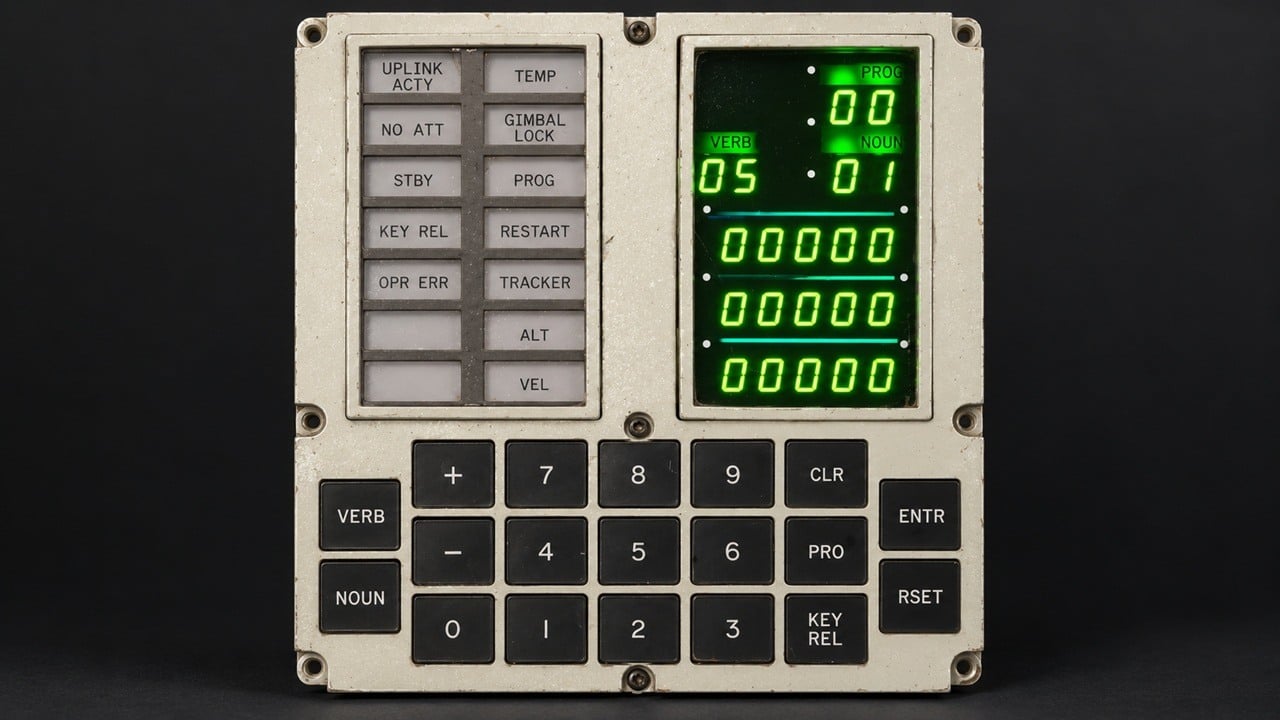
Crypto media outlets circulated the story again earlier today, explaining that computer scientist Ken Shirriff was able to program an Apollo Guidance machine to mine Bitcoin. Shirriff first published the project on his blog in July 2019, drawing coverage from several popular media houses at the time.
The reason the story continues to pique the interest of crypto enthusiasts is simple, i.e. it sets one of the most famous computers in history against the most powerful computing network on Earth, and the gap between them explains proof-of-work, bitcoin’s mining system, better than any diagram.
The Machine on the Bench
The Apollo Guidance Computer (AGC) handled navigation and engine control on the Apollo missions. According to Shirriff, it weighs about 70 pounds, has 2K words of RAM (roughly 4 kilobytes), 36K words of read-only memory, and can perform about 40,000 additions per second.
Market Context
Bitcoin
BTC
$80,364
-1.02% (24H)
Market Cap
$1.61T
24H Volume
$17.5B
24H High
$81,915
Article Intelligence
Key Entities
Topics
Related Coverage
 CryptoNASA's Apollo computer mined Bitcoin in 2019 bu...vor einer Stunde · 1 min read
 CryptoCoinbase vs. Robinhood Stock: Which Is Better as Bitcoin Slips?vor 10 Minuten · 8 min read
 CryptoEverything Went Against Bitcoin This Week – So Why Is BTC Back Above $80K?vor 14 Minuten · 3 min read
Sponsored
Ad
NewsLayerLearn more
NewsLayer Premium
Unlock deeper intelligence.
Ad-free reading, exclusive research, and real-time onchain insights.
Go Premium