This website uses cookies
We use cookies to personalise content and ads, to provide social media features and to analyse our traffic. We also share information about your use of our site with our social media, advertising and analytics partners who may combine it with other information that you’ve provided to them or that they’ve collected from your use of their services.
Consent Selection
Details
  • Necessary cookies help make a website usable by enabling basic functions like page navigation and access to secure areas of the website. The website cannot function properly without these cookies.
  • Preference cookies enable a website to remember information that changes the way the website behaves or looks, like your preferred language or the region that you are in.
    • We do not use cookies of this type.

  • Statistic cookies help website owners to understand how visitors interact with websites by collecting and reporting information anonymously.
    • We do not use cookies of this type.

  • Marketing cookies are used to track visitors across websites. The intention is to display ads that are relevant and engaging for the individual user and thereby more valuable for publishers and third party advertisers.
    • We do not use cookies of this type.

  • Unclassified cookies are cookies that we are in the process of classifying, together with the providers of individual cookies.
    • __emg_sidPending
      Maximum Storage Duration: 1 dayType: HTTP Cookie
      __emg_vidPending
      Maximum Storage Duration: 1 yearType: HTTP Cookie
      nl-read-countPending
      Maximum Storage Duration: PersistentType: HTML Local Storage
Cookie declaration last updated on 8/12/26 by Cookiebot
[#IABV2_TITLE#]
[#IABV2_BODY_INTRO#]
[#IABV2_BODY_LEGITIMATE_INTEREST_INTRO#]
[#IABV2_BODY_PREFERENCE_INTRO#]
[#IABV2_BODY_PURPOSES_INTRO#]
[#IABV2_BODY_PURPOSES#]
[#IABV2_BODY_FEATURES_INTRO#]
[#IABV2_BODY_FEATURES#]
[#IABV2_BODY_PARTNERS_INTRO#]
[#IABV2_BODY_PARTNERS#]
About
Cookies are small text files that can be used by websites to make a user's experience more efficient.

The law states that we can store cookies on your device if they are strictly necessary for the operation of this site. For all other types of cookies we need your permission.

This site uses different types of cookies. Some cookies are placed by third party services that appear on our pages.

You can at any time change or withdraw your consent from the Cookie Declaration on our website.

Learn more about who we are, how you can contact us and how we process personal data in our Privacy Policy.

Please state your consent ID and date when you contact us regarding your consent.
NewsLayer

Install NewsLayer

Get the app experience — one tap from your home screen, instant loads and breaking-news alerts.

NewsLayer.com
BreakingExternal ReportingUpdated vor 5 Tagen

Putin Signs Russia's First Crypto Law: Trading Is Legal, Payments Stay Banned

The new law creates a licensed, central bank-supervised market for trading digital assets, yet crypto remains barred from everyday payments.

Putin Signs Russia's First Crypto Law: Trading Is Legal, Payments Stay Banned
Von Jose Antonio Lanz 2 Min. Lesezeit
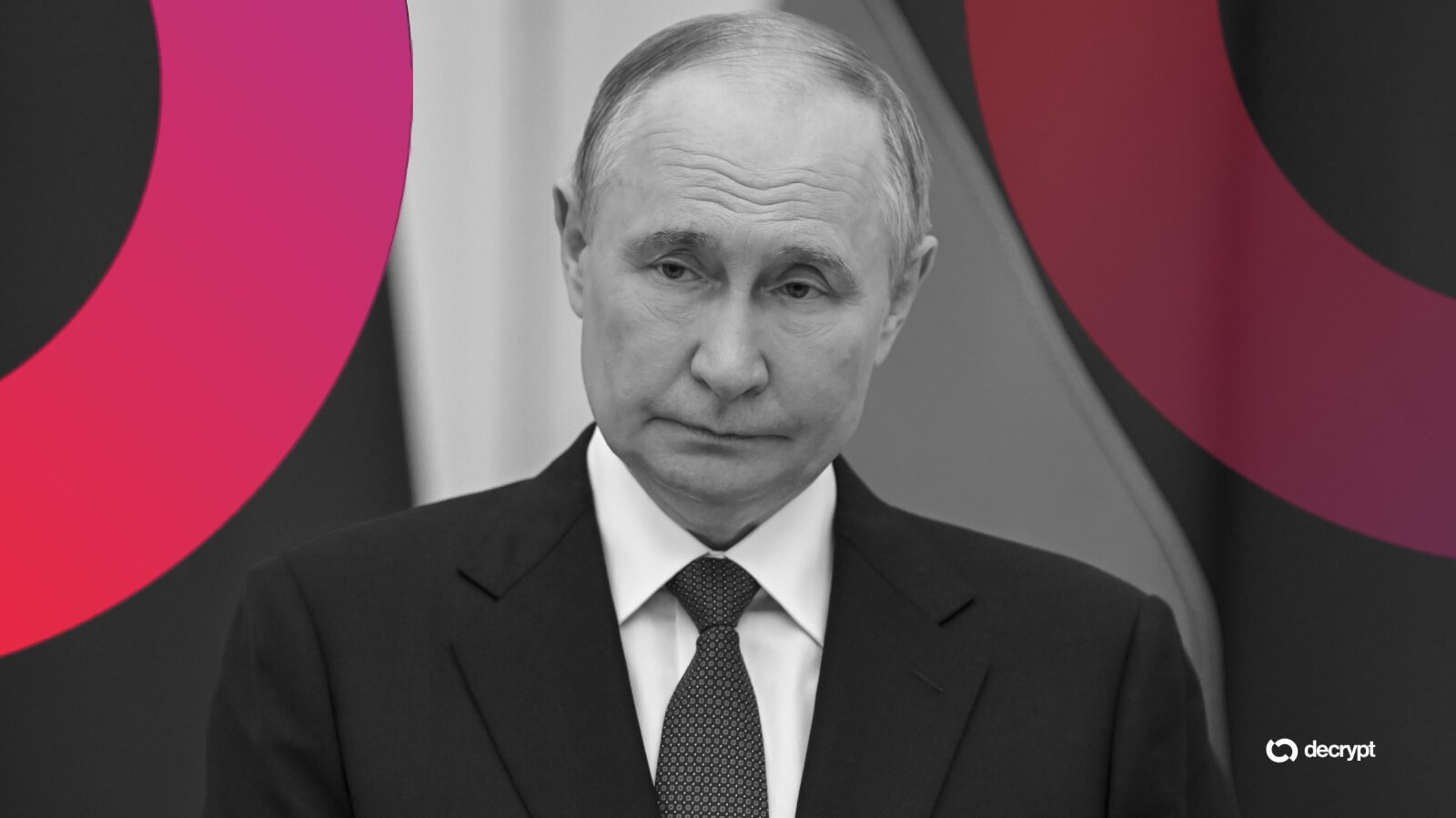
Image via Decrypt

Layer Index

↑ 3 pts in 24h

In brief

  • President Vladimir Putin signed Russia's first law giving comprehensive rules to crypto exchanges, custodians, brokers, and mining.
  • Only firms on a state registry may run exchanges after July 1, 2027, with a 15 million ruble ($187,000) capital floor and a self-regulatory body requirement.
  • Using crypto as money is still banned, and banks can block transfers they suspect flow to unregistered providers.

Russian President Vladimir Putin signed the country's first comprehensive law governing digital currencies on Tuesday, state news agency Tass reported. The legislation sets rules for how crypto is issued, stored, accounted for, and traded, wrapping exchanges, digital depositories, brokers, and clearing houses into one framework.

It isn't a free market. The law keeps the ban on using crypto and digital rights as payment for goods and services, and it blocks advertising that pitches crypto payments. Russia already legalized cryptocurrency mining in 2024, when Putin signed a separate bill green-lighting the industry, so this law fills the gap on trading and custody that the mining rules left open.

How the market gets built

Only organizations on a special government registry may run crypto exchanges, and existing operators get a grace period to register by July 1, 2027. Registered exchanges need at least 15 million rubles (about $187,000) of their own capital and must join a self-regulatory body in the financial market.

Regular exchange activity kicks in once a firm trades more than 3.5 million rubles in a month. Banks and foreign-lender branches must reject transfers they suspect are routed through an unregistered provider.

Retail access is capped and gated. Non-accredited investors may buy the most liquid cryptocurrencies (list to be disclosed) through licensed intermediaries, up to 300,000 rubles per year per intermediary, and both retail and qualified investors must pass a knowledge test. Qualified investors face no purchase limit.

The law also guarantees court protection for crypto owners regardless of whether they declared the assets before.


Most of the provisions take effect September 1. Decrypt tracked the bill as it neared passage, noting the gap between "buy crypto" and "use crypto" was the whole point—Russia wants a regulated on-ramp, not a parallel currency. The framework dovetails with the digital ruble push, which the central bank governor says banks must support by the same September 1 date.

The sanctions question

The law's exceptions matter most outside Russia. Settlements under foreign trade contracts between residents and nonresidents are permitted, as are deals involving mined coins and payments inside digital asset platforms. That carve-out is the part Western regulators will watch: Russia has leaned on crypto for cross-border trade as sanctions pressure built.

The law gives Russian holders something they didn't have: legal standing and a licensed venue. It gives the state what it wanted more: a central bank-supervised pipeline it can monitor.

Daily Debrief Newsletter

Start every day with the top news stories right now, plus original features, a podcast, videos and more.

Attribution

Originally reported by Decrypt

Reader Poll

Will Russia license its first crypto trading platforms within the next year?

Eilmeldung

Verpassen Sie keine Eilmeldung

Große News verbreiten sich schnell — erhalten Sie sie zuerst auf X und Telegram.

Get stories like this, daily.

Daily crypto + regulation intelligence, straight to your inbox. Free.

Ähnliche Artikel