

Quantum Machines and Academia Sinica have dramatically accelerated a critical step in quantum computing, reducing two-qubit gate calibration from approximately 15 minutes to just 25 seconds. This speed-up, achieved by directly connecting Quantum Machines’ OPX1000 controller to a classical GPU accelerator via OPNIC, enables real-time hardware feedback for a reinforcement learning agent, the company says. Beyond single gates, the agent simultaneously optimized all parameters of a five-qubit circuit to prepare a GHZ state, demonstrating a path toward continuous calibration for larger quantum processors.
Quantum Machines And Academia Sinica Speed Up Qubit Tuning With AI
Quantum Machines and Academia Sinica have dramatically accelerated a critical step in quantum computing, reducing two-qubit gate calibration from approximately 15 minutes to just 25 seconds. This speed-up, achieved by directly…
Quantum Zeitgeist
Publisher
Aug 30, 2026 at 10:45 AM UTC · 7 Min. Lesezeit
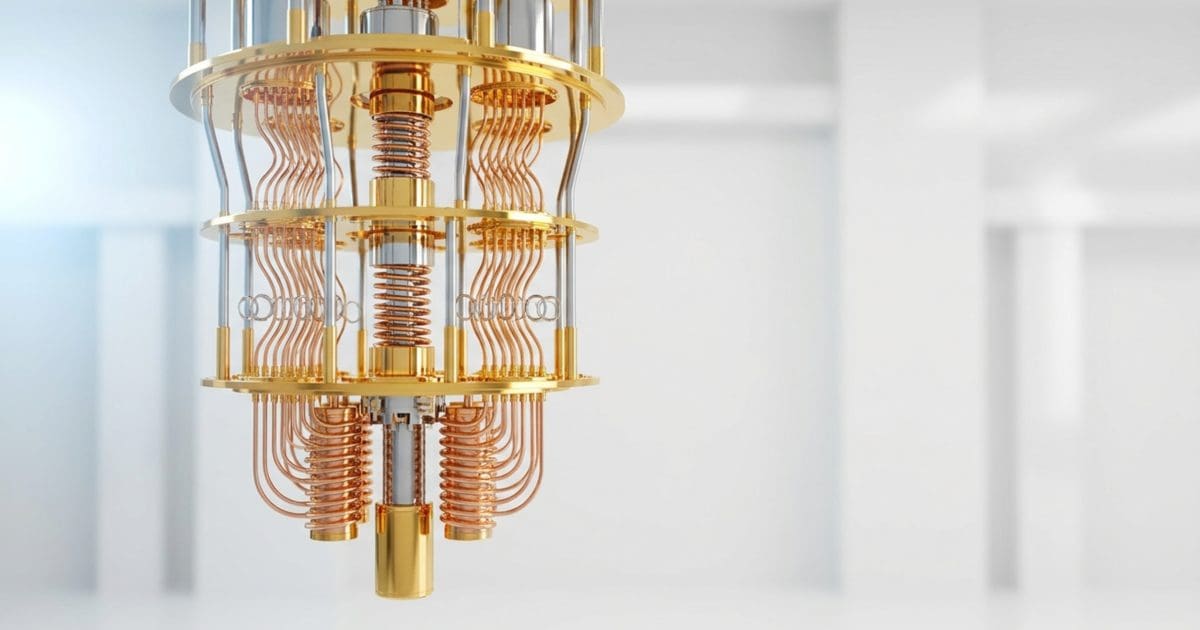
Reinforcement Learning Achieves 25-Second Two-Qubit Gate Calibration
This speed-up addresses a critical bottleneck in scaling quantum processors, where maintaining calibration across hundreds or even thousands of qubits demands faster, more autonomous routines capable of optimizing numerous parameters simultaneously. The core of this advancement lies in the direct connection of Quantum Machines’ OPX1000 controller to the GPU via OPNIC, a technology that enables the rapid exchange of data crucial for the agent’s learning process, according to the company.
Traditional control hardware often struggles to keep pace with the dynamic drifts inherent in quantum processors; OPNIC circumvents this limitation by allowing high-compute tasks to occur within the calibration loop on microsecond timescales. This is particularly important because the optimal operating regime for a QPU is not static, influenced by both fabrication imperfections and environmental fluctuations that necessitate frequent recalibration.
Article Intelligence
Sponsored
Ad
NewsLayerLearn more
NewsLayer Premium
Unlock deeper intelligence.
Ad-free reading, exclusive research, and real-time onchain insights.
Go Premium