This website uses cookies
We use cookies to personalise content and ads, to provide social media features and to analyse our traffic. We also share information about your use of our site with our social media, advertising and analytics partners who may combine it with other information that you’ve provided to them or that they’ve collected from your use of their services.
Consent Selection
Details
  • Necessary cookies help make a website usable by enabling basic functions like page navigation and access to secure areas of the website. The website cannot function properly without these cookies.
  • Preference cookies enable a website to remember information that changes the way the website behaves or looks, like your preferred language or the region that you are in.
    • We do not use cookies of this type.

  • Statistic cookies help website owners to understand how visitors interact with websites by collecting and reporting information anonymously.
    • We do not use cookies of this type.

  • Marketing cookies are used to track visitors across websites. The intention is to display ads that are relevant and engaging for the individual user and thereby more valuable for publishers and third party advertisers.
    • We do not use cookies of this type.

  • Unclassified cookies are cookies that we are in the process of classifying, together with the providers of individual cookies.
    • __emg_sidPending
      Maximum Storage Duration: 1 dayType: HTTP Cookie
      __emg_vidPending
      Maximum Storage Duration: 1 yearType: HTTP Cookie
      nl-read-countPending
      Maximum Storage Duration: PersistentType: HTML Local Storage
Cookie declaration last updated on 8/12/26 by Cookiebot
[#IABV2_TITLE#]
[#IABV2_BODY_INTRO#]
[#IABV2_BODY_LEGITIMATE_INTEREST_INTRO#]
[#IABV2_BODY_PREFERENCE_INTRO#]
[#IABV2_BODY_PURPOSES_INTRO#]
[#IABV2_BODY_PURPOSES#]
[#IABV2_BODY_FEATURES_INTRO#]
[#IABV2_BODY_FEATURES#]
[#IABV2_BODY_PARTNERS_INTRO#]
[#IABV2_BODY_PARTNERS#]
About
Cookies are small text files that can be used by websites to make a user's experience more efficient.

The law states that we can store cookies on your device if they are strictly necessary for the operation of this site. For all other types of cookies we need your permission.

This site uses different types of cookies. Some cookies are placed by third party services that appear on our pages.

You can at any time change or withdraw your consent from the Cookie Declaration on our website.

Learn more about who we are, how you can contact us and how we process personal data in our Privacy Policy.

Please state your consent ID and date when you contact us regarding your consent.
NewsLayer.com
NewsLayer PulseLIVEBTC$77,162+0.24%ETH$2,431+0.73%SOL$94.76+1.65%XRP$1.51+4.31%DOGE$0.0926+2.72%ADA$0.2256+0.59%Total Cap$2.74T+0.83%Layer Index56 Neutral

Skalierung der Datenplattform hinter ChatGPT

Skalierung der Datenplattform von Databricks für ChatGPT

Databricks

Publisher

Aug 20, 2026 at 2:00 PM UTC · Updated vor 3 Tagen · 1 Min. Lesezeit

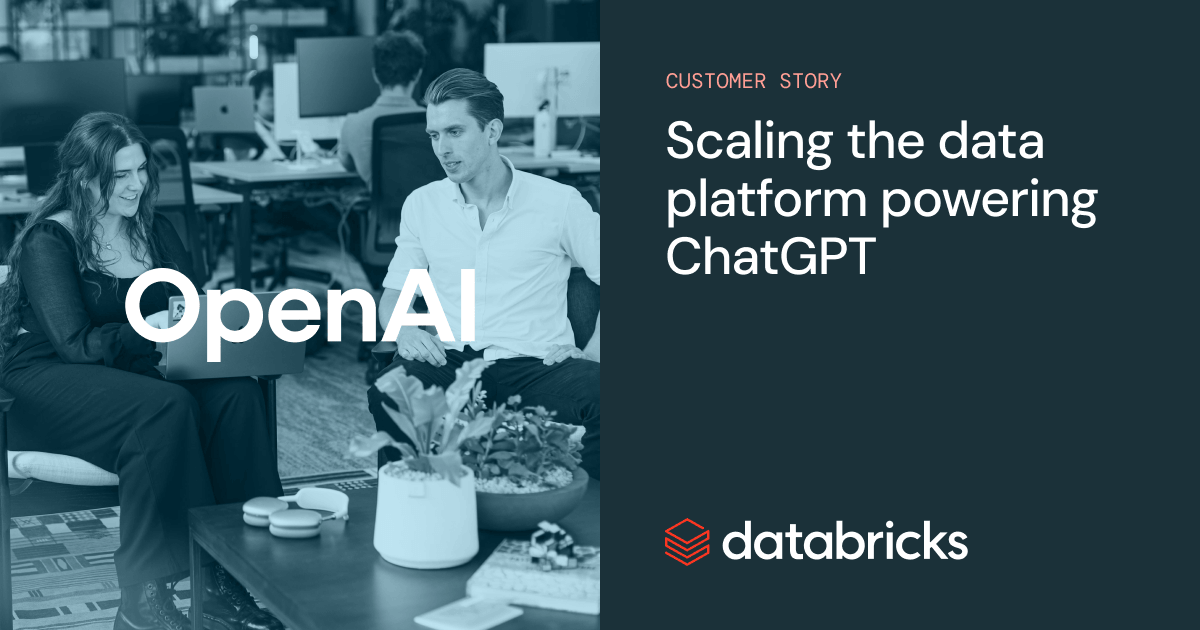
Skalierung der Datenplattform hinter ChatGPT
Image via Databricks

Wie bringen Databricks und OpenAI regulierte Frontier-Modelle in Unternehmen?

Das operative Vertrauen zwischen den beiden Unternehmen legt den Grundstein für eine größere kommerzielle Partnerschaft. Durch eine wegweisende mehrjährige Vereinbarung sind Databricks und OpenAI eine Partnerschaft eingegangen, um die Frontier-Modelle von OpenAI, einschließlich der neuesten GPT-Modelle und Codex, nativ innerhalb der Databricks Platform verfügbar zu machen. Unternehmen können diese Modelle nun nutzen, ohne sensible Daten zu verschieben, indem sie diese über SQL- oder API-Aufrufe auf Daten anwenden, die bereits der Governance des Unity Catalog unterliegen.

Die native Verfügbarkeit verbindet sich mit Agent Bricks, dem Framework von Databricks für den Aufbau, die Evaluierung und die Skalierung produktionsbereiter KI-Agenten. Agent Bricks misst die Genauigkeit und hilft bei der Optimierung von Modellen wie GPT-5.6 für domänenspezifische Aufgaben, während der Unity Catalog die Zugriffskontrollen, die Herkunft (Lineage) und das Audit-Protokoll bereitstellt, die für den Unternehmenseinsatz erforderlich sind. Zusammen bedeuten die Integrationen, dass Kunden sich nicht mehr zwischen der Qualität von Frontier-Modellen und einer Governance auf Unternehmensniveau entscheiden müssen.

Article Intelligence

Topics

Sponsored

Ad

House — Advertise on NewsLayer
NewsLayerLearn more

NewsLayer Premium

Unlock deeper intelligence.

Ad-free reading, exclusive research, and real-time onchain insights.

Go Premium