This website uses cookies
We use cookies to personalise content and ads, to provide social media features and to analyse our traffic. We also share information about your use of our site with our social media, advertising and analytics partners who may combine it with other information that you’ve provided to them or that they’ve collected from your use of their services.
Consent Selection
Details
  • Necessary cookies help make a website usable by enabling basic functions like page navigation and access to secure areas of the website. The website cannot function properly without these cookies.
  • Preference cookies enable a website to remember information that changes the way the website behaves or looks, like your preferred language or the region that you are in.
    • We do not use cookies of this type.

  • Statistic cookies help website owners to understand how visitors interact with websites by collecting and reporting information anonymously.
    • We do not use cookies of this type.

  • Marketing cookies are used to track visitors across websites. The intention is to display ads that are relevant and engaging for the individual user and thereby more valuable for publishers and third party advertisers.
    • We do not use cookies of this type.

  • Unclassified cookies are cookies that we are in the process of classifying, together with the providers of individual cookies.
    • __emg_sidPending
      Maximum Storage Duration: 1 dayType: HTTP Cookie
      __emg_vidPending
      Maximum Storage Duration: 1 yearType: HTTP Cookie
      nl-read-countPending
      Maximum Storage Duration: PersistentType: HTML Local Storage
Cookie declaration last updated on 8/12/26 by Cookiebot
[#IABV2_TITLE#]
[#IABV2_BODY_INTRO#]
[#IABV2_BODY_LEGITIMATE_INTEREST_INTRO#]
[#IABV2_BODY_PREFERENCE_INTRO#]
[#IABV2_BODY_PURPOSES_INTRO#]
[#IABV2_BODY_PURPOSES#]
[#IABV2_BODY_FEATURES_INTRO#]
[#IABV2_BODY_FEATURES#]
[#IABV2_BODY_PARTNERS_INTRO#]
[#IABV2_BODY_PARTNERS#]
About
Cookies are small text files that can be used by websites to make a user's experience more efficient.

The law states that we can store cookies on your device if they are strictly necessary for the operation of this site. For all other types of cookies we need your permission.

This site uses different types of cookies. Some cookies are placed by third party services that appear on our pages.

You can at any time change or withdraw your consent from the Cookie Declaration on our website.

Learn more about who we are, how you can contact us and how we process personal data in our Privacy Policy.

Please state your consent ID and date when you contact us regarding your consent.
NewsLayer.com
NewsLayer PulseLIVEBTC$63,515+0.91%ETH$1,897+1.02%SOL$75.33+0.24%XRP$0.9983-0.07%DOGE$0.07+0.28%ADA$0.1737-1.44%Total Cap$2.28T+0.58%Layer Index45 Neutral
External ReportingVeröffentlicht vor 12 Stunden

Study: Mistyped Address Transfers Led to $575M in Permanent Crypto Losses on Ethereum and BNB Chain

New research from Peking University and Zhejiang University has quantified the staggering cost of simple typing errors in cryptocurrency transactions. The study found that permanently lost funds from mistyped address transfers on…

Study: Mistyped Address Transfers Led to $575M in Permanent Crypto Losses on Ethereum and BNB Chain
Publisher Bitcoin World 3 Min. Lesezeit
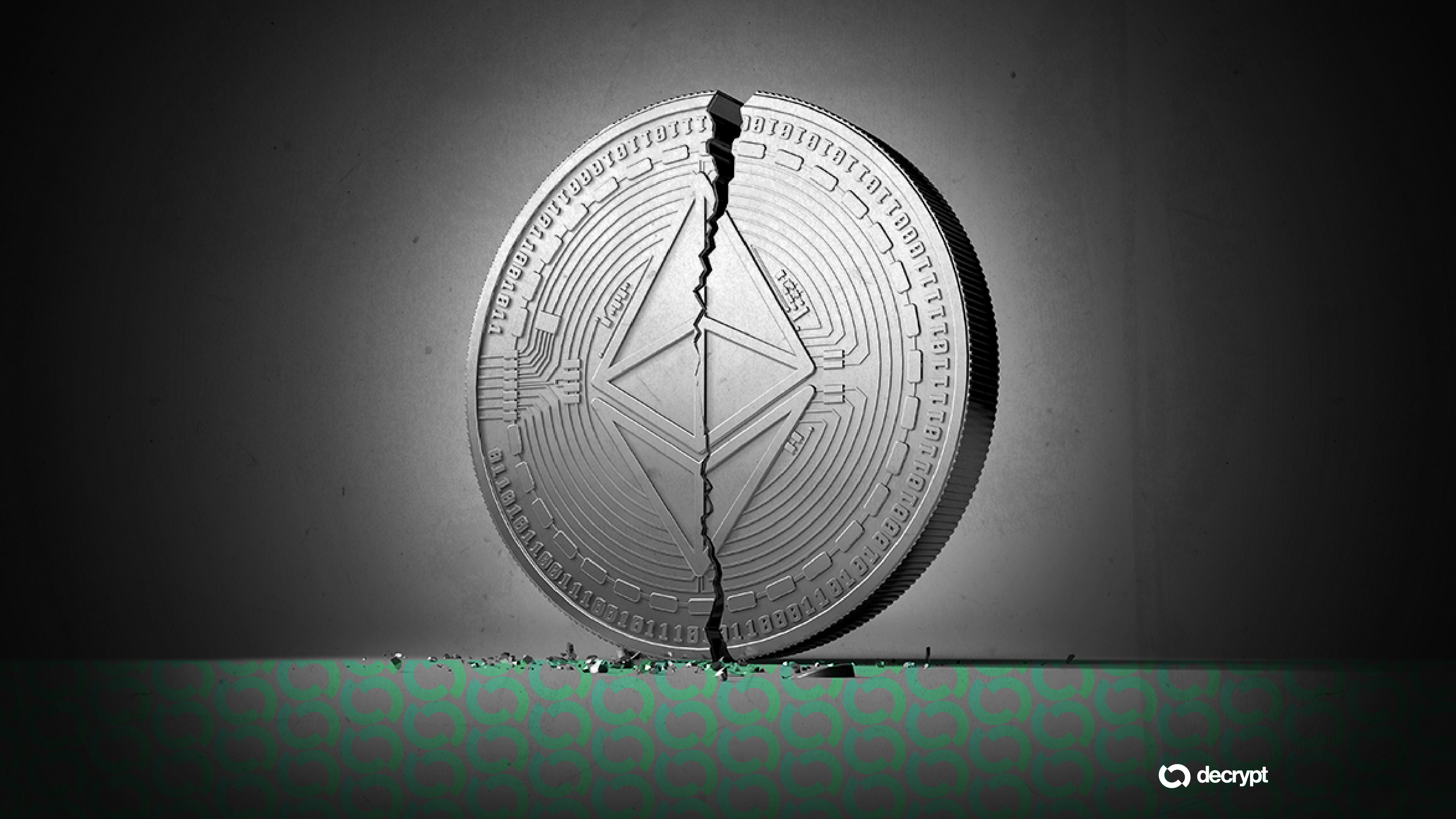
Image via Bitcoin World
Übersetzung…

Market Context

Ethereum

ETH

$1,897

+1.02% 24h

BTC$63,515+0.91%

Layer Index

45

↑ 3 pts in 24h

New research from Peking University and Zhejiang University has quantified the staggering cost of simple typing errors in cryptocurrency transactions. The study found that permanently lost funds from mistyped address transfers on Ethereum and BNB Chain total approximately $575 million, highlighting a persistent and often overlooked risk in blockchain usage.

Scope of the Research and Key Findings

The research team analyzed over 10 million addresses and more than 16 million exposed private keys, examining roughly 2.5 million transactions across both networks. They identified 65,340 cases of address misuse involving two distinct address types: contract accounts and externally owned accounts (EOAs).

Losses tied to contract account-related misuse reached 22,738.41 ETH and 8,681.41 BNB. Meanwhile, externally owned account-related losses totaled 104,224.53 ETH and 9,045.29 BNB. These figures, when converted at current market prices, approximate the $575 million cumulative loss.

Root Causes of Permanent Fund Loss

The study points to three primary causes of these irreversible errors: confusion with testnet addresses, reuse of contract addresses, and the exposure of private keys. Testnet addresses, which are used for development and testing, are often mistakenly used in real transactions. Contract addresses, which are not designed to receive standard transfers, can also trap funds permanently. Additionally, exposed private keys allow malicious actors to drain wallets, often with no recourse for recovery.

Why This Matters for Crypto Users

These findings underscore a critical vulnerability in blockchain technology: transactions are final and irreversible. Unlike traditional banking, there is no central authority to reverse a mistaken transfer. For individual users, this means a single typo can result in the permanent loss of substantial assets. For the broader ecosystem, these losses represent a significant barrier to mainstream adoption, as users may be wary of the technical precision required.

Implications for Wallet Providers and Exchanges

The research also highlights opportunities for improvement. Wallet providers and exchanges could implement more robust address validation, such as checksum verification, warning systems for unusual addresses, or confirmation prompts that flag potential errors. Some platforms already use address book features or allow users to verify the first and last characters of an address, but the study suggests that more proactive measures are needed to reduce these losses.

Conclusion

The $575 million in lost funds due to mistyped transfers on Ethereum and BNB Chain is a stark reminder of the risks inherent in self-custody and direct blockchain transactions. While the technology offers unprecedented control, it also demands a high level of diligence. As the crypto industry matures, addressing these usability and safety issues will be essential to building trust and ensuring broader participation.

FAQs

Q1: What are contract addresses and externally owned accounts?
Contract addresses are smart contracts deployed on the blockchain, which may not be able to send or receive standard transfers. Externally owned accounts are user-controlled wallets with private keys. Both types can be involved in irreversible transfer errors.

Q2: Can a mistyped transfer be reversed?
No, blockchain transactions are final and irreversible by design. Once a transfer is confirmed, it cannot be undone, which is why errors can lead to permanent loss of funds.

Q3: How can users avoid mistyped address transfers?
Users should always double-check addresses, use copy-paste functions, enable address book features, and consider using QR codes. Some wallets also offer address validation or warning systems for potential errors, which can help prevent mistakes.

Disclaimer: The information provided is not trading advice, Bitcoinworld.co.in holds no liability for any investments made based on the information provided on this page. We strongly recommend independent research and/or consultation with a qualified professional before making any investment decisions.

Eilmeldung

Verpassen Sie keine Eilmeldung

Advertisement

House — Advertise on NewsLayer
NewsLayerAd

Sourced by

Originally reported by Bitcoin World

NewsLayer coverage based on externally reported material.

The Daily Brief

The onchain economy, before your day starts.

Curated markets, onchain insights, and key headlines — delivered every weekday morning.

Weekdays · Free · ~5 minute read

Ähnliche Artikel