
The AI-Generated Pattern Hides You From Surveillance Cameras—Including Flock
A Kansas City security researcher ran 31 million tests to teach a model how to paint camouflage for the algorithm age.
Jose Antonio Lanz
Publisher Decrypt
Aug 12, 2026 at 9:31 PM UTC · 3 Min. Lesezeit
Key Signal
11 open-source algorithms defeated
Last Updated
vor 2 Monaten
Übersetzung…
- Bill Swearingen’s noRecognition project generates patterns that stop camera software from classifying what it covers—people, faces, or cars.
- The patterns defeated all 11 open-source detection algorithms he tested, including the software behind Flock license plate readers, Axon body cameras, and Clearview AI.
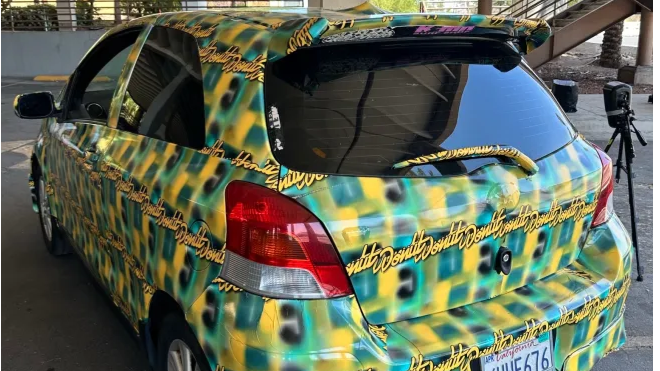
- The first public test came Friday at Def Con in Las Vegas: a 2009 Toyota Yaris wrapped in the pattern, driven past a Flock camera.
Bill Swearingen spent the past year running one experiment over and over from his home in Kansas City, where he co-founded the SecKC security meetup. About 31 million tests later, he says he can produce patterns on demand that hide whatever they cover from the detection software wired into Flock cameras—the controversial surveillance system being rolled out across America.
He showed it in public for the first time Friday at Def Con, working with the YouTube channel Donut Media to cover a 2009 Toyota Yaris in one of his newest patterns and roll it past a Flock camera.
“We proved it was effective,” Swearingen told TechCrunch, though he said the wheels were a challenge. Donut Media said video of the demo lands in the next few weeks.
The pattern doesn’t blind the camera. Footage still records normally, and a human watching the screen sees a car. What breaks is the layer on top—the object-detection model that decides “that’s a vehicle, that’s a plate, log it.”
Article Intelligence
Regulation Signal
in progressUpdated vor 2 Monaten
SEC Crypto Asset Market Structure RulemakingRelated Coverage
 Artificial IntelligenceUK Regains Early Access to AI Models After Reported White House Reversalvor 14 Minuten · 3 min read
 CryptoCrypto Payroll Now Collateralizes Bank Loans: Analysisvor 7 Stunden · 8 min read
 CryptoBitfinex Reports Bitcoin at Key Levels Ahead of CPI Datavor 12 Stunden · 1 min read
Sponsored
Ad
NewsLayerLearn more
NewsLayer Premium
Unlock deeper intelligence.
Ad-free reading, exclusive research, and real-time onchain insights.
Go Premium