This website uses cookies
We use cookies to personalise content and ads, to provide social media features and to analyse our traffic. We also share information about your use of our site with our social media, advertising and analytics partners who may combine it with other information that you’ve provided to them or that they’ve collected from your use of their services.
Consent Selection
Details
  • Necessary cookies help make a website usable by enabling basic functions like page navigation and access to secure areas of the website. The website cannot function properly without these cookies.
  • Preference cookies enable a website to remember information that changes the way the website behaves or looks, like your preferred language or the region that you are in.
    • We do not use cookies of this type.

  • Statistic cookies help website owners to understand how visitors interact with websites by collecting and reporting information anonymously.
    • We do not use cookies of this type.

  • Marketing cookies are used to track visitors across websites. The intention is to display ads that are relevant and engaging for the individual user and thereby more valuable for publishers and third party advertisers.
    • We do not use cookies of this type.

  • Unclassified cookies are cookies that we are in the process of classifying, together with the providers of individual cookies.
    • __emg_sidPending
      Maximum Storage Duration: 1 dayType: HTTP Cookie
      __emg_vidPending
      Maximum Storage Duration: 1 yearType: HTTP Cookie
      nl-read-countPending
      Maximum Storage Duration: PersistentType: HTML Local Storage
Cookie declaration last updated on 8/12/26 by Cookiebot
[#IABV2_TITLE#]
[#IABV2_BODY_INTRO#]
[#IABV2_BODY_LEGITIMATE_INTEREST_INTRO#]
[#IABV2_BODY_PREFERENCE_INTRO#]
[#IABV2_BODY_PURPOSES_INTRO#]
[#IABV2_BODY_PURPOSES#]
[#IABV2_BODY_FEATURES_INTRO#]
[#IABV2_BODY_FEATURES#]
[#IABV2_BODY_PARTNERS_INTRO#]
[#IABV2_BODY_PARTNERS#]
About
Cookies are small text files that can be used by websites to make a user's experience more efficient.

The law states that we can store cookies on your device if they are strictly necessary for the operation of this site. For all other types of cookies we need your permission.

This site uses different types of cookies. Some cookies are placed by third party services that appear on our pages.

You can at any time change or withdraw your consent from the Cookie Declaration on our website.

Learn more about who we are, how you can contact us and how we process personal data in our Privacy Policy.

Please state your consent ID and date when you contact us regarding your consent.
NewsLayer

Install NewsLayer

Get the app experience — one tap from your home screen, instant loads and breaking-news alerts.

NewsLayer.com
NewsLayer PulseLIVEBTC$64,310+1.18%ETH$1,902+0.00%SOL$76.31+0.95%XRP$0.9989-0.04%DOGE$0.0699-0.33%ADA$0.1736-0.63%Total Cap$2.30T+0.49%Layer Index45 Neutral
External ReportingUpdated vor 10 Tagen

The Craze for ‘Stocks Traded with Crypto’... The Real Profits Go to [Weekend Money]

The article examines growing interest in products that allow investors to trade stocks using cryptocurrency or crypto-linked platforms. It suggests that while the trend attracts retail attention, the largest financial gains may accrue…

The Craze for ‘Stocks Traded with Crypto’... The Real Profits Go to [Weekend Money]
Publisher 아시아경제 2 Min. Lesezeit
Image via 아시아경제
Übersetzung…

Kernpunkte

  • Crypto-based access to stock trading is drawing increased investor interest.
  • The model may blur boundaries between traditional securities markets and digital-asset platforms.
  • Platform operators and service providers could capture a significant share of revenues through fees and infrastructure services.

Layer Index

45

↑ 1 pts in 24h

Perpetual futures in virtual assets reach 35 times spot trading volume
Rising trading volumes boost DEXs like Hyperliquid

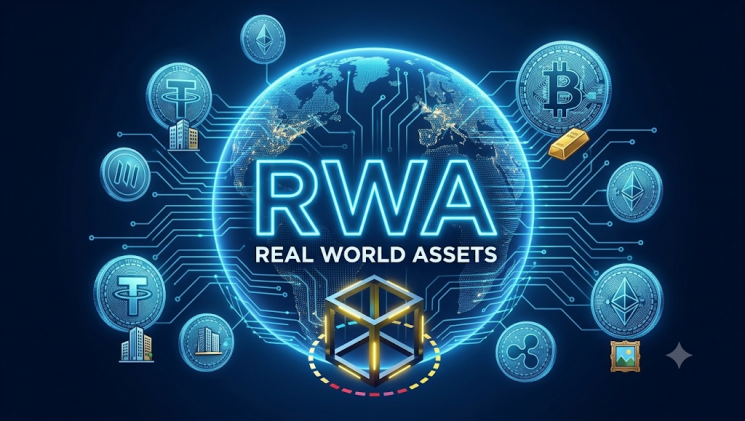
As the tokenized stock market based on real world asset (RWA) structures experiences rapid growth, some analysts suggest that decentralized exchanges (DEX), where liquidity and fees concentrate rather than the blockchains issuing the assets, stand to benefit the most.

Generative Artificial Intelligence (AI) Gemini Generated Image

View original image

On August 8, Lightwoods stated in its report, “The Era of Tokenized Stocks: The Real Beneficiary May Be Decentralized Exchanges,” that the core market growth is focused on derivatives that allow 24-hour trading, rather than simply on the issuance of ownership rights.

According to the report, the market value of on-chain tokenized stocks reached 2.73 trillion won as of last month. Trading volumes for perpetual futures were higher than for spot trades. In the first quarter of this year, the trading volume for tokenized stock spot products amounted to 21.5 trillion won, while the volume for perpetual futures—which track equities, commodities, indexes, and more—reached 745 trillion won, 35 times that of spot trading.


As a result, asset issuers receive one-off profits, but exchanges collect fees every time trades are repeated. A leading example of this is Hyperliquid, a decentralized exchange that has grown through virtual asset perpetual futures trading.

On July 27, the perpetual futures trading volume for SK hynix on Hyperliquid was 607 billion won, amounting to 8.5% of the domestic spot trading volume of SK hynix shares (7.15 trillion won) on the same day. Combined with other overseas platform-linked products, the trading volume climbed to 5.47 trillion won, or 76.5% of the domestic spot trading value.

The expansion of trading also brings operational risks. On July 28, in the Nextrade (NXT) pre-market, a single SK hynix share was traded at 1,272,000 won—about 30% lower than the previous day’s closing price. This execution affected overseas perpetual futures prices, causing Hyperliquid’s SK hynix product to drop sharply by 17.9%, and triggering the forced liquidation of buy positions amounting to 81.5 billion won across 960 accounts. On the same day, the spot stock also declined by 14.6%.

The report highlighted that transactions amounting to several trillion won occur during the periods when the domestic stock market is closed. Although the liquidation event on Hyperliquid cannot be seen as the sole reason behind the drop in SK hynix’s spot price, it is possible that the decline in overseas futures prices affected investor sentiment, resulting in greater volatility. In other words, the formation of the SK hynix price is expanding beyond the official Korean market hours, and Hyperliquid has started to make an impact.

Ricky Sohn, a researcher at Blue Lake, commented, “In the era of tokenized stocks, the direct benefit does not go to the platforms that issue the most tokens, but rather to the infrastructure that secures trading volume and liquidity and connects fee revenue to token value. We need to closely monitor where the trading activity actually concentrates.”

This content was produced with the assistance of AI translation services.

© The Asia Business Daily. All rights reserved. Unauthorized AI training and use prohibited.

Eilmeldung

Verpassen Sie keine Eilmeldung

Advertisement

House — Advertise on NewsLayer
NewsLayerAd

Sourced by

Originally reported by 아시아경제

NewsLayer coverage based on externally reported material.

The Daily Brief

The onchain economy, before your day starts.

Curated markets, onchain insights, and key headlines — delivered every weekday morning.

Weekdays · Free · ~5 minute read

Ähnliche Artikel