
In the next five to 10 years quantum computers are predicted to be capable of decrypting everything from personal health records to national defense contracts.
This researcher is helping fend off quantum computing security risks
In the next five to 10 years quantum computers are predicted to be capable of decrypting everything from personal health records to national defense contracts.
Northeastern Global News
Publisher
Aug 18, 2026 at 6:51 PM UTC · 4 Min. Lesezeit
Übersetzung…
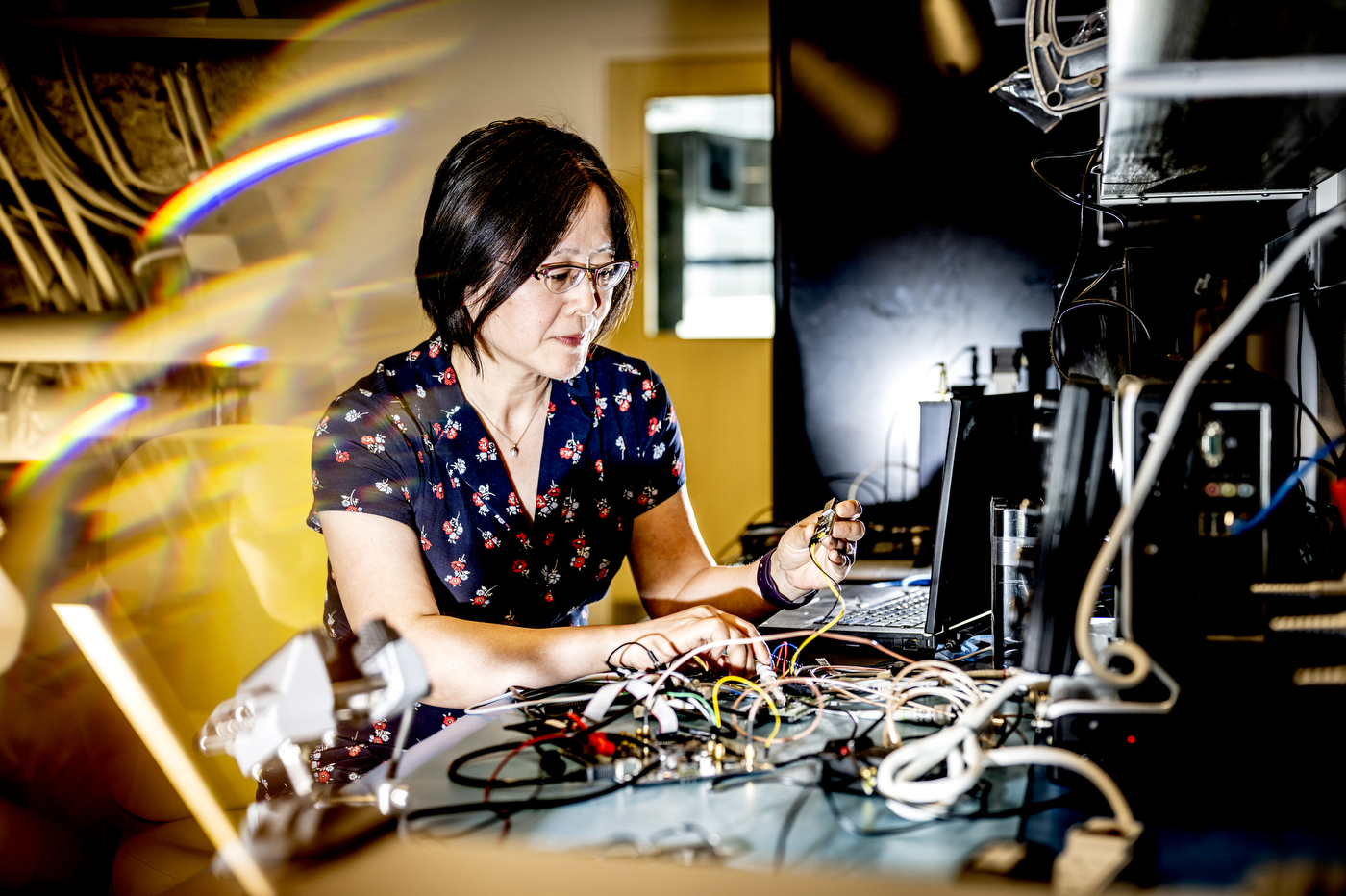
That’s because these machines are poised to be extremely adept at breaking encryption codes. The mathematical algorithms found throughout the web help keep our precious data safe from hackers, explained Yunsi Fei, a professor of electrical and computer engineering at Northeastern University.
It would take upwards of a million years for today’s computers to solve the mathematical formulas underlying today’s encryption techniques, she said. But quantum computers could solve them in a fraction of the time.
The Boston Consulting Group, a global management consulting firm, estimates that “quantum computers have a better than 50% likelihood of breaking widely used cryptographic algorithms by 2035.”
To safeguard against this, governments and developers throughout the world have begun the process of developing new post-quantum cryptography (PQC) algorithms and techniques. In June, the White House even issued an executive order on the development of PQC technologies.

The order directs federal agencies to dedicate time and resources to accelerate the transition to PQC technologies, highlighting their importance for preserving “critical infrastructure and (the) digital economy” against potential quantum computing threats.
Article Intelligence
Topics
Regulation Signal
in progressUpdated vor 2 Monaten
SEC Crypto Asset Market Structure RulemakingRelated Coverage
 CryptoFrance reports 90 violent crypto-related attacks in 2026, driven by leaked tax data exposing holders' identities.vor 14 Stunden · 1 min read
 CryptoLiquid freezes Bitcoin redemptions due to 14.2% reserve shortfall and pending security reviewsvor 2 Stunden · 1 min read
 CryptoCFTC Chair Michael Selig Says US Must Lead Global Crypto Marketvor 12 Stunden · 3 min read
Sponsored
Ad
NewsLayerLearn more
NewsLayer Premium
Unlock deeper intelligence.
Ad-free reading, exclusive research, and real-time onchain insights.
Go Premium