


Crypto has a funny way of arriving before the meeting agenda catches up. Many credit union members have already made room for it, even as their financial institutions are still deciding what to do.
Younger Members Push Credit Unions Toward Crypto Services
Crypto has a funny way of arriving before the meeting agenda catches up. Many credit union members have already made room for it, even as their financial institutions are still deciding what to do.
PYMNTS.com
Publisher
Aug 14, 2026 at 8:03 AM UTC · 3 Min. Lesezeit
Übersetzung…
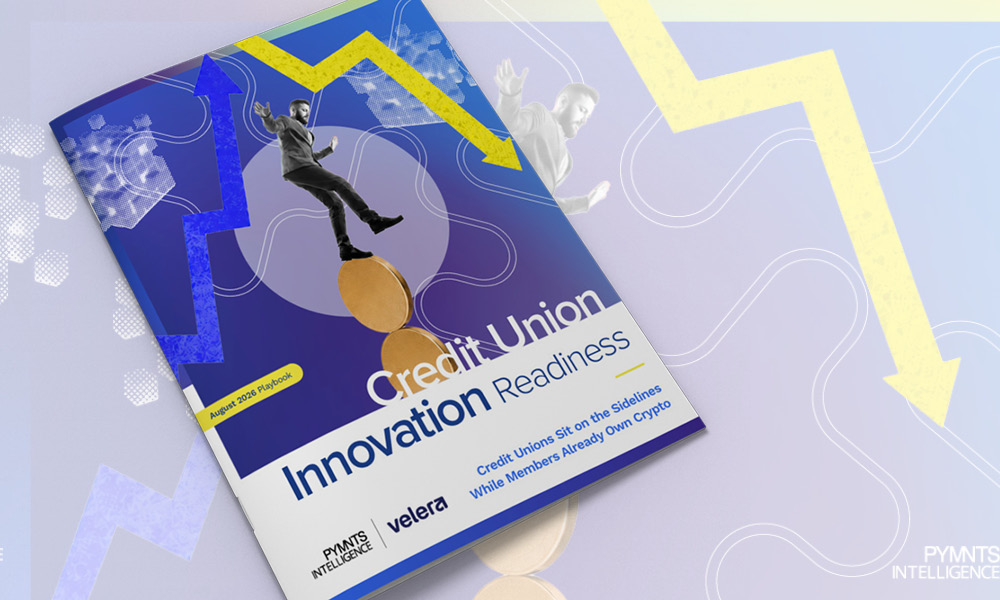
“Credit Unions Sit on the Sidelines While Members Already Own Crypto” is a PYMNTS Intelligence and Velera collaboration. The report is based on a March 2026 survey of 500 U.S. credit union executives. It examines how these leaders view member demand for cryptocurrency and stablecoins. It also explores their current plans, operational readiness and biggest concerns.
The findings reveal a clear opening for credit unions. Many institutions see limited demand today, but younger members are already buying crypto and showing interest in crypto payments. Those that prepare now can build knowledge, improve safeguards and test new services before demand grows.
Download the Report Credit Unions Sit on the Sidelines While Members Already Own Crypto
In “Credit Unions Sit on the Sidelines While Members Already Own Crypto,” learn how:
- Security concerns are slowing progress. Cybersecurity and fraud risk rank as the leading barriers for both cryptocurrency and stablecoins. More than half of executives cite these concerns. Regulatory issues rank lower, suggesting that many of the biggest hurdles are within the institution’s control.
- Credit unions are putting protection before products. Fifty-nine percent of executives expect their institutions to offer crypto education within three years. Another 53% expect to build fraud prevention and compliance tools. Only 22% plan to offer crypto rewards during that period.
- Stablecoins could find their first credit union role behind the scenes. Executives see the strongest uses in round-the-clock settlement, domestic payments, tokenized deposits and business payments. These applications could help these financial institutions improve how money moves before they introduce new services to members.
Article Intelligence
Topics
Sponsored
Ad
NewsLayerLearn more
NewsLayer Premium
Unlock deeper intelligence.
Ad-free reading, exclusive research, and real-time onchain insights.
Go Premium