
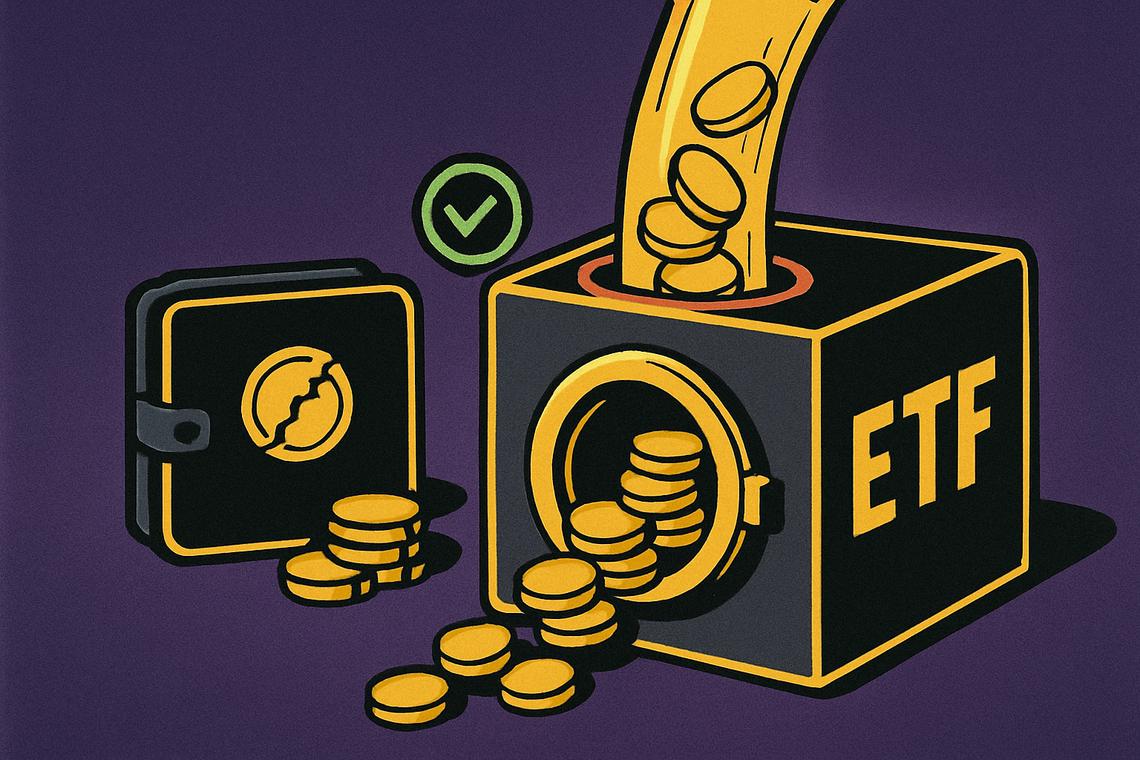
For roughly fifteen years, one rule about Bitcoin held steady: the amount sitting in personal wallets kept growing. That streak just broke. New data shows a decline in Bitcoin held outside exchanges and funds, and the reason isn’t a hack, a crash, or panic selling. It’s Wall Street quietly building a tax-friendly door for the wealthiest holders to walk through, and the shift is now reshaping Bitcoin custody trends across the market.
Bitcoin Custody Trends Shift as Whales Move $3B Into BlackRock’s ETF
For roughly fifteen years, one rule about Bitcoin held steady: the amount sitting in personal wallets kept growing. That streak just broke. New data shows a decline in Bitcoin held outside exchanges and funds, and the reason isn’t a…
The Cryptonomist
Publisher
Aug 26, 2026 at 6:21 AM UTC · 5 min de lectura
Entities
bitcoin, blackrock
Market Impact
BTC-1.02%$78,495
Last Updated
hace 3 horas
Traduciendo…
Key takeaways
- Bitcoin held in self-custody wallets declined for the first time in about 15 years, according to reporting cited by Bloomberg.
- BlackRock’s iShares Bitcoin Trust (IBIT) has absorbed more than $3 billion in Bitcoin through in-kind ETF creation by late 2025.
- The in-kind swap lets large holders trade coins directly for ETF shares without triggering a capital gains tax bill.
- Self-custody still holds roughly 65.9% of total Bitcoin supply — about 13.83 million BTC, worth approximately $1.09 trillion — as of August 2026, per a River Financial report.
- Hardware wallet exploits in August 2026 caused an estimated $116 million to $130 million in losses, adding pressure to the self-custody debate.
Shift in Bitcoin Custody Among Whales
The headline shift is straightforward: fewer coins are sitting in personal wallets than before, and more are flowing into regulated fund structures built by traditional finance. This marks a break from more than a decade of steady growth in self-custody balances, and it’s happening because Wall Street built a mechanism that large holders find hard to ignore.
Market Context
Bitcoin
BTC
$78,442
-1.08% (24H)
Market Cap
$1.57T
Circulating Supply
20.1M BTC
24H Volume
$31.8B
24H High
$79,563
Article Intelligence
Related Coverage
 CryptoBitcoin is facing a new transformation as BlackRock expands access to IBIThace 2 horas · 1 min read
 CryptoARKB: The ETF Flow Cycle Matters More Than The Bitcoin Price Cycle (BATS:ARKB)hace 3 horas · 1 min read
Sponsored
Ad
NewsLayerLearn more
NewsLayer Premium
Unlock deeper intelligence.
Ad-free reading, exclusive research, and real-time onchain insights.
Go Premium