This website uses cookies
We use cookies to personalise content and ads, to provide social media features and to analyse our traffic. We also share information about your use of our site with our social media, advertising and analytics partners who may combine it with other information that you’ve provided to them or that they’ve collected from your use of their services.
Consent Selection
Details
  • Necessary cookies help make a website usable by enabling basic functions like page navigation and access to secure areas of the website. The website cannot function properly without these cookies.
  • Preference cookies enable a website to remember information that changes the way the website behaves or looks, like your preferred language or the region that you are in.
    • We do not use cookies of this type.

  • Statistic cookies help website owners to understand how visitors interact with websites by collecting and reporting information anonymously.
    • We do not use cookies of this type.

  • Marketing cookies are used to track visitors across websites. The intention is to display ads that are relevant and engaging for the individual user and thereby more valuable for publishers and third party advertisers.
    • We do not use cookies of this type.

  • Unclassified cookies are cookies that we are in the process of classifying, together with the providers of individual cookies.
    • __emg_sidPending
      Maximum Storage Duration: 1 dayType: HTTP Cookie
      __emg_vidPending
      Maximum Storage Duration: 1 yearType: HTTP Cookie
      nl-read-countPending
      Maximum Storage Duration: PersistentType: HTML Local Storage
Cookie declaration last updated on 8/12/26 by Cookiebot
[#IABV2_TITLE#]
[#IABV2_BODY_INTRO#]
[#IABV2_BODY_LEGITIMATE_INTEREST_INTRO#]
[#IABV2_BODY_PREFERENCE_INTRO#]
[#IABV2_BODY_PURPOSES_INTRO#]
[#IABV2_BODY_PURPOSES#]
[#IABV2_BODY_FEATURES_INTRO#]
[#IABV2_BODY_FEATURES#]
[#IABV2_BODY_PARTNERS_INTRO#]
[#IABV2_BODY_PARTNERS#]
About
Cookies are small text files that can be used by websites to make a user's experience more efficient.

The law states that we can store cookies on your device if they are strictly necessary for the operation of this site. For all other types of cookies we need your permission.

This site uses different types of cookies. Some cookies are placed by third party services that appear on our pages.

You can at any time change or withdraw your consent from the Cookie Declaration on our website.

Learn more about who we are, how you can contact us and how we process personal data in our Privacy Policy.

Please state your consent ID and date when you contact us regarding your consent.
NewsLayer

Install NewsLayer

Get the app experience — one tap from your home screen, instant loads and breaking-news alerts.

NewsLayer.com
NewsLayer PulseLIVEBTC$63,009+0.05%ETH$1,881+0.01%SOL$75.38+0.08%XRP$1.01+0.66%DOGE$0.0701+0.15%ADA$0.1796-0.26%Total Cap$2.27T-0.07%Layer Index42 Neutral
External ReportingPublicado hace un día

Former SEC Official: Crypto Rulemaking Can Begin Before CLARITY Act Passage

Anne Kelly, a former official at the U.S. Securities and Exchange Commission (SEC), has stated that the agency does not need to wait for the passage of the CLARITY Act to begin rulemaking for digital assets. In a post on X, Kelly…

Former SEC Official: Crypto Rulemaking Can Begin Before CLARITY Act Passage
Publisher Cryptonews.net 2 min de lectura
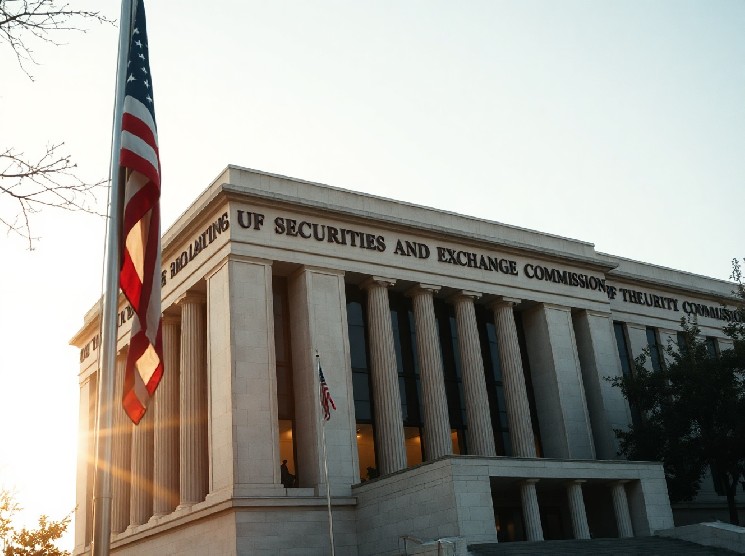
NewsLayer editorial artwork

Regulation Context

SEC Crypto Asset Market Structure Rulemaking
JurisdictionUnited States
RegulatorSEC
Statusin progress
Updatedhace 7 días

Layer Index

42

↑ 3 pts in 24h

Anne Kelly, a former official at the U.S. Securities and Exchange Commission (SEC), has stated that the agency does not need to wait for the passage of the CLARITY Act to begin rulemaking for digital assets. In a post on X, Kelly emphasized that the SEC can initiate rulemaking proactively, and if the CLARITY Act is later enacted, its provisions can be incorporated through additional rule proposals.

Understanding the CLARITY Act and Its Timeline

The CLARITY Act, which aims to clarify the regulatory status of digital assets, has been a topic of debate in Congress. However, even if the bill were to pass immediately, it would still take several months for the SEC and the Commodity Futures Trading Commission (CFTC) to draft detailed implementation rules. Kelly’s remarks highlight a pragmatic approach: rather than waiting for legislative action, regulators can begin the process now, ensuring a smoother transition once the law is finalized.

Implications for the Crypto Industry

For the cryptocurrency industry, this signals a potential acceleration in regulatory clarity. Market participants have long sought clear guidelines on how digital assets are classified and regulated. By starting rulemaking earlier, the SEC could provide much-needed direction, reducing uncertainty for businesses and investors. Kelly’s perspective underscores that Congress and regulators are partners in this effort, not adversaries, and that collaboration can lead to more effective oversight.

Why This Matters

The timeline for crypto regulation has been a point of contention, with industry advocates pushing for faster action and regulators emphasizing the need for thorough deliberation. Kelly’s comments suggest that a proactive approach could bridge this gap, allowing the SEC to address key issues while Congress continues its work. For stakeholders, this could mean earlier clarity on compliance requirements, potentially fostering innovation while ensuring investor protection.

Conclusion

As the debate over crypto regulation continues, the possibility of the SEC moving forward with rulemaking independent of the CLARITY Act offers a constructive path forward. While the legislative process is essential, regulators have the tools to begin shaping the framework now. This development could mark a significant step toward a more defined regulatory environment for digital assets in the United States.

FAQs

Q1: What is the CLARITY Act?
The CLARITY Act is a proposed U.S. law designed to clarify the regulatory status of digital assets, determining which are securities and which are commodities, and assigning oversight to the SEC or CFTC accordingly.

Q2: Can the SEC really start rulemaking before the CLARITY Act passes?
Yes, according to former SEC official Anne Kelly. The SEC has existing authority to propose rules for digital assets, and any later legislative changes can be incorporated through additional rulemaking.

Q3: How long would implementation take after the CLARITY Act passes?
Even if passed immediately, it would likely take several months for the SEC and CFTC to draft and finalize detailed rules, given the complexity of the subject and the need for public comment periods.

Última Hora

No te pierdas ninguna noticia de última hora

Advertisement

House — Advertise on NewsLayer
NewsLayerAd

Sourced by

Originally reported by Cryptonews.net

NewsLayer coverage based on externally reported material.

The Daily Brief

The onchain economy, before your day starts.

Curated markets, onchain insights, and key headlines — delivered every weekday morning.

Weekdays · Free · ~5 minute read

Noticias Relacionadas