
Bitcoin’s back-to-back October losses have put its “Uptober” reputation under the microscope as analysts weigh seasonal trends against institutional demand and economic conditions.
From Uptober to Hacktober: Are Bitcoin’s seasonal patterns becoming obsolete?
Bitcoin lost 7.3% in October 2026 after another decline the previous year, despite the month’s historically strong returns, as analysts reassess seasonal signals.
Cointelegraph by Helen Partz
Publisher Cointelegraph
Nov 2, 2026 at 11:19 AM UTC · 2 min de lectura

Key Signal
7.3% Bitcoin October decline
Entities
bitcoin
Market Impact
BTC+1.89%$78,433
Last Updated
hace 2 días
Traduciendo…
Bitcoin fell 7.3% in October 2026, following a roughly 4% decline a year earlier, according to CoinGlass data.
The losses defied October’s historically bullish reputation, which earned it the nickname “Uptober.” This year, industry figures turned to darker labels, including “Black October” and “Hacktober,” amid a wave of crypto security incidents, including Binance’s record-breaking $6.3 billion hack.
Bitcoin’s seasonal trends shift as monthly volatility declines
October has historically delivered Bitcoin’s highest median return at 15.4%, with gains in 10 of 13 years through 2025, according to Andrew Yang, a researcher at crypto analytics firm Kaiko.
September’s historically bearish reputation has weakened as well. Bitcoin has posted gains every September since 2023, which could reflect traders buying ahead of an expected October rally, Yang told Cointelegraph.
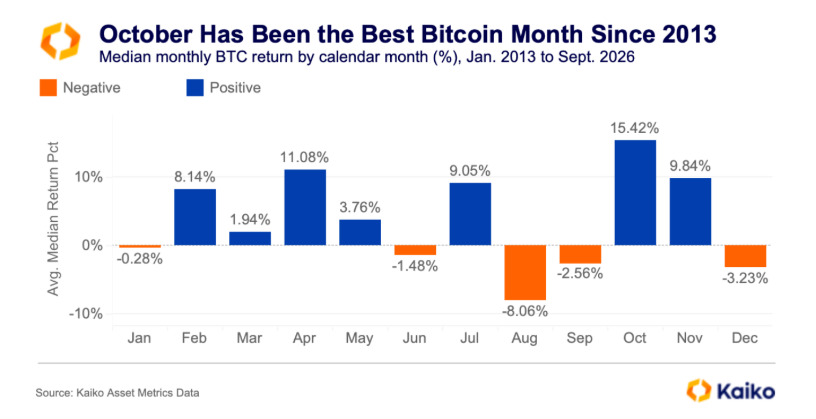
Bitcoin’s narrowing price swings may also be making seasonal trends less pronounced, Yang said. Its typical monthly move has declined from 14% between 2013 and 2016 to 9.6% since 2024, leaving less room for sharp seasonal rallies, he added.
Market Context
Bitcoin
BTC
$78,455
+1.92% (24H)
Market Cap
$1.58T
24H Volume
$19.2B
24H High
$78,590
Article Intelligence
Key Entities
Related Coverage
 CryptoBitcoin Price Reclaims $78K: Can BTC Extend Its Recovery Toward $82K?hace una hora · 1 min read
 MarketsBitcoin ETFs lose $1.16B as Bitwise calls selling ‘short-term’hace una hora · 2 min read
 CryptoBitcoin Price Forecast: Why is BTC in a no-trade zone?hace 2 horas · 1 min read
Sponsored
Ad
NewsLayerLearn more
NewsLayer Premium
Unlock deeper intelligence.
Ad-free reading, exclusive research, and real-time onchain insights.
Go Premium