
This website uses cookies
We use cookies to personalise content and ads, to provide social media features and to analyse our traffic. We also share information about your use of our site with our social media, advertising and analytics partners who may combine it with other information that you’ve provided to them or that they’ve collected from your use of their services.
Consent Selection
Details
  • Necessary cookies help make a website usable by enabling basic functions like page navigation and access to secure areas of the website. The website cannot function properly without these cookies.
  • Preference cookies enable a website to remember information that changes the way the website behaves or looks, like your preferred language or the region that you are in.
    • We do not use cookies of this type.

  • Statistic cookies help website owners to understand how visitors interact with websites by collecting and reporting information anonymously.
    • We do not use cookies of this type.

  • Marketing cookies are used to track visitors across websites. The intention is to display ads that are relevant and engaging for the individual user and thereby more valuable for publishers and third party advertisers.
    • We do not use cookies of this type.

  • Unclassified cookies are cookies that we are in the process of classifying, together with the providers of individual cookies.
    • __emg_sidPending
      Maximum Storage Duration: 1 dayType: HTTP Cookie
      __emg_vidPending
      Maximum Storage Duration: 1 yearType: HTTP Cookie
      nl-read-countPending
      Maximum Storage Duration: PersistentType: HTML Local Storage
Cookie declaration last updated on 8/12/26 by Cookiebot
[#IABV2_TITLE#]
[#IABV2_BODY_INTRO#]
[#IABV2_BODY_LEGITIMATE_INTEREST_INTRO#]
[#IABV2_BODY_PREFERENCE_INTRO#]
[#IABV2_BODY_PURPOSES_INTRO#]
[#IABV2_BODY_PURPOSES#]
[#IABV2_BODY_FEATURES_INTRO#]
[#IABV2_BODY_FEATURES#]
[#IABV2_BODY_PARTNERS_INTRO#]
[#IABV2_BODY_PARTNERS#]
About
Cookies are small text files that can be used by websites to make a user's experience more efficient.

The law states that we can store cookies on your device if they are strictly necessary for the operation of this site. For all other types of cookies we need your permission.

This site uses different types of cookies. Some cookies are placed by third party services that appear on our pages.

You can at any time change or withdraw your consent from the Cookie Declaration on our website.

Learn more about who we are, how you can contact us and how we process personal data in our Privacy Policy.

Please state your consent ID and date when you contact us regarding your consent.
NewsLayer.com

IBM moves a step closer to fault-tolerant quantum computing by linking its first modular cryogenic fridges

IBM Corp. said today it has taken a massive step forward toward its goal of delivering the world’s first fault-tolerant quantum computer by 2029, after successfully linking and cooling down the first pair of modules based on a new,…

SiliconANGLE

Publisher

Aug 19, 2026 at 10:00 AM UTC · 4 min de lectura
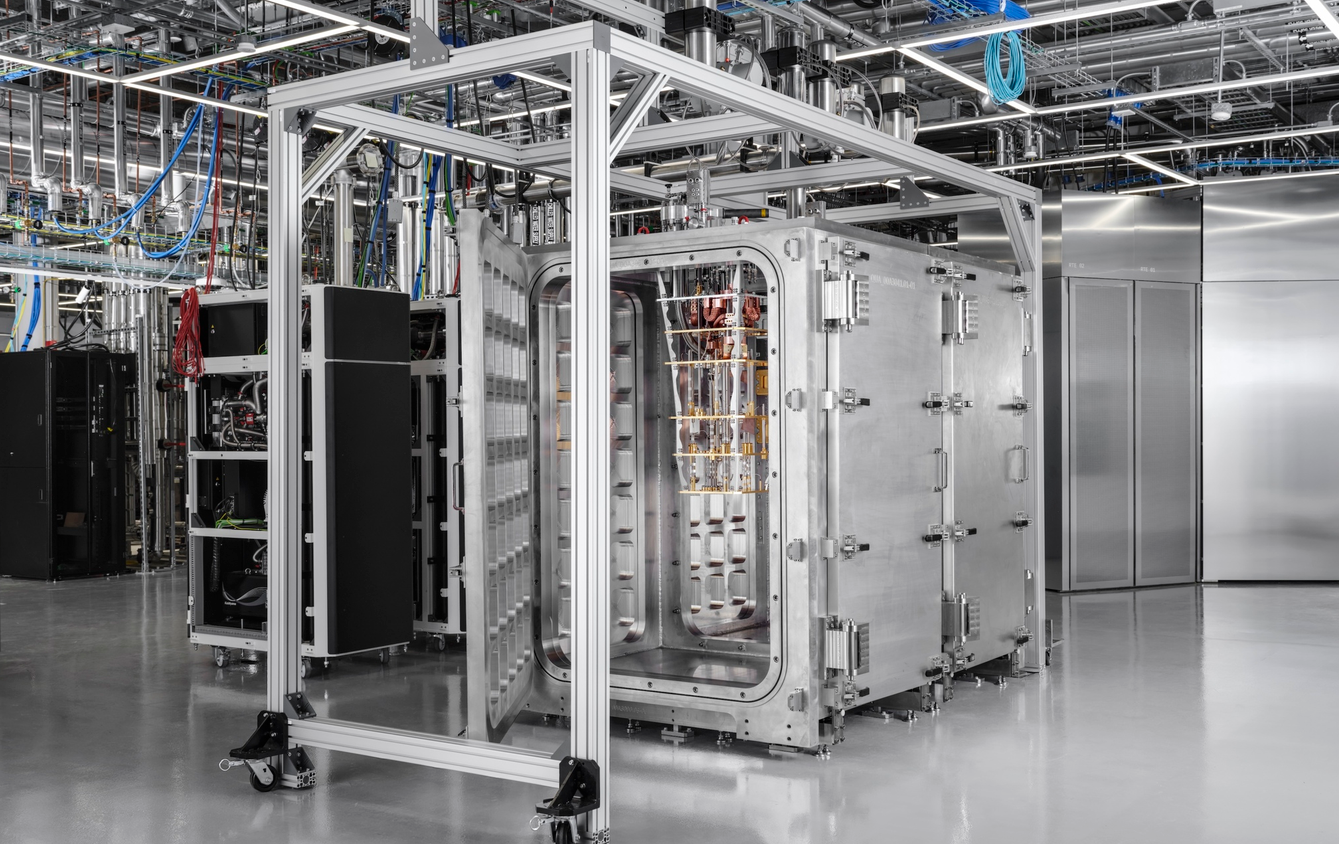
IBM moves a step closer to fault-tolerant quantum computing by linking its first modular cryogenic fridges
Image via SiliconANGLE
Traduciendo…

IBM Corp. said today it has taken a massive step forward toward its goal of delivering the world’s first fault-tolerant quantum computer by 2029, after successfully linking and cooling down the first pair of modules based on a new, highly scalable cryogenic architecture.

The new system makes it possible for hundreds of quantum processors to be linked together into a giant cluster, paving the way for large-scale quantum computers that can actually make a difference.

IBM said the achievement is a key milestone on its roadmap toward the delivery of IBM Quantum Starling, which is a new quantum computing system that’s currently under development and slated to launch in three years. It’s envisaged that Starling will be able to perform about 20,000 times more calculations than today’s existing quantum computers, making it powerful enough to deliver the Holy Grail of “quantum advantage.” That’s the threshold where these machines will be able to solve complex, real-world problems that existing classical supercomputers cannot do.

Quantum computers derive their incredible computing power from so-called “qubits,” which are the quantum version of traditional bits found in classical computers. With classical computers, the bits can represent either a 1 or a 0, whereas qubits can be a 1 or a 0, or both at the same time. They can do this because they take advantage of a principle in quantum mechanics known as “superposition,” and that enables them to process vast amounts of multidimensional data at such ungodly speeds.
