


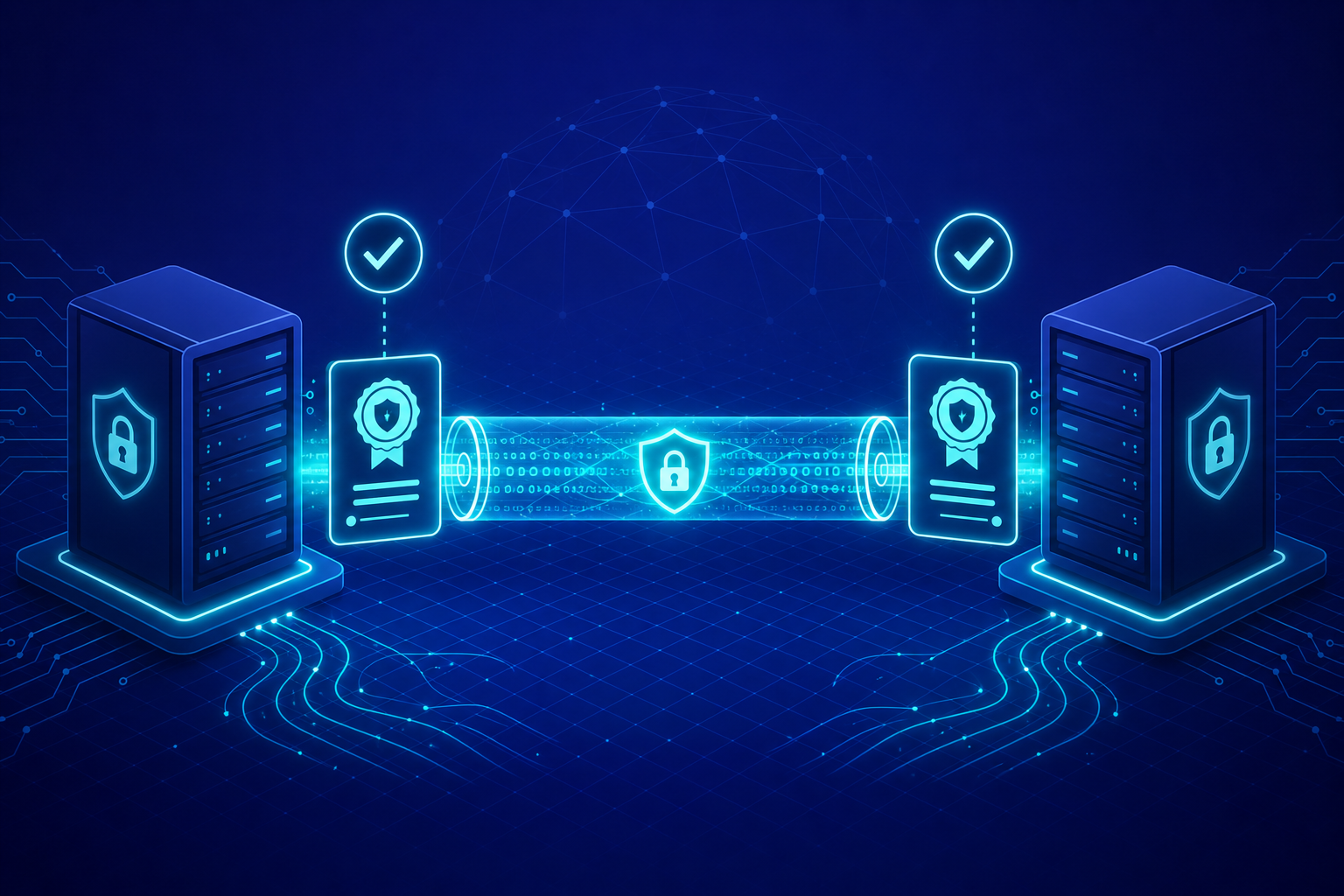
En la Parte 7 acuñamos certificados post-cuánticos y los pesamos. Pero los certificados guardados en una carpeta son solo la mitad de la diversión. Es hora de que hagan el trabajo para el que nacieron: demostrar la identidad. Levantaremos dos contenedores, cada uno con un certificado, y veremos cómo se demuestran quiénes son el uno al otro antes de que se establezca el túnel. Eso es autenticación mutua, sobre un intercambio IKEv2 real.
Autenticación poscuántica mutua sobre IKEv2 – Serie IPsec, parte 8
La octava entrega de la serie sobre IPsec de Cisco Blogs se centra en la autenticación poscuántica mutua sobre IKEv2. El extracto identifica el tema y la ubicación de la serie, pero no proporciona más detalles técnicos.
Cisco Blogs
Publisher
Aug 24, 2026 at 7:43 PM UTC · Updated hace 8 horas · 7 min de lectura
Key Signal
6 fragments ML-DSA handshake limit
Last Updated
hace 8 horas
Puntos Clave
- El artículo es la parte 8 de una serie enfocada en IPsec.
- El tema principal es la autenticación poscuántica mutua sobre IKEv2.
- El artículo está publicado en Cisco Blogs.
Y lo haremos dos veces, y la progresión es todo el punto:
- ECDSA Clásico (la postura real de hoy), en un strongSwan estable.
- ML-DSA Post-cuántico (la vanguardia), en una rama experimental.
Esta Parte utiliza el laboratorio authentication/: su propio pequeño stack, separado del de intercambio de claves. Solo se requiere Docker.
Clonar el repositorio
Obtén el repositorio y entra en el directorio de este laboratorio. Todos los comandos a continuación se ejecutan desde ipsec/authentication/:
git clone https://github.com/juliogomez/pqc.git
cd ipsec/pqc/authentication
Cómo funciona la confianza
Ambos pares confían en una pequeña Autoridad de Certificación que levantamos solo para el laboratorio. La CA firma dos certificados finales (uno por par), y cada par tiene el certificado de la CA preinstalado para que pueda verificar al otro lado. Durante el intercambio, cada par envía solo su propio certificado final; la CA ya es conocida por ambos. (Eso mantiene bajos los bytes transmitidos, lo cual importa mucho una vez que los certificados pasan a ser post-cuánticos, como mostró tan claramente la Parte 7). Un script auxiliar, gen-certs.sh, se encarga de toda la acuñación; tú solo le dices qué algoritmo usar.
Article Intelligence
Regulation Signal
in progressUpdated hace 18 días
SEC Crypto Asset Market Structure RulemakingRelated Coverage
 QuantumFive Institutions Co-Led Investment: Upstream Quantum Computing Company Secures New Hundreds of Millions Yuan Financing Roundhace 2 horas · 7 min read
 QuantumInfleqtion supports Japan’s first neutral-atom quantum computerhace 15 minutos · 1 min read
 CryptoBitcoin Tops $80k as US Treasury Buybacks Lift Assetshace 2 horas · 4 min read
Sponsored
Ad
NewsLayerLearn more
NewsLayer Premium
Unlock deeper intelligence.
Ad-free reading, exclusive research, and real-time onchain insights.
Go Premium