
Quantum computing promises computational advantages that would smoke classical computing, but the rapidly advancing technology still faces formidable barriers. Among these obstacles are limitations in hardware, software, and error correction, which stand in the way of developing commercially viable applications.
Scaling Up, Out, Across: USU Physicist Explores Light as Pathway to Quantum Computing
Quantum computing promises computational advantages that would smoke classical computing, but the rapidly advancing technology still faces formidable barriers. Among these obstacles are limitations in hardware, software, and error…
Utah State University
Publisher
Sep 18, 2026 at 7:16 PM UTC · 2 min de lectura
Traduciendo…
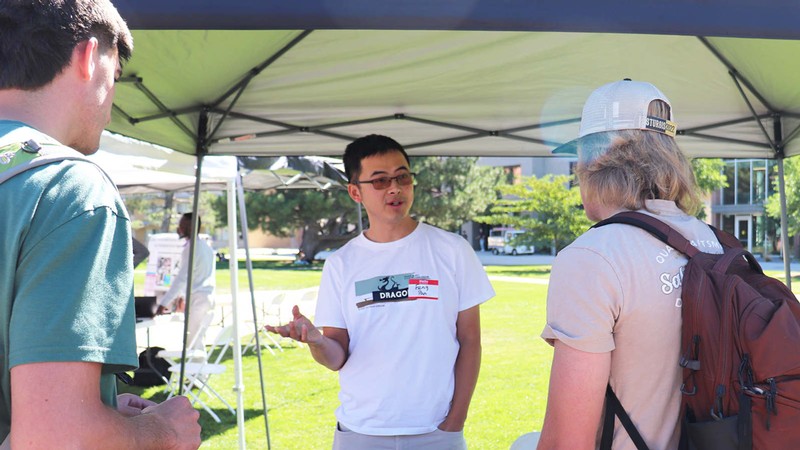
“Quantum bits, or qubits — the basic units of information in quantum computing — are incredibly fragile,” said USU physicist Feng Pan. “Tiny fluctuations in temperature can disturb them and cause computing errors.”
Pan, who studies nanophotonics, believes light may hold the key to solving these challenges.
The assistant professor in USU’s Department of Physics was the recipient of the top research paper award at Lawrence Berkeley National Laboratory’s 2026 Molecular Foundry Annual User Meeting on Aug. 20-21 in Berkeley, California. Pan delivered an invited talk during the plenary session about his research on how sculpted light interacts with materials at the nanoscale.
“Light is relatively inexpensive and operates at room temperature,” Pan said. “By learning how to use light to interconnect quantum processor units via optoelectronic materials, we aim to make a quantum supercomputer reachable.”
Article Intelligence
Sponsored
Ad
NewsLayerLearn more
NewsLayer Premium
Unlock deeper intelligence.
Ad-free reading, exclusive research, and real-time onchain insights.
Go Premium