
Mechanically isolated quantum emitters in hexagonal boron nitride maintain narrow optical linewidths even at room temperature, a characteristic that sets them apart from other solid-state candidates for coherent optical control. Researchers are now focusing on addressing persistent spectral instabilities that hinder their potential; these emitters frequently exhibit fluctuations and intermittency on timescales ranging from nanoseconds to seconds. The work demonstrates detailed examination of a bright, single hBN emitter within a donor-acceptor pair framework to understand its spectral stability, a step toward realizing robust spin-photon interfaces.
Temperature Has Less Impact On This HBN Qubit’s Stability
Mechanically isolated quantum emitters in hexagonal boron nitride maintain narrow optical linewidths even at room temperature, a characteristic that sets them apart from other solid-state candidates for coherent optical control.…
Quantum Zeitgeist
Publisher
Sep 19, 2026 at 10:52 AM UTC · 9 min de lectura
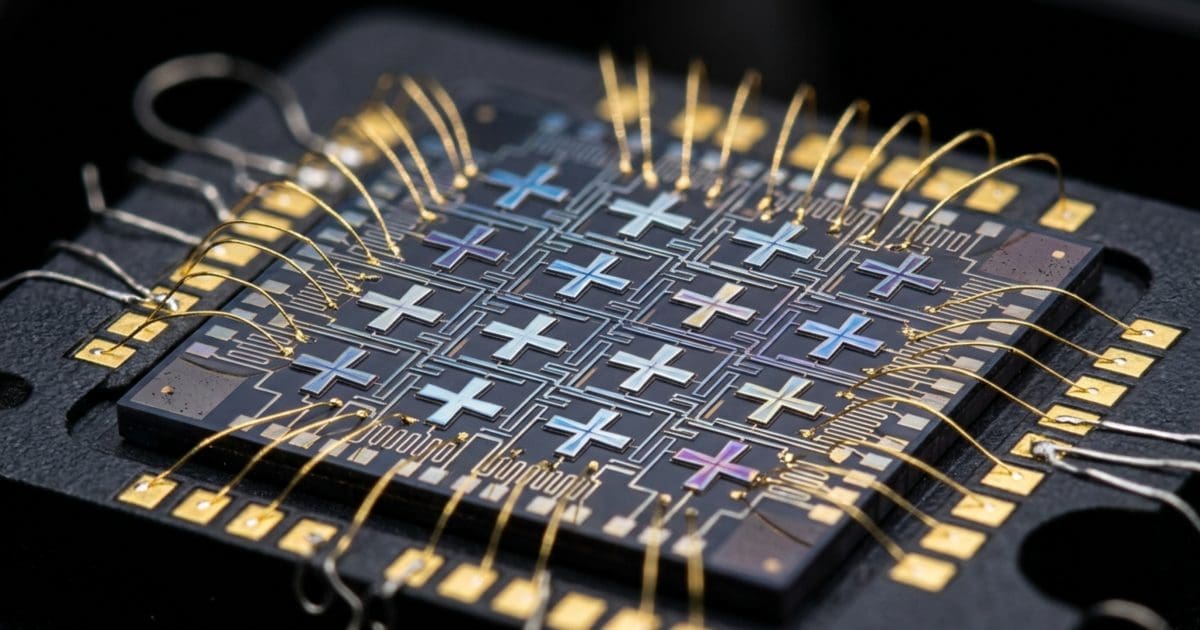
hBN Defect Origins: Donor-Acceptor Pair Framework
High-resolution spectroscopy revealed two zero-phonon lines originating from a single hexagonal boron nitride (hBN) emitter, demonstrating distinct spectral diffusion dynamics despite arising from the same defect. These closely spaced transitions, observed during investigation of a mechanically isolated emitter, suggest separate recombination pathways with differing sensitivities to local electrostatic fluctuations. Researchers utilized a high numerical aperture (NA = 0.9) objective within a cryostat to efficiently excite and collect emissions from the hBN defect using a confocal setup, enabling detailed examination of its spectral properties.
Article Intelligence
Topics
Sponsored
Ad
NewsLayerLearn more
NewsLayer Premium
Unlock deeper intelligence.
Ad-free reading, exclusive research, and real-time onchain insights.
Go Premium