
AI Agents Use Digital Twins to Plan Automated Labs
Artificial intelligence agents have designed laboratory layouts, created digital representations of equipment, developed robotic workflows, and tested those workflows before transferring them to a physical laboratory.
Lab Manager
Publisher
Nov 10, 2026 at 1:10 PM UTC · 3 min de lecture
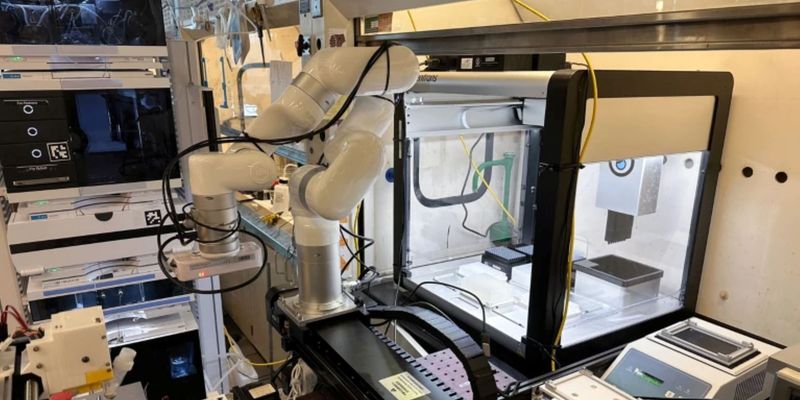
Artificial intelligence agents have designed laboratory layouts, created digital representations of equipment, developed robotic workflows, and tested those workflows before transferring them to a physical laboratory.
The system, described in a preprint and highlighted by Nature, introduces the concept of a “self-building laboratory.” Unlike a self-driving laboratory configured for a predetermined range of experiments, the system attempts to develop capabilities needed for new scientific objectives.
The underlying paper has not undergone peer review. However, its demonstration points to a possible new role for digital twins in planning, commissioning, and modifying automated laboratories.
From scientific objective to robotic instructions
A researcher begins by describing a scientific goal and the equipment already available. Specialized AI agents then identify missing capabilities and generate a laboratory layout, digital twin, robotic skills, and experimental workflow.
The digital twin represents the laboratory’s instruments, robots, spatial arrangement, and relevant operating constraints. Agents can use the simulation to determine whether a robot can reach an instrument, check movements for potential collisions, and refine procedures before sending commands to physical equipment.
Article Intelligence
Topics
Sponsored
Ad
NewsLayer Premium
Unlock deeper intelligence.
Ad-free reading, exclusive research, and real-time onchain insights.
Go Premium