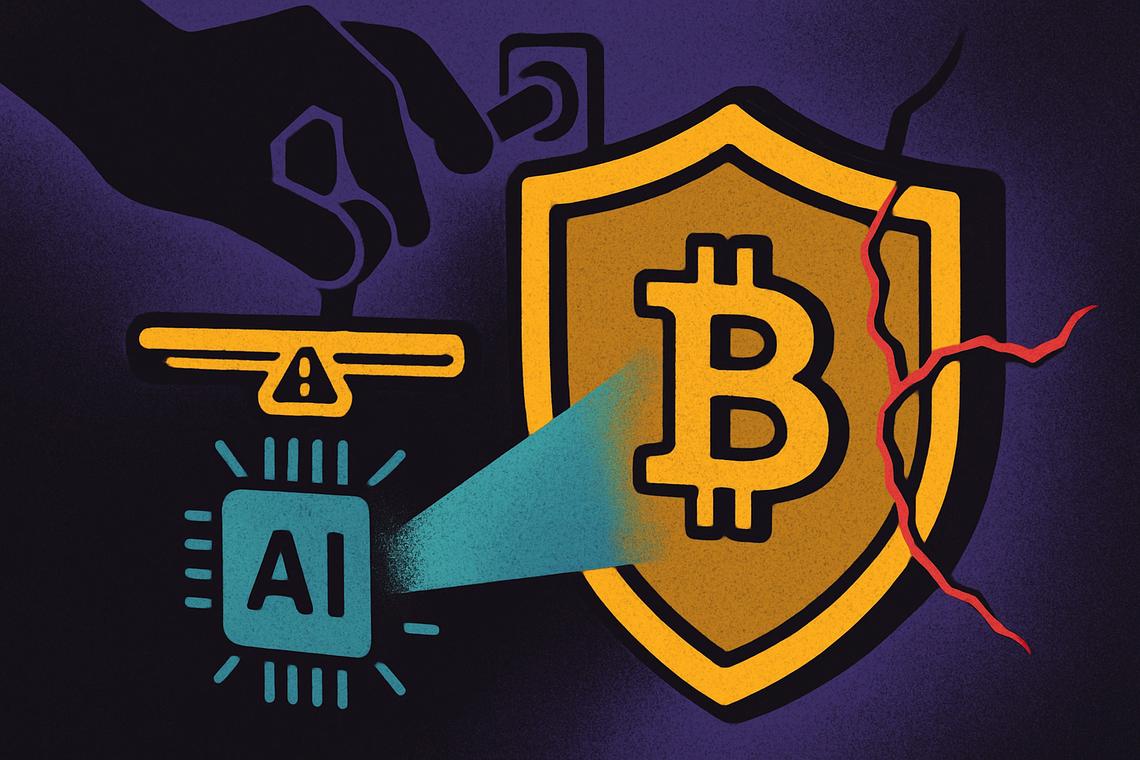
Who should get first crack at the world’s most powerful AI models — the hackers probing Bitcoin’s code for weaknesses, or the volunteers trying to patch it before they strike? That question sits at the center of a new open letter from the Bitcoin Policy Institute (BPI) and more than 40 digital-asset organizations, which is pushing for faster Bitcoin developers AI access to frontier artificial intelligence systems as AI-assisted attacks on crypto infrastructure keep escalating.
Key takeaways
- The Bitcoin Policy Institute and over 40 crypto organizations, including Block, Coinbase, Strategy, MARA, Galaxy, BitGo, Brink and Trezor, signed an open letter asking AI labs to grant trusted access to frontier models.
- Bitcoin Core developers and other open-source maintainers say public guardrails on advanced AI systems currently block legitimate security research.
- Bitcoin secures more than $1 trillion in value, which the coalition says raises the stakes of any unpatched vulnerability.
- Hackers stole over $634 million from crypto platforms in April 2026, the worst monthly total since the Bybit hack, according to DefiLlama data cited in the letter.
- Immunefi’s CEO says newer AI models, including Claude Opus 4.8 and ChatGPT 5.5, have fueled a “vulnerability apocalypse” across the industry.
Crypto companies urge AI firms to enable early frontier model access for Bitcoin developers
The letter, published by the BPI, does not ask AI labs to open advanced cybersecurity capabilities to the public. Instead, it proposes a controlled program: early access to frontier cybersecurity models, sufficient computing capacity, secure research environments, and direct lines of communication with AI lab security teams. That structure is designed to let vetted researchers before attackers can exploit newly discovered vulnerabilities, it is important to review payment infrastructure, Bitcoin wallets, and other open-source software flaws.
The coalition behind the request is broad. Signatories include Block, Coinbase, Strategy, MARA, Galaxy, BitGo, Brink, OpenSats, Chaincode Labs, Spiral, Trezor, Unchained, Btrust and Fedi, spanning publicly traded companies, mining firms, custodians and nonprofit developer groups. “The past several weeks have made the need for this abundantly clear,” the BPI wrote in the letter.
Limited access for Bitcoin Core developers due to AI guardrails
Many digital-asset defenders, including Bitcoin Core developers, currently lack access to lab cyber programs and get constrained by guardrails present on publicly accessible frontier systems, forcing reliance on less advanced open-weight alternatives alternatives, according to the letter.
That gap has already pushed at least one prominent researcher toward unconventional workarounds. AnchorWatch CEO Rob Hamilton, who leads the volunteer-run Bitcoin Red Team security-audit effort, said he began integrating OpenAI’s Trust & Cyber capabilities into his review work, only to find his access restricted the following morning. “It absolutely guts me as a patriotic American to have to do this, but I will be going back to using Chinese open source models to conduct my research to protect Bitcoin infrastructure,” Hamilton said. He added that the policy gap leaves defenders sidelined while less scrupulous actors face no such restrictions: “Black hats will not hit these issues. The white hats will. We’ve hit a local minima in policy.”
Call for trusted-access programs for open-source financial infrastructure defenders
The signatories urged frontier AI labs to “establish or expand standing trusted-access programs for qualified defenders of open-source financial infrastructure.” The letter frames open-source software as critical to both digital and traditional financial systems, arguing that a single vulnerability in that infrastructure can put life savings at risk.
Funding alone hasn’t closed the gap. Strategy, BlackRock, Coinbase and six other companies recently formed the Bitcoin Security Consortium, pledging $15 million over three years toward developers and researchers focused on Bitcoin’s long-term security, with post-quantum cryptography as an early priority. Galaxy separately opened a $5 million Bitcoin security fund covering new signature systems, wallet-migration tools and audits. Those efforts show the industry is willing to pay for defense — but the BPI’s letter argues that money without model access still leaves researchers working with one hand tied behind their back.
The critical cybersecurity role of frontier AI amid surging crypto attacks
Frontier AI is reshaping the economics of both defense and offense in cybersecurity, according to the letter, because advanced models can scan large codebases, flag potential weaknesses and speed up technical work that once took human teams weeks. That dual-use nature is exactly why access matters so much right now.
Frontier AI improves vulnerability detection but also aids adversaries
The letter calls frontier AI potentially one of the “most powerful defensive technologies ever developed.” Bitcoin Red Team’s own work illustrates the point: the volunteer initiative reported surfacing 4,962 potential issues across 390 Bitcoin-related projects in fewer than 30 hours of AI-assisted code review, with 720 initially flagged as high or critical severity. By the following weekend, the group’s tally of confirmed critical and high-level vulnerabilities had climbed to 1,288 — a pace no small human team could match without AI assistance, though every automated finding still needs human verification before it counts as real.
Risk of defenders falling behind evolving cyber threats without dedicated access
“Without dedicated access programs, defenders may lack the tools needed to keep pace with evolving threats to the infrastructure they maintain,” the letter warns. The BPI said it had multiple independent reports have been received from open-source maintainers documenting coordinated campaigns by sophisticated actors—potentially including state-sponsored adversaries—leveraging advanced AI tools to perpetuate ongoing attacks. That claim tracks with separate reporting that North Korea-linked hacking group Kimsuky has built local AI environments using tools such as Ollama, GPT4All and Msty, allowing malware development and phishing campaigns to run without ever touching a monitored commercial AI service. That’s a structural problem for AI labs trying to police misuse: an attacker running an open model on private hardware sits outside the account suspensions and usage limits that apply to public tools, while legitimate researchers asking for the same capability get turned away.
Recent hacking surge and AI’s impact on crypto vulnerability landscape
Losses tied to crypto hacking have been climbing through 2026, giving the coalition’s warning immediate real-world weight rather than abstract risk.