
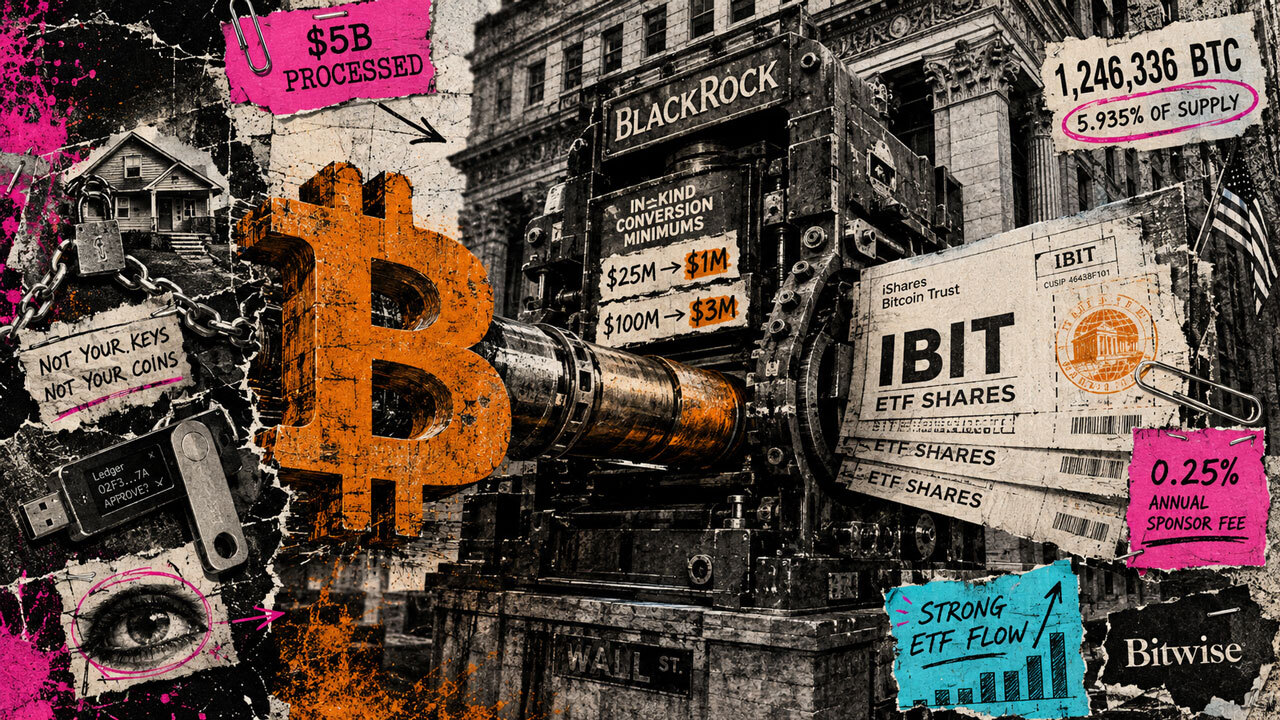
BlackRock cut the minimum for converting privately held Bitcoin into IBIT shares from $25 million to $1 million, while Bitwise lowered its floor from $100 million to $3 million. While this might sound like a niche development for a small number of institutional users, it signals that custody is no longer just a slogan for Wall Street.
It just got 25 times easier to move self-custody Bitcoin directly onto Wall Street, and $5 billion already has
BlackRock cut the minimum for converting privately held Bitcoin into IBIT shares from $25 million to $1 million, while Bitwise lowered its floor from $100 million to $3 million. While this might sound like a niche development for a…
CryptoSlate
Publisher
Aug 27, 2026 at 8:05 PM UTC · 7 min de lecture
Entities
bitcoin
Last Updated
il y a une heure
Traduction…
BlackRock cut the minimum transaction size for a qualifying Bitcoin holder to convert coins directly into shares of its iShares Bitcoin Trust ETF from $25 million to $1 million in July, the company told Bloomberg. The 96% reduction now brings a service once reserved for the richest whales within reach of a much larger class of family offices and wealthy clients, and BlackRock says the program has processed more than $5 billion to date.
Bitwise made an even steeper cut, taking its minimum from $100 million for its first such transaction to $50 million and now $3 million. The cut reduced Bitwise's threshold by 97%, and each conversion preserves exposure to Bitcoin price while placing the coins inside the fund's custody structure.
The cheaper entry point is an important rethink of a decision once shaped by the execution costs and possible tax bill of selling coins, wiring dollars, and repurchasing exposure through an ETF. An in-kind conversion compresses those steps into one institutional transaction, giving the holder ETF shares that fit inside a brokerage account and the familiar systems that surround it.
Market Context
Bitcoin
BTC
$80,035
+1.63% (24H)
Market Cap
$1.61T
24H Volume
$30.3B
24H High
$80,848
Article Intelligence
Key Entities
Topics
Related Coverage
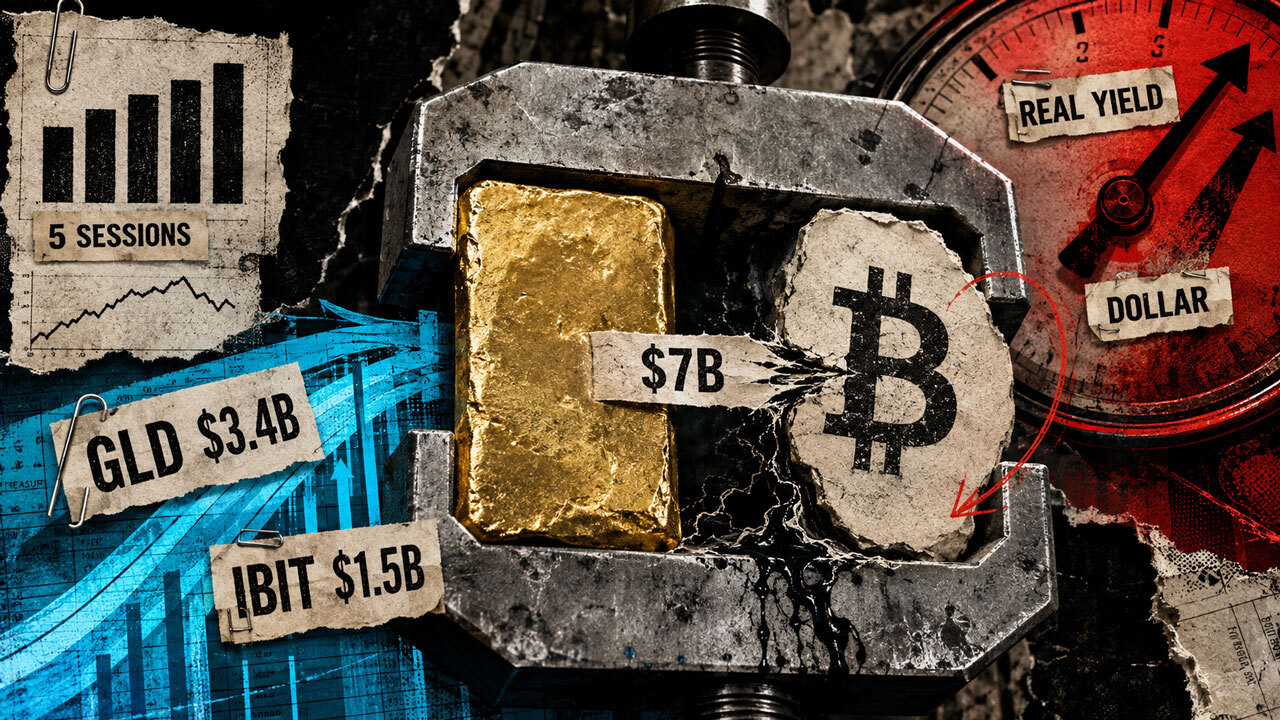 CryptoInvestors just moved $7 billion into Bitcoin and gold in five days to escape an accelerating dollar crisisil y a 2 heures · 4 min read
 CryptoBitcoin and Gold Funds Draw $7 Billion Amid Scarcity Tradeil y a 38 minutes · 1 min read
 CryptoStrive (ASST) Increased Bitcoin Holdings 5.5%, but Bitcoin per Assumed Diluted Share Rose Just 1.3%. Is the Treasury Strategy Creating Value?il y a une heure · 3 min read
Sponsored
Ad
NewsLayerLearn more
NewsLayer Premium
Unlock deeper intelligence.
Ad-free reading, exclusive research, and real-time onchain insights.
Go Premium