
Insider Brief
New Quantum Algorithm Targets Bottleneck in Fluid-Flow Modeling
Insider Brief PRESS RELEASE — Researchers at the Department of Energy’s Oak Ridge National Laboratory used the world’s fastest supercomputer for open science to develop a quantum algorithm that could lead to more advanced models in…
Matt Swayne
Publisher The Quantum Insider
Sep 30, 2026 at 8:23 AM UTC · Updated il y a 9 heures · 5 min de lecture
Traduction…
- Oak Ridge National Laboratory researchers developed LuGo, a quantum algorithm that reduced quantum gate requirements by more than 95% in a fluid-flow modeling problem.
- LuGo performs more calculations on classical computers before encoding data into quantum circuits, cutting the required gate count from 2 million to 91,000.
- Researchers validated the algorithm through classical simulations and evaluated it on quantum processors, with potential future applications in microfluidics, groundwater flow and porous media flow.
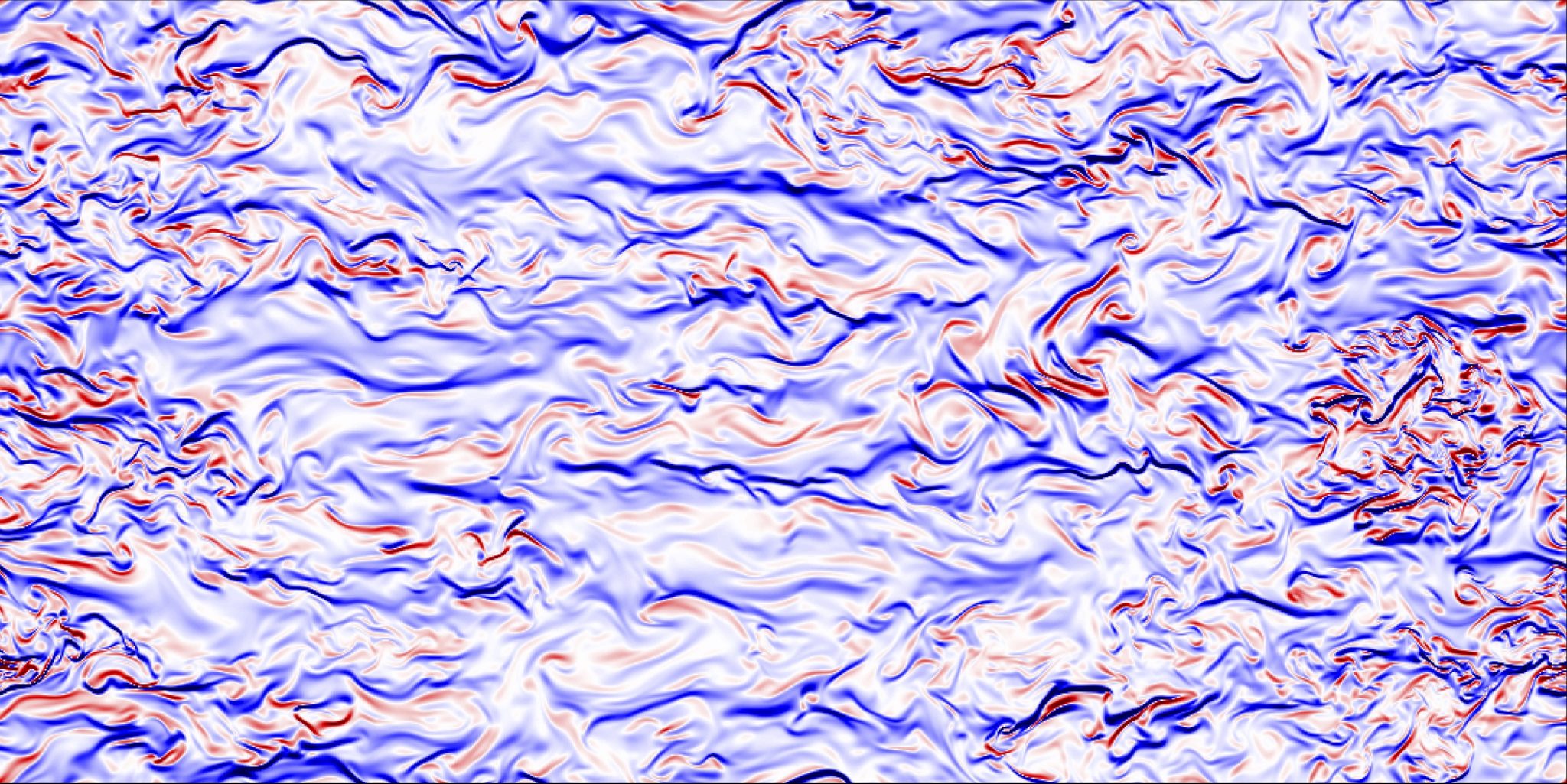
- Image: A 2023 simulation on Oak Ridge National Laboratory’s Summit supercomputer used trillions of grid points to model turbulence in ocean water. LuGo, a quantum algorithm developed by ORNL researchers, could open new possibilities for such quantum studies of turbulence. (Miles Couchman)
PRESS RELEASE — Researchers at the Department of Energy’s Oak Ridge National Laboratory used the world’s fastest supercomputer for open science to develop a quantum algorithm that could lead to more advanced models in fluid dynamics and other scientific fields.
The results of the study, supported by the Oak Ridge Leadership Computing Facility’s Frontier supercomputer and Quantum Computing User Program (QCUP), highlight new opportunities to explore quantum computing’s emerging potential to fuel scientific discovery. The findings could ultimately support applications in such real-world problems as microfluidics, groundwater flow and porous media flow as scientists work to develop more accurate, “fault-tolerant” quantum computers with lower error rates.
Article Intelligence
Key Entities
Fluid
Related Coverage
 QuantumZinc oxide quantum dots enable faster charge detection, laying groundwork for spin qubitsil y a une heure · 1 min read
 QuantumNew Report Positions Florida as an Emerging Leader in Defense-Led Quantum Technologyil y a 5 heures · 4 min read
 QuantumDiraq Expands U.S. Footprint with New Mexico Quantum R&D Laboratory to Advance DARPA QBI Milestonesil y a 9 heures · 1 min read
Sponsored
Ad
NewsLayerLearn more
NewsLayer Premium
Unlock deeper intelligence.
Ad-free reading, exclusive research, and real-time onchain insights.
Go Premium