
Pentagon Math Over Physics
In June 2026, the Department of War released a formal Post-Quantum Cryptography (PQC) Strategy, announced by Department Chief Information Officer Kirsten Davies one day after President Trump signed a pair of executive orders on quantum…
Small Wars Journal
Publisher
Sep 17, 2026 at 6:15 AM UTC · 6 min de lecture
Traduction…
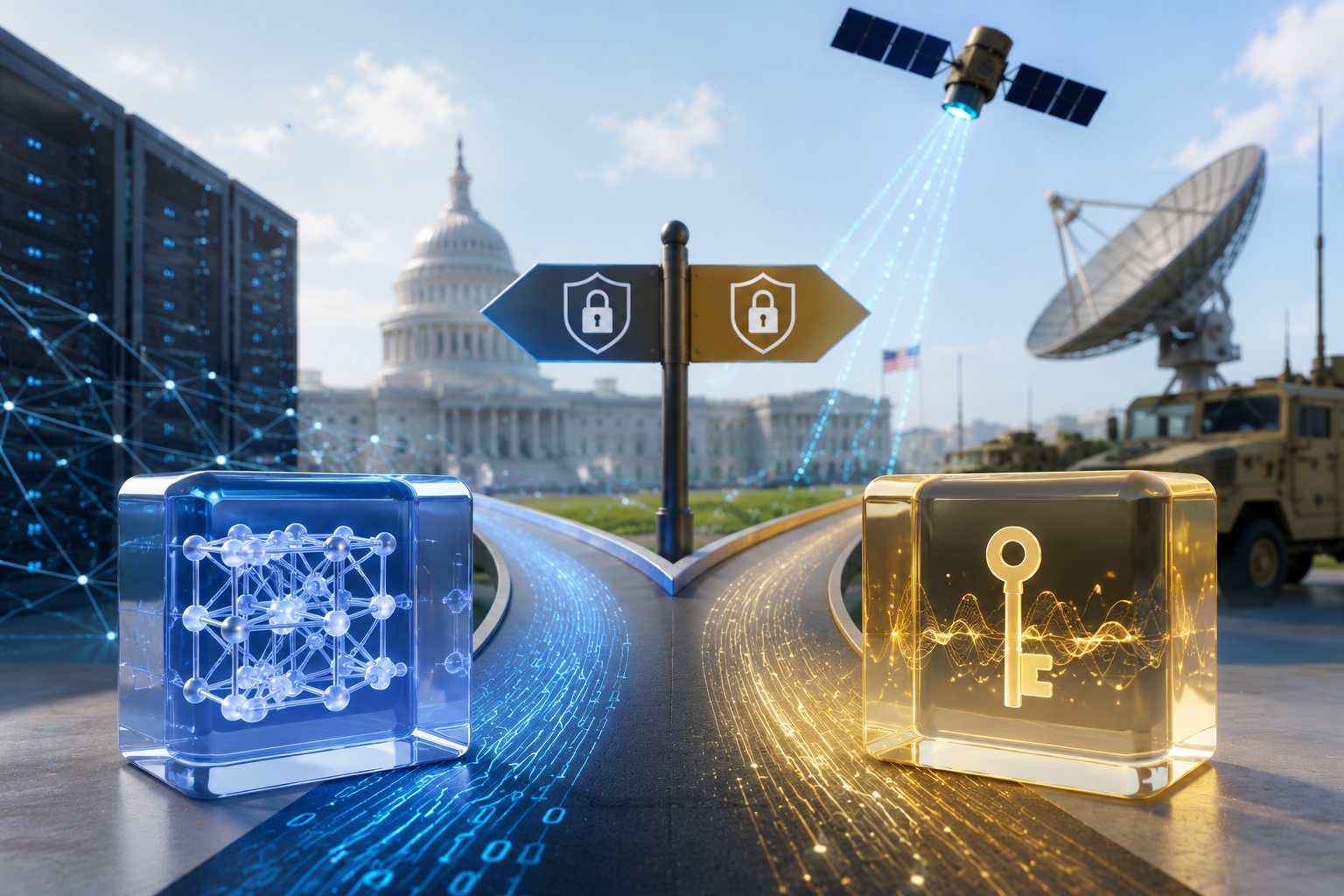
In June 2026, the Department of War released a formal Post-Quantum Cryptography (PQC) Strategy, announced by Department Chief Information Officer Kirsten Davies one day after President Trump signed a pair of executive orders on quantum technology, one of which was devoted to cryptographic security. The strategy sets two deadlines: impact systems must run on post-quantum cryptography or be phased out by December 31, 2030, and every Department of War (DoW) system must run on quantum-resistant algorithms by 2031. Another rule in the strategy places quantum key distribution, the physics-based encryption approach China has pursued since 2016, on the strategy’s list of prohibited technologies.
Post-quantum cryptography is software designed to resist quantum computing factorization involved in new forms of cryptanalysis. Quantum computers, which remain an immature technology, may have utility in breaking the cryptographic algorithms used in public key infrastructure (PKI) for encryption. PKI is the scheme used to produce session keys from enormously large prime numbers that are easy to multiply but hard to factorize. (After the session keys are exchanged, traditional cryptography is employed to exchange data in an encrypted format.) Quantum computing would make that factorization far easier, significantly weakening PKI protection. US adversaries equipped with quantum computers may be able to apply them to decrypt intercepted messages encrypted with algorithms that are not quantum-resistant. A hint at how the quantum cryptanalysis project is advancing may come from cyber-criminals or state actors able to use the factorization capability to unlock cryptocurrency wallets of users who’ve lost their passwords, and thus access to them.
Article Intelligence
Topics
Sponsored
Ad
NewsLayerLearn more
NewsLayer Premium
Unlock deeper intelligence.
Ad-free reading, exclusive research, and real-time onchain insights.
Go Premium