

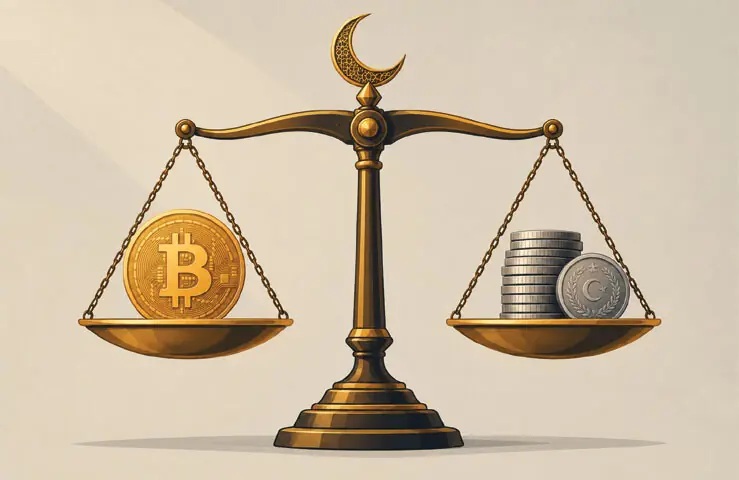
Pakistan made global headlines this June when Islamic scholar Mufti Taqi Usmani, along with five others, issued a fatwa [religious edict] arguing that it was “impermissible” to use cryptocurrencies to purchase goods. The argument was that crypto is “merely the recording of fictitious numbers in a digital account”, it is not recognised as maal [wealth] in Shariah.
POLICY: THE ISLAMIC DEBATE OVER CRYPTO
Pakistan made global headlines this June when Islamic scholar Mufti Taqi Usmani, along with five others, issued a fatwa [religious edict] arguing that it was “impermissible” to use cryptocurrencies to purchase goods. The argument was…
Dawn
Publisher
Oct 4, 2026 at 1:19 AM UTC · 6 min de lecture
Traduction…
Bilal bin Saqib, chairman of the Pakistan Virtual Assets Regulatory Authority (PVARA), followed up with a request for clarification: crypto actually encompasses a range of assets — from pure digital currencies to gold-backed tokens, stablecoins and complex financial instruments — some of which translate to legal claims on real-world wealth, precious metals and currencies. This is a valid concern. In several of these cases, cryptocurrency technology, the underlying blockchain, simply acts as a recording ledger, much like a database in a bank.
This ruling has significant implications in Pakistan for two reasons: one, after eight years of an outright ban on banking for all things crypto, Pakistan recently made a whiplash pivot to full-throated advocacy, jumping on board the crypto bandwagon. This fatwa will certainly complicate matters.
Article Intelligence
Topics
Related Coverage
 CryptoCOIN and CRCL Stock Outlook as ICBA Sues OCC For Issuing Bank Charters to Crypto Companiesil y a 2 heures · 1 min read
 PolicyMALT Loses $72K After Flawed Swap Lets Attacker Tap Treasury DAIil y a 3 heures · 1 min read
 CryptoFarage claims people ‘quite impressed’ by £72m donations from crypto-billionairesil y a 3 heures · 1 min read
Sponsored
Ad
NewsLayerLearn more
NewsLayer Premium
Unlock deeper intelligence.
Ad-free reading, exclusive research, and real-time onchain insights.
Go Premium