

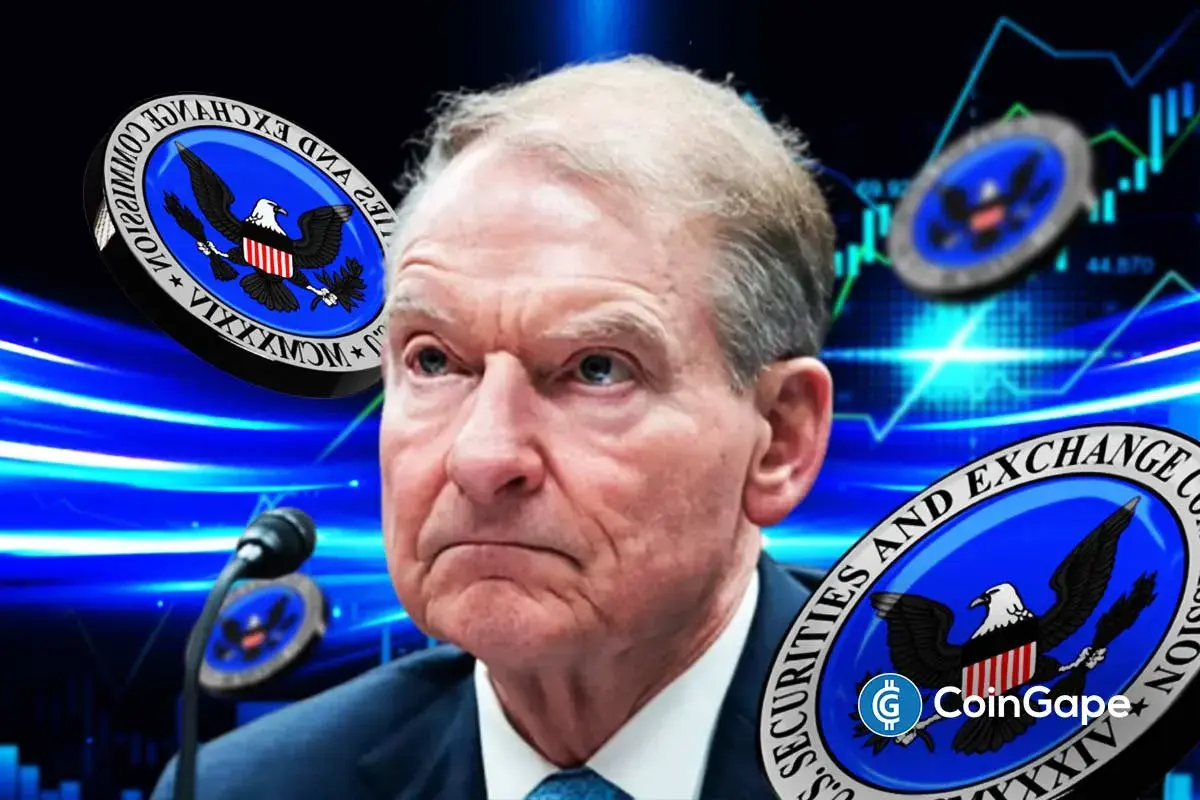
SEC Chair Paul Atkins expects the Senate to advance the CLARITY Act this month, setting up a key test for a crypto market structure bill that has faced repeated delays. Atkins said he hopes lawmakers can move the legislation forward within two weeks and eventually send it to President Donald Trump for his signature.
SEC Chair Atkins Says He Hopes CLARITY Act Advances in September 15 Senate Vote
SEC Chair Paul Atkins expects the Senate to advance the CLARITY Act this month, setting up a key test for a crypto market structure bill that has faced repeated delays. Atkins said he hopes lawmakers can move the legislation forward…
CoinGape
Publisher
Sep 2, 2026 at 6:39 PM UTC · Updated il y a 3 heures · 2 min de lecture
Traduction…
The Senate is scheduled to hold a cloture vote on September 15, a procedural step that could end debate and clear the path toward a final vote. However, doubts remain over whether Congress can complete the legislation this year as lawmakers approach the midterm election period.


SEC Chair Atkins Backs CLARITY Act as SEC Moves Ahead
SEC Atkins said the SEC is preparing its regulatory approach to work alongside the CLARITY Act. The agency’s proposal includes exemptions covering fundraising and other activities, while public comments are currently being collected.
The SEC chair also said the regulator could act under existing securities laws if Congress fails to pass the bill. However, he argued that legislation would provide a more durable foundation that future SEC leadership could not easily reverse.
“Our goal is to get them adopted, to get them taken up by the industry,” Atkins said. He added that “what we really do need though is statutory grounding” to make the framework sustainable over time.
Article Intelligence
Regulation Signal
in progressUpdated il y a un mois
SEC Crypto Asset Market Structure RulemakingRelated Coverage
 Crypto‘Crypto Capital of the World’: SEC Chair Expects Clarity Act to Pass This Monthil y a une heure · 1 min read
 CryptoJapan’s Remixpoint Dumps Ethereum, XRP in Shift to Bitcoin-Only Treasuryil y a une heure · 2 min read
 CryptoDOJ says Hamas crypto seizures reached $560,000 as FBI took over fundraising sitesil y a une heure · 1 min read
Sponsored
Ad
NewsLayerLearn more
NewsLayer Premium
Unlock deeper intelligence.
Ad-free reading, exclusive research, and real-time onchain insights.
Go Premium