

The SEC's new crypto fundraising proposal deliberately treats tokens as free to trade as soon as a buyer acquires them, unless the issuer or another law says otherwise.
SEC opens door to day-one crypto insider sales that Senate draft would block
The SEC's new crypto fundraising proposal deliberately treats tokens as free to trade as soon as a buyer acquires them, unless the issuer or another law says otherwise.
CryptoSlate
Publisher
Aug 19, 2026 at 9:45 AM UTC · 5 min de lecture
Key Signal
12 months Senate pre-certification lockup
Last Updated
il y a 2 mois
Traduction…
Insiders typically know more than the public while a token project is still being built, and their incentives do not always line up with everyone else's.
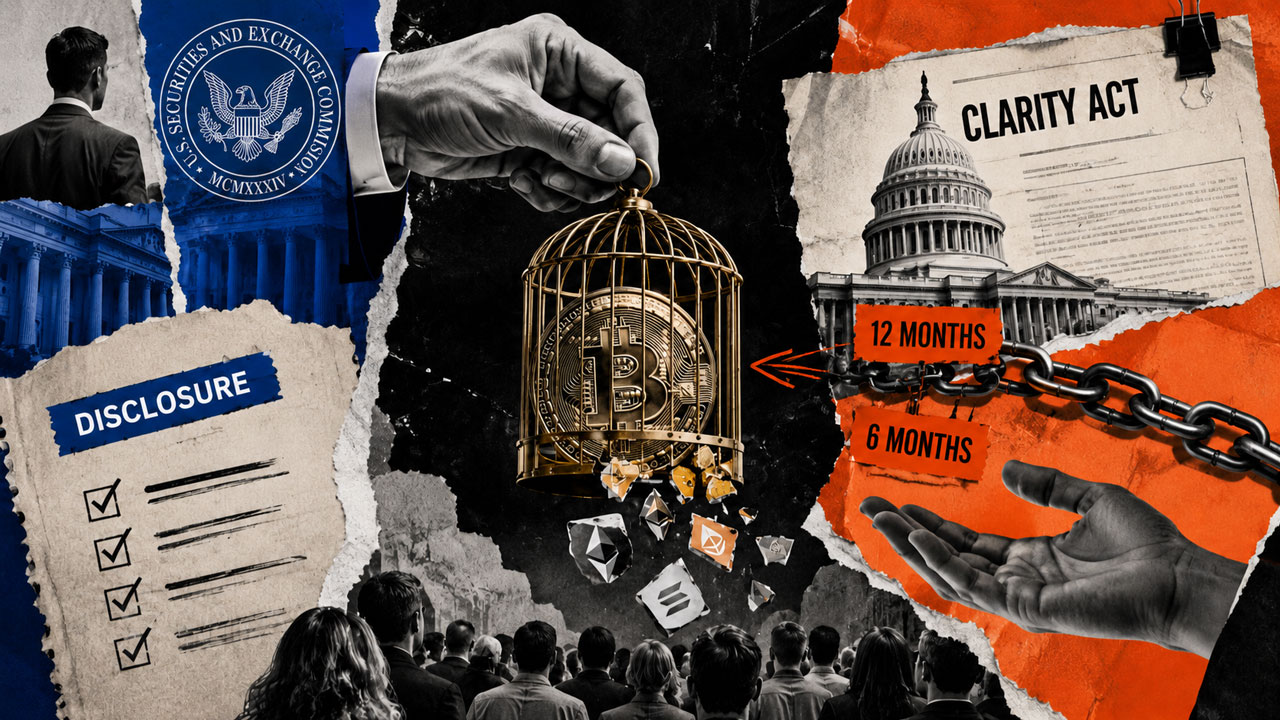
The Senate's July 22 CLARITY draft would force insiders to hold a token for a full year before its network clears a specific control test, then six more months once it does. The bill also limits how much they can sell, but the SEC's proposal skips those requirements.
| Question | SEC Regulation Crypto Assets proposal | Senate July 22 CLARITY draft |
|---|---|---|
| Are tokens freely tradable after purchase? | Generally yes, unless another restriction applies | Not for related persons covered by the lockup rules |
| Is there a mandatory insider holding period? | No | Yes |
| Before network control certification | No federal time-based lockup | 12-month minimum holding period |
| After certification | No federal time-based lockup | 6-month minimum holding period |
| Main investor protection tool | Disclosure | Mandatory holding period plus volume limits |
| Core philosophy | Let buyers price disclosed insider risk | Force insiders to stay economically exposed |
How the SEC reached its decision for crypto insiders
The SEC's Regulation Crypto Assets spends space building the case for insider lockups before setting one aside. It discusses the information gap between insiders and buyers, reviews research showing token offerings tend to do better under vesting or lockup terms, and then settles on disclosure as its answer.
Issuers get to decide whether to restrict their insiders, and the SEC goes one step further by asking commenters whether it should require a one-year holding period before finalizing the rule.
That question wouldn't make sense if the draft already included a one-year period.
Article Intelligence
Regulation Signal
in progressUpdated il y a 2 mois
SEC Crypto Asset Market Structure RulemakingRelated Coverage
 PolicyAustralia releases draft bill to adopt OECD crypto tax reporting frameworkil y a 2 heures · 1 min read
 CryptoCFTC moves to integrate crypto platform Hyperli...il y a 2 heures · 1 min read
 CryptoBrian Daly of SEC Shares Insights on Novel ETF Innovationsil y a 7 heures · 1 min read
Sponsored
Ad
NewsLayerLearn more
NewsLayer Premium
Unlock deeper intelligence.
Ad-free reading, exclusive research, and real-time onchain insights.
Go Premium