In 1956, at an exhibition hall in Tokyo, a Japanese artist named Saburō Murakami ran through a row of paper screens, leaving a torn, human-shaped hole in each one. The audience heard the rip in the moment but likely didn’t understand it.
Murakami belonged to Gutai, the radical postwar avant-garde collective whose members painted with their feet and fought with mud, and his gesture made an argument the art world is still digesting, but ultimately the tearing and the wreckage after were the actual artwork.
Seventy years later, the ripping hasn’t stopped. Trading card livestreams, Discord server groups, collector markets of all sorts, gambling/flipping, and nostalgia freebasing. Layered detritus. The artist named Evil Biscuit seems aware of this.
If you haven’t heard of Evil Biscuit, you may not have been watching one of the strangest and most vital corners of internet art. Over the past few years, a scene of mostly pseudonymous artists, formed across crypto subcultures, Twitter timelines, and private group chats, has been quietly staging one of the more genuine artistic rebellions of the decade.
Where the establishment crypto-art world courted galleries with polished generative work, these artists went the other direction. Images so dense with meme references, anime, veiled art history, and internet debris that critics had to invent new words for them. They called the style schizocollage or traitmaxxing, a practice of taking the trait system that generates ordinary avatar collections and pushing it past its breaking point, hundreds of layers deep, until the image verges on chaos.
Critics started paying attention. In Spike Art Magazine, Dean Kissick placed the work in the lineage of deliberately “bad painting”, a tradition with serious credentials: Marcia Tucker staged ‘Bad’ Painting at the New Museum in 1978, arguing that wrongness, handled deliberately, is a form of freedom. Right Click Save filed dispatches from what it called the Avant NFT underground. And the movement’s participants, with characteristic self-mockery, settled on their own name for it: Avant/Gay.
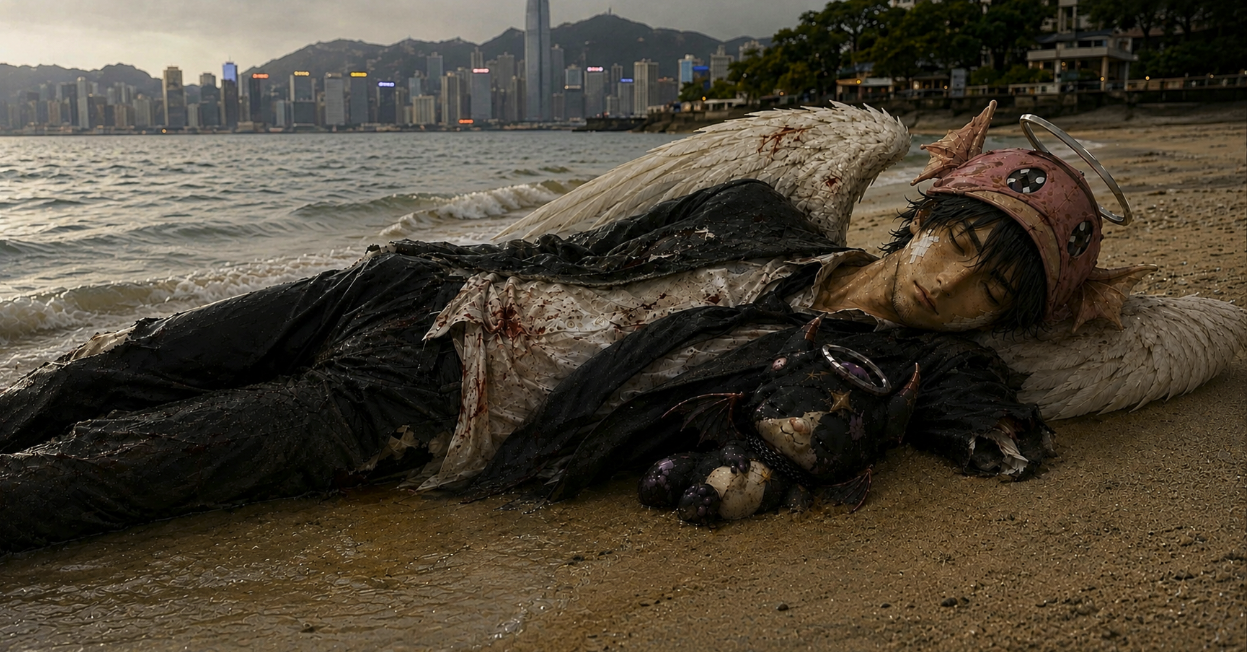
Near the center of the scene sits Biscuit. His Drifella collections are widely cited as its defining works, and artist Parker Ito, the post-internet veteran who crossed over into the movement, credits Drifella 2 with establishing the aesthetic the whole scene became known for, and went on to collaborate with Biscuit on last Halloween’s Heavy Liquid Graphic. The endorsement cuts both ways: the art world is starting to take this seriously, and the scene got there without asking anyone’s permission.
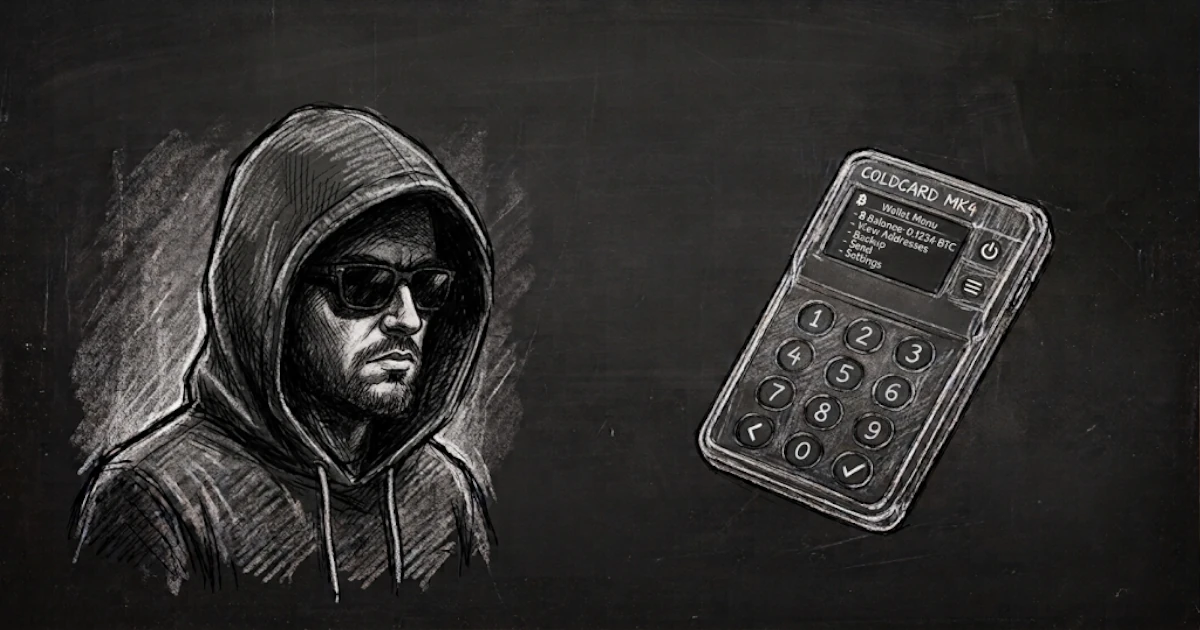
Lately, Biscuit’s work has been escaping the screen, and the destruction has gotten literal. His current project, Card NFT 2, debuted with preliminary ‘Framed Cards’ through SOLOS Gallery at Felix Art Fair this February. And earlier this summer he made roughly eleven thousand cards, sold in packs, each digital card redeemable for a physical one if the collector is willing to burn the NFT to get it. For the rarest tier, as he told Peter Bauman at Le Random, he takes vintage holographic Pokémon cards, dissolves the ink off them with acetone until only the bare silver foil remains, then UV-prints entirely new artwork onto the wreckage. Saburō Murakami would understand. One theme runs through everything Biscuit makes: “destruction, death and rebirth.”
Now Biscuit’s art is headed to Hong Kong. He is contributing to the Bitcoin Asia 2026 conference card pack produced by the artist Rax, where his cards will sit alongside work by Ariamis (formerly Terrorism) — his New Bad Image co-exhibitor, a younger artist pouring Renaissance devotional imagery into the card format, and several other key artists in this movement. The pack is something like a satellite of the show, sealed in foil. And it sits exactly on the fault line this scene has been working: the old hierarchy between artwork and collectible has collapsed, and the most interesting artists now make objects that are both at once.
Internet art has always come from rooms the trad art world ignored: forums, blogs, group chats, and now crypto. BMAG has been working in one of those rooms for years: it’s the Bitcoin conference art gallery. When the painter Nardo showed at Bitcoin MENA in 2024, our conversation circled around memes as units of cultural transmission. A year later his Citadel, a seven-foot oil painting built from a 4chan meme, debuted at the Bitcoin Conference in Las Vegas, a monument raised to an internet shitpost.
Ahead of the BMAG Card Expo at Bitcoin Asia and the pack’s release, I sat down with Biscuit to talk about coming up in the internet’s wildest art scene, why the trading card keeps pulling digital artists toward cardboard, and what collectors keep getting wrong, and right, about both.
BMAG: Your father runs a comic shop, and you’ve talked about digging through his boxes to find the source material. What is a core memory from your time in your dad’s comic shop? What did those boxes teach you about why people collect?
EB: Yeah, some of the deep ties I have with trading cards come from my experience playing in Yugioh tournaments and collecting when I was a young kid at my father’s shop.
I was quite a shy young kid so it was definitely an experience going to play for the first time with a nonsense 100+ card deck against older teenagers. I remember this one autistic kid used to sit outside on a pillar and he would meditate before his matches channeling anime characters and talking to himself.
Pokémon was around ever since I was born so playing my older brother’s games and going to church where they would trade cards and show off their binders were core memories before I was even 6 years old. The shop closed down when I was really young and before I became serious about making art some years ago my dad and I opened it back up selling comics, vintage video games and trading cards.
card nft – 2024